

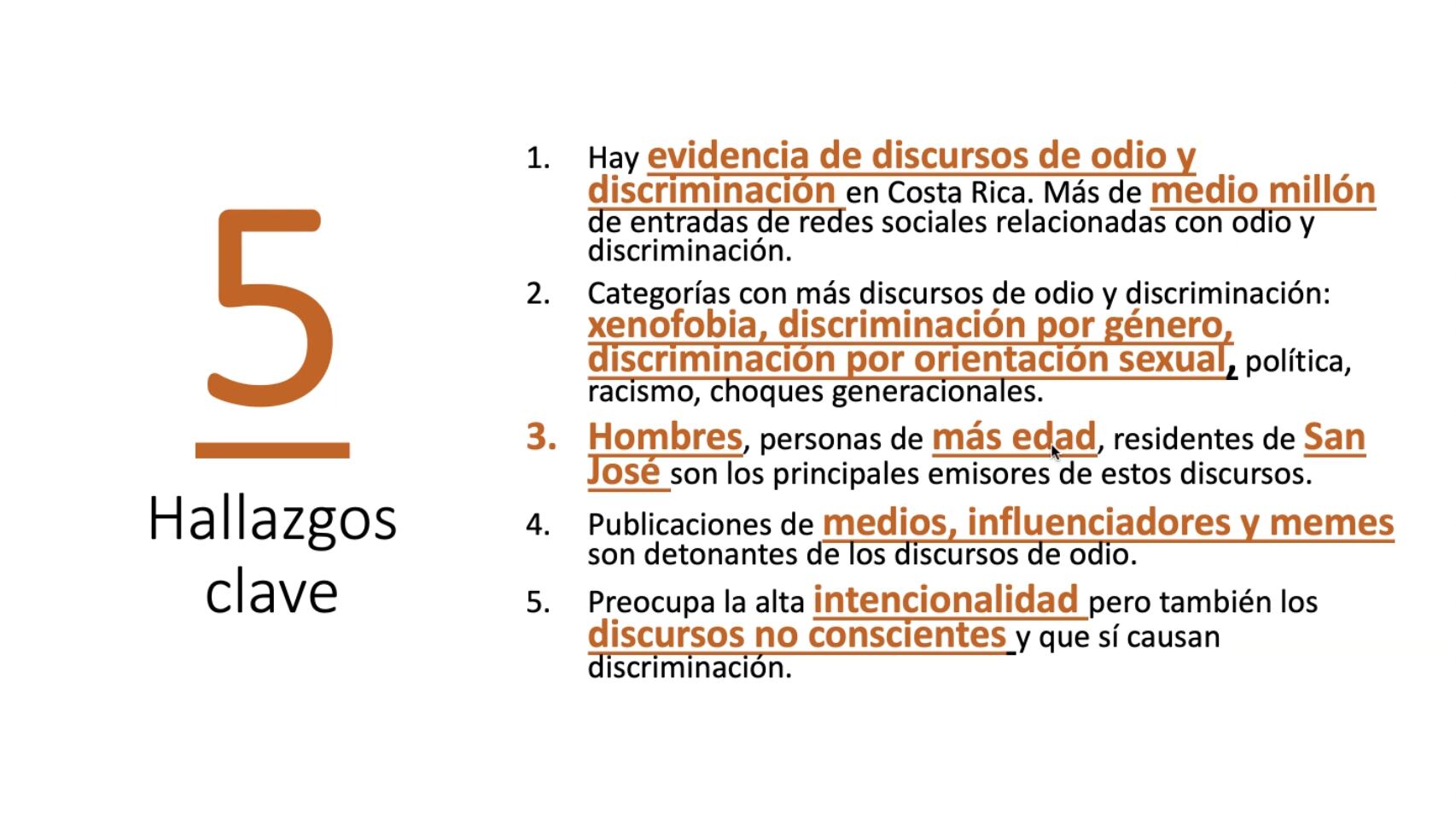
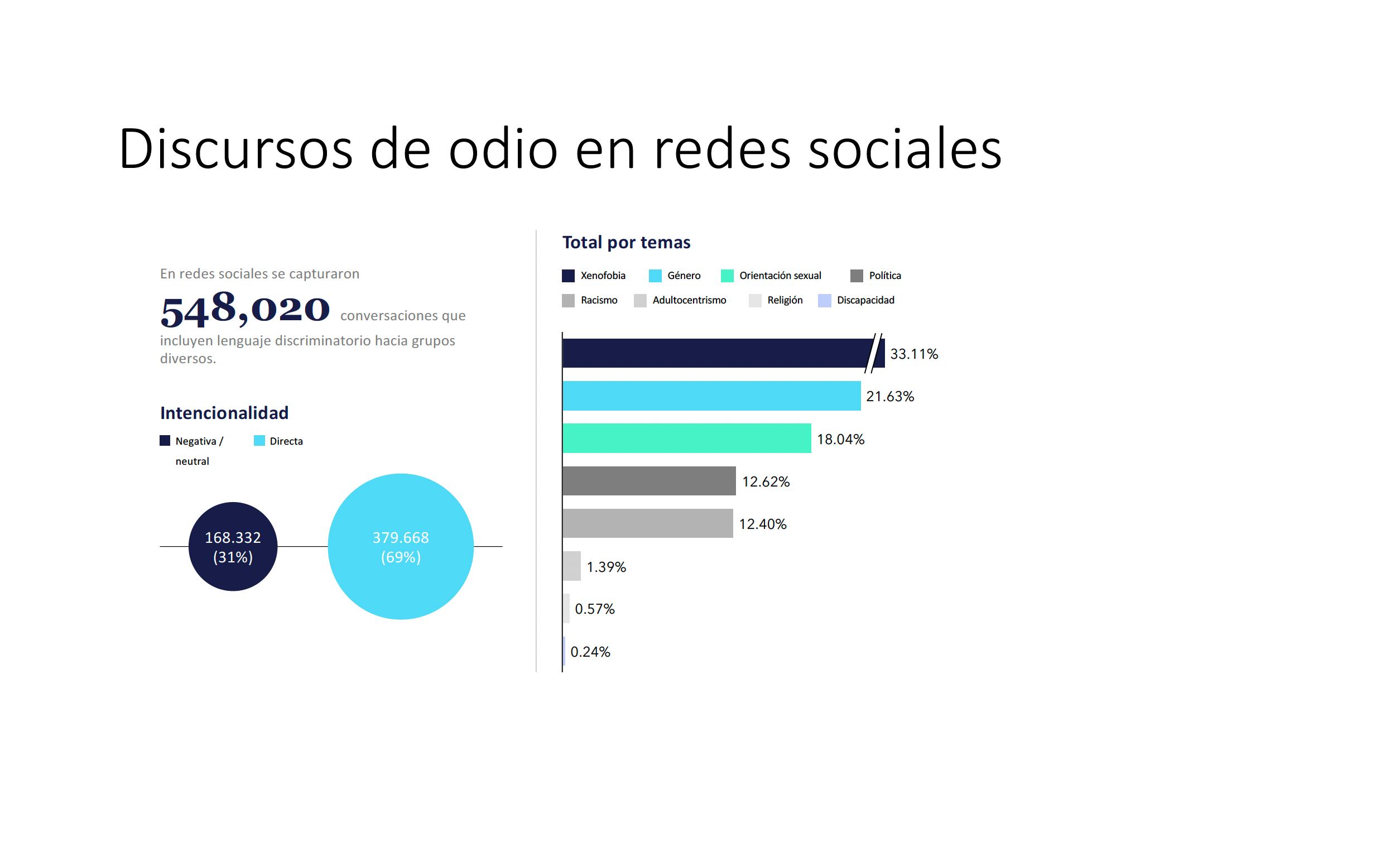
Un estudio preliminar elaborado por Naciones Unidas encontró más de medio millón de conversaciones con discursos de odio o mensajes discriminatorios en las redes sociales de costarricenses, durante el último año.
Se trata de publicaciones de Facebook y Twitter, emitidas entre mayo de 2020 y junio de 2021, con contenido xenofóbico y discriminatorio por género y por orientación sexual, principalmente.
Luego de desagregar estos temas, el informe detalló que las principales víctimas de esos mensajes violentos son personas nicaragüenses, mujeres y homosexuales.
LEA MÁS: Red de páginas en Facebook multiplica la xenofobia y hasta gana dinero por ello
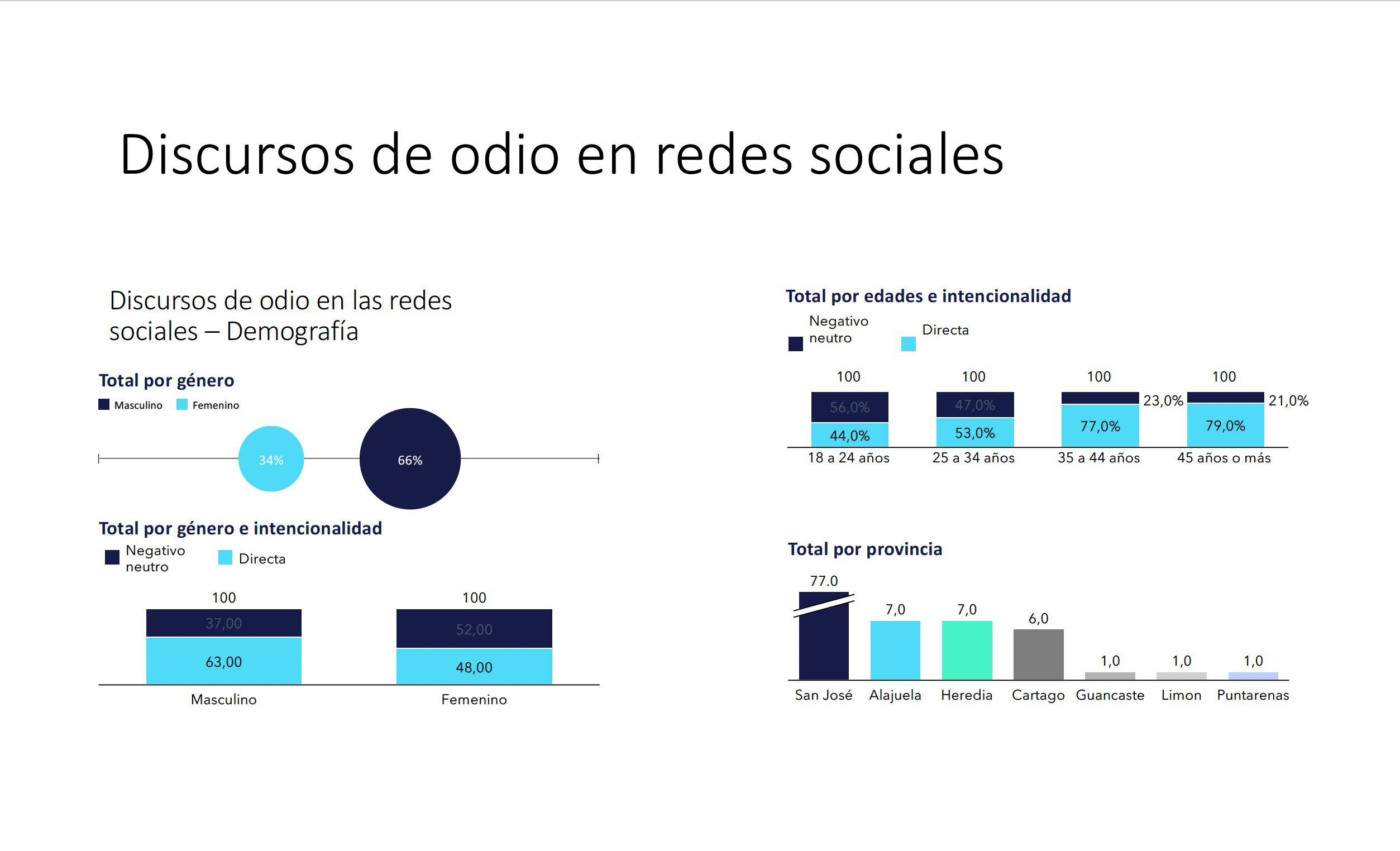
¿Quiénes son los principales emisores de publicaciones de odio o discriminatorias en las redes sociales? Principalmente hombres de 45 o más años que residen en San José.
Nicaragüenses y asiáticos
Se detectaron 181.500 entradas xenófobas en las redes sociales de costarricenses, con la característica de que un 80% de esos mensajes tenían una alta intencionalidad, es decir, quienes emitieron esos mensajes tenían el propósito de herir directamente a esas personas.
Ese tipo de reacciones, agrega el estudio, fueron detonadas por coberturas mediáticas, sucesos y temas asociados con crimen, acoso y abuso.
El mayor pico de comentarios ocurrió en junio de 2020, cuando los medios informaron sobre situación en cuarterías y cierre de fronteras como medida sanitaria. Por esta razón, se concluye que la pandemia potenció los mensajes de odio contra los nicaragüenses, principalmente.
También se encontraron mensajes contra poblaciones asiáticas, relacionadas con el hallazgo de huesos de perro y ratas dentro de dos congeladores dentro de un local de comida china en el centro de San José.
Mujeres
También se reportaron 118.539 publicaciones con contenido de género. Esos mensajes de odio o discriminatorios afectan mayoritariamente a las mujeres y, principalmente, son emitidos por hombres.
En este caso destaca que la intencionalidad de los mensajes descienden al 51%, lo que señala que casi la mitad de las publicaciones podrían estar relacionadas con prejuicios machistas.
Se reportaron frases de hombres como “a nosotros también nos pasa”, haciendo referencia al acoso callejero, que intentan reducir el nivel de esa problemática.
También calificativos como “feminazis, locas o regludas”.
LEA MÁS: La sutil línea entre el odio en Internet y la vida real
Por otro lado, también surgió con gran fuerza en las redes sociales el uso de la palabra “onvrez”, que hace referencia a hombres con actitudes vagas o machistas.
“Inició como término para la reivindicación de derechos, pero se ha convertido en un descalificativo. Entre personas de 18 a 24 años, más ligado a burla y de 25 a 34, a señalamientos de masculinidades tóxicas”.
Homosexuales
La intencionalidad de herir con mensajes de odio o discriminatorios contra la población de la diversidad sexual crece al 85%.
En total se capturaron 98.865 conversaciones que hacen referencia a la preferencia sexual de las personas, o su identidad de género autopercibida.
La atracción entre hombres generó la mayor cantidad de reacciones con palabras como “playo y maricón”, nuevamente utilizadas principalmente por hombres heterosexuales.
Naciones Unidas reportó su preocupación por el nivel de violencia en estos mensajes, pues se hace un uso extendido de la palabra “asco” en este tipo de conversaciones de odio.
Política, racismo y choque generacional
En medio de la situación sociopolítica que atraviesa el país, sumado a la realización de convenciones internas para la elección de candidatos presidenciales, también proliferaron los mensajes de odio relacionados con ideologías políticas o partidarias.
Sobre este tópico se detectaron 69.170 conversaciones, con una intencionalidad del 85%.
Entretanto, otro de los temas identificados dentro de la investigación sobre mensajes de odio y discriminación en redes sociales, también se encontraron conversaciones racistas, con apenas un 33% de intencionalidad.
Las poblaciones afrodescendientes (46%) y las asiáticas (20%) son las más afectadas por términos de racismo.
Marcas, usuarios y medios de comunicación implementaron frases discriminatorias como “si la va a hacer negra, hágala trompuda”, “qué suerte tan negra”, “soy la oveja negra de la familia”, “es por ser negro”, o “trabajé como negra”.
Los usuarios más jóvenes también usan la etiqueta #Nigga, promoviendo un estereotipo.
También se reportó una especie de choque generacional entre boomers, personas maduras, y juventudes, a quienes algunos llaman “generación de cristal”.
Las personas entre 18 y 24 años perciben discriminación por generaciones mayores, que asocian la edad con conocimiento, grado educativo, madurez y capacidad para opinar.
En este caso también existe una alta intencionalidad en mensajes hirientes.