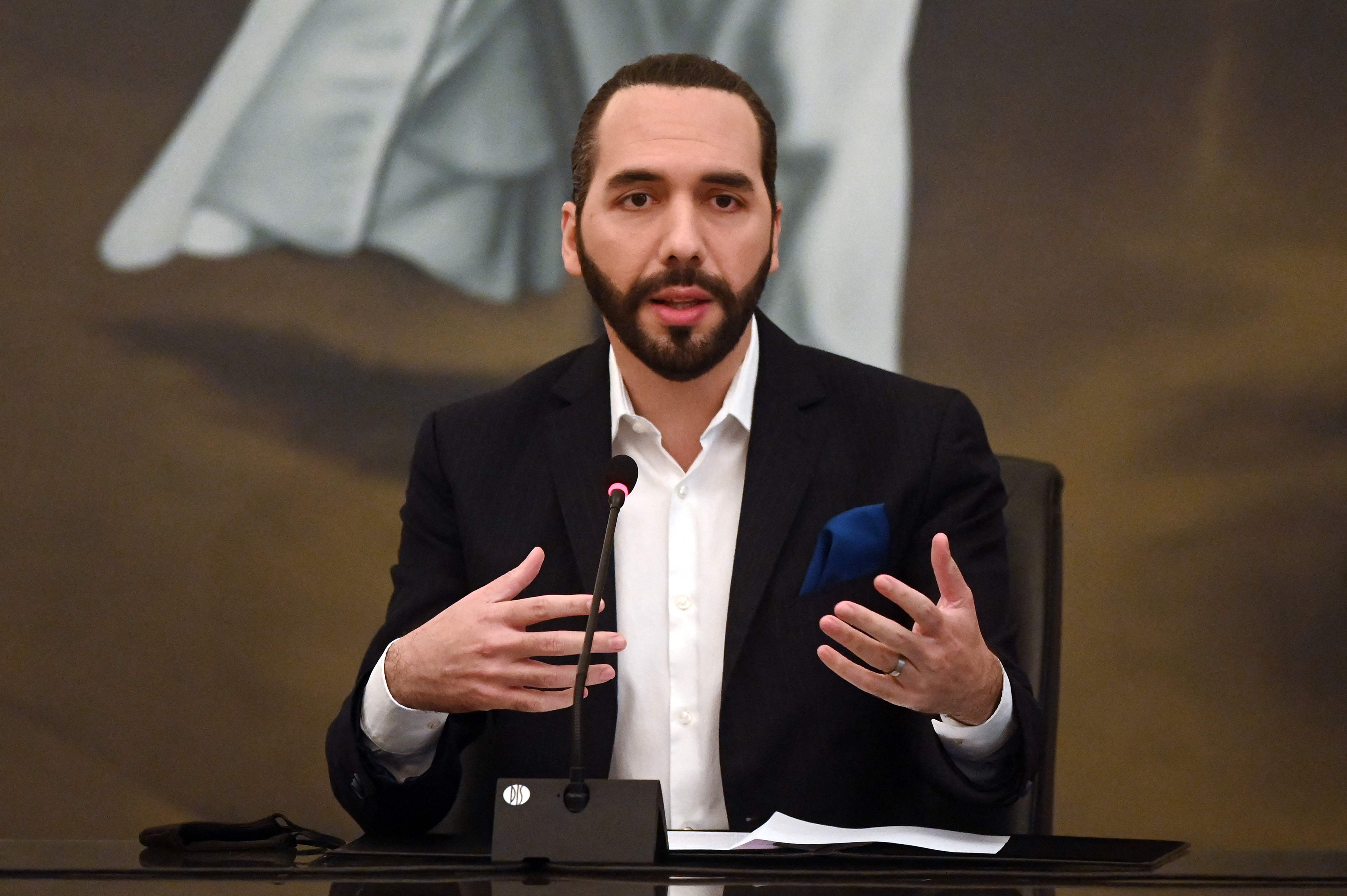

San Salvador. El presidente de El Salvador, Nayib Bukele, hizo de la seguridad un eje de la campaña política que lo llevó al poder y destacó al inicio de su mandato la mejora en los indicadores sobre homicidios, tras poner en marcha el “plan de control territorial” que, entre otras cosas, contempla el uso del Ejército como apoyo a la policía en labores de seguridad pública y el combate a las pandillas.
Ahora, casi tres años después y luego de una ola sangrienta en el país, que dejó 87 homicidios el fin de semana pasado atribuidos por el gobierno a las Mara Salvatrucha (MS-13) y Barrio 18, el mandatario decidió entrar “en guerra”. Desde entonces, restringió libertades individuales mediante un régimen de excepción y las calificó recientemente como grupos “terroristas”, aumentando las penas de prisión hasta los 45 años.
LEA MÁS: Bukele amenaza a pandilleros con represalias si no ‘dejan de matar’
Según datos oficiales, El Salvador cerró el 2015 como el año más violento de su historia, con 6.656 homicidios. A partir de ahí la cifra viene a la baja, con 5.280 en el 2016, 3.962 en el 2017 y 3.343 en el 2018. Sin embargo, la caída más drástica se dio con la llegada de Bukele al poder, durante el año 2019.
De acuerdo con los datos, para ese año se registraron 2.398 asesinatos y para los dos siguientes la cifra continúo bajando hasta llegar cerca del umbral de los 1.000 homicidios anuales, en el 2021, con 1.140. Cuando se publicaron los datos, en enero del 2022, la Casa Presidencial señaló en su cuenta de Twitter que el 2021 fue “el año más seguro desde que se tiene registro de estadísticas” sobre criminalidad.
Bukele atribuye esa disminución dramática a su plan de control territorial, aunque diversos medios independientes como El Faro han puesto en tela de duda que esa sea la razón y más bien señalan que la reducción en los asesinatos responde a negociaciones encubiertas realizadas por el gobierno con estas agrupaciones criminales.
Una investigación del medio reveló en el año 2020 que el gobierno de Nayib Bukele negoció con tres pandillas de El Salvador a cambio de mantener bajos los índices de homicidios en el país centroamericano. El mandatario negó esos vínculos, aunque luego destituyó a los miembros de la fiscalía que llevaban la investigación con ayuda de la Asamblea, controlada totalmente por su partido.
En dicha investigación, denominada Catedral, se recopilaron audios, fotografías, testimonios y otras pruebas de las reuniones de funcionarios de Bukele con las pandillas en las cárceles. El gobierno de Estados Unidos también se pronunció al respecto en diciembre del 2021 y sancionó a dos funcionarios salvadoreños que, según dijo, habían participado en las negociaciones con la MS-13, la pandilla más grande del país.
Régimen de excepción
El domingo, en medio de la ola sangrienta del fin de semana, el Congreso salvadoreño aprobó el régimen de excepción por un mes, a pedido del presidente Bukele.
Esta decisión, amparada en el artículo 29 de la Constitución de El Salvador, permite a la Asamblea Legislativa suspender ciertos derechos constitucionales en circunstancias extremas, como la libre reunión, la inviolabilidad de la correspondencia y comunicaciones y faculta las detenciones sin orden judicial.
LEA MÁS: El Salvador restringe libertades por pedido de Bukele para enfrentar crímenes de pandillas
Algunas organizaciones internacionales de derechos humanos han criticado esta medida, considerada como “autoritaria”. Tal es el caso de Human Rights Watch, quien aseguró de que la restricción de libertades “abre la puerta a que se cometan violaciones de derechos humanos”.
“El gobierno del presidente Bukele debe tomar medidas serias, sostenibles y respetuosas de los derechos humanos pare frenar la atroz violencia que ejercen las pandillas en El Salvador”, afirmó Tamara Taraciuk Broner, directora en funciones para las Américas de la entidad.
Grupos ‘terroristas’
El miércoles, como parte de las medidas contra las pandillas, el Congreso de El Salvador también reformó el código penal para aumentar de 9 a 45 años de prisión la pena máxima por pertenecer a las pandillas, que fueron calificadas como grupos terroristas.
Ahora, establece que “el que tomase parte en una agrupación, asociación u organización ilícita” como las pandillas “será sancionado con prisión de veinte a treinta años”, y si son “cabecillas” la pena de prisión será de 40 a 45 años. Antes de la reforma, se castigaba con prisión de tres a cinco años, y si era cabecilla la pena era de seis a nueve años.
Otro de los cambios supone una reforma a la Ley Penal Juvenil, que establece que los menores de edad que hayan cumplido 16 años y cometan un delito siendo parte de una pandilla recibirán una pena de hasta 20 años. En tanto, los menores que hayan cumplido 12 años de edad recibirán una pena de hasta 10 años de cárcel en los mismos términos.
El Congreso también introdujo un nuevo inciso para castigar con no menos de 20 años a los miembros de pandillas que trafiquen drogas y habilitó un sistema de recompensas para personas que brinden información que lleve a la detención de pandilleros.

‘Mano dura’ en cárceles
El jueves Bukele publicó en Twitter un vídeo en el que se muestran las duras condiciones que tienen actualmente los pandilleros en prisión, luego de decretar emergencia máxima en las cárceles el domingo anterior.
En las imágenes se les observa aglomerados en celdas, sin colchones en donde dormir y se escucha la voz de uno de ellos que se queja de la disminución en las raciones de comida y la falta de implementos para limpiar su celda.
“Desde el domingo, la comida es racionada y los 16,000 pandilleros encarcelados no han salido de sus celdas, ni han visto el sol. En estos días hemos arrestado 3,000 más (y seguimos). Así que cada vez habrá menos espacio y tendremos que racionar aún más”, escribió el mandatario.
LEA MÁS: Estado de excepción en El Salvador: la política de ‘mano dura’ de Bukele contra las pandillas
Al respecto, la Comisión Interamericana de Derechos Humanos hizo un pronunciamiento donde expresó su preocupación por las medidas, las cuales constituyen “políticas de carácter represivo” que pueden resultar “en serias violaciones a los derechos humanos”. La CIDH instó al gobierno a revertir urgentemente las medidas.
Por otra parte, Human Rights Watch señaló que castigar a los reclusos por las acciones cometidas por personas fuera de la prisión es “una forma de castigo colectivo que viola múltiples derechos humanos”. “Privar a los reclusos de ropa, luz, ropa de cama, acceso al aire libre, alimentos y agua adecuados también es incompatible con los estándares internacionales sobre el trato a los detenidos”, apuntó.
Tras los pronunciamientos de estas organizaciones, Bukele ha respondido con sarcasmo “a la comunidad internacional” que critica sus medidas por no respetar los derechos humanos. “Tenemos 70.000 pandilleros aún en las calles. Vengan por ellos, llévenselos a sus países, sáquenlos de esta ‘persecución dictatorial y autoritaria’”, manifestó.
Desde el domingo, la comida es racionada y los 16,000 pandilleros encarcelados no han salido de sus celdas, ni han visto el sol.
— Nayib Bukele (@nayibbukele) March 31, 2022
En estos días hemos arrestado 3,000 más (y seguimos).
Así que cada vez habrá menos espacio y tendremos que racionar aún más.#GuerraContraPandillas pic.twitter.com/03MbAEzMPY