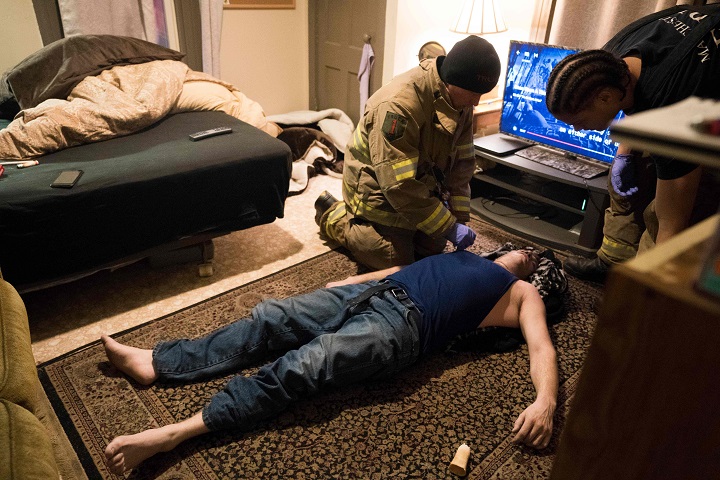
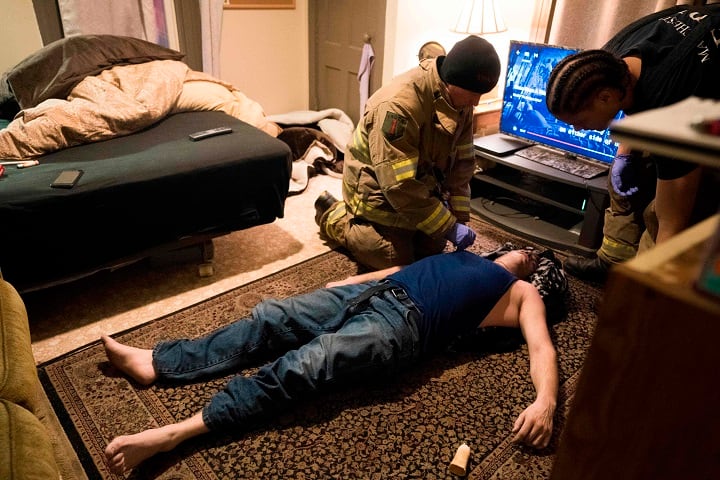
La epidemia de opiáceos que golpea a Estados Unidos y en particular al estado de New Hampshire se originó con la prescripción de medicamentos contra el dolor. ¿Cómo comenzó? ¿Qué efecto tienen los opiáceos en el cuerpo? ¿Alcanzó ya la crisis su máxima expresión?
Lisa Marsch, experta en prevención y tratamiento de enfermedades ligadas al abuso de sustancias y profesora de la Facultad de Medicina Geisel de la Universidad de Dartmouth, contesta estas preguntas.
La crisis “en gran parte se debió a la intención de los médicos que trataban de aliviar el dolor (...) y las empresas farmacéuticas estaban inundando el mercado con muchas opciones de opiáceos”.
“Afecta a todo tipo de personas de cualquier estrato socioeconómico, pero sigue siendo un fenómeno predominantemente de gente blanca”.
“En la década de 1970 y 1980, los afroestadounidenses, las comunidades negras en Estados Unidos estaban destrozadas por las epidemias de crack y heroína, y (...) para las generaciones que siguieron, el uso de algunos de esos tipos de drogas quedó muy estigmatizado.”
Marsch examinó a 76 usuarios activos de fentanilo. Dice que el 80% de ellos llegaron a los opiáceos tomando primero pastillas para el dolor, que usualmente un par de años después se pasaron a la heroína, y tras otro par de años, al fentanilo.
“La parte de tu cerebro centrada en tu sobrevivencia es la que los opiáceosocupan (...) y tu cerebro te está diciendo: esto es parte de lo que necesito para sobrevivir”.
Los indicadores nacionales no apuntan a una mejora inmediata.
LEA MÁS: Bomberos en Estados Unidos luchan contra la crisis de los opiáceos
“Salvar vidas, la rápida distribución del Narcan (...) eso es solo parte de las muchas cosas que se precisan”, dice Marsch en referencia al poderoso antídoto a una sobredosis de drogas.
“Hemos visto cada vez más reportes de fabricación casera (...) Puedes conseguir algunos ingredientes clave y transportarlos. La gente literalmente cuenta que está fabricando fentanilo en licuadoras en sus casas”.
“El carfentanil ha entrado recientemente en escena, y es unas 100 veces más poderoso que el fentanilo, así que el tamaño de un grano de arena de carfentanil puede realmente matar a una persona. Fue concebido para tranquilizar a un animal muy grande”.
“Debido a su potencia puedes absorberlo a través de tu piel (...) Así que si alguien está tratando de revertir una sobredosis de una persona durante un procedimiento médico de emergencia, podría tener una sobredosis ella misma si tiene contacto con la droga”.