Lucy, primera misión de la NASA hacia asteroides troyanos de Júpiter, inició viaje de 12 años
El objetivo de la misión es entender mejor la formación de nuestro sistema solar. Es la primera nave de energía solar en aventurarse tan lejos del Sol
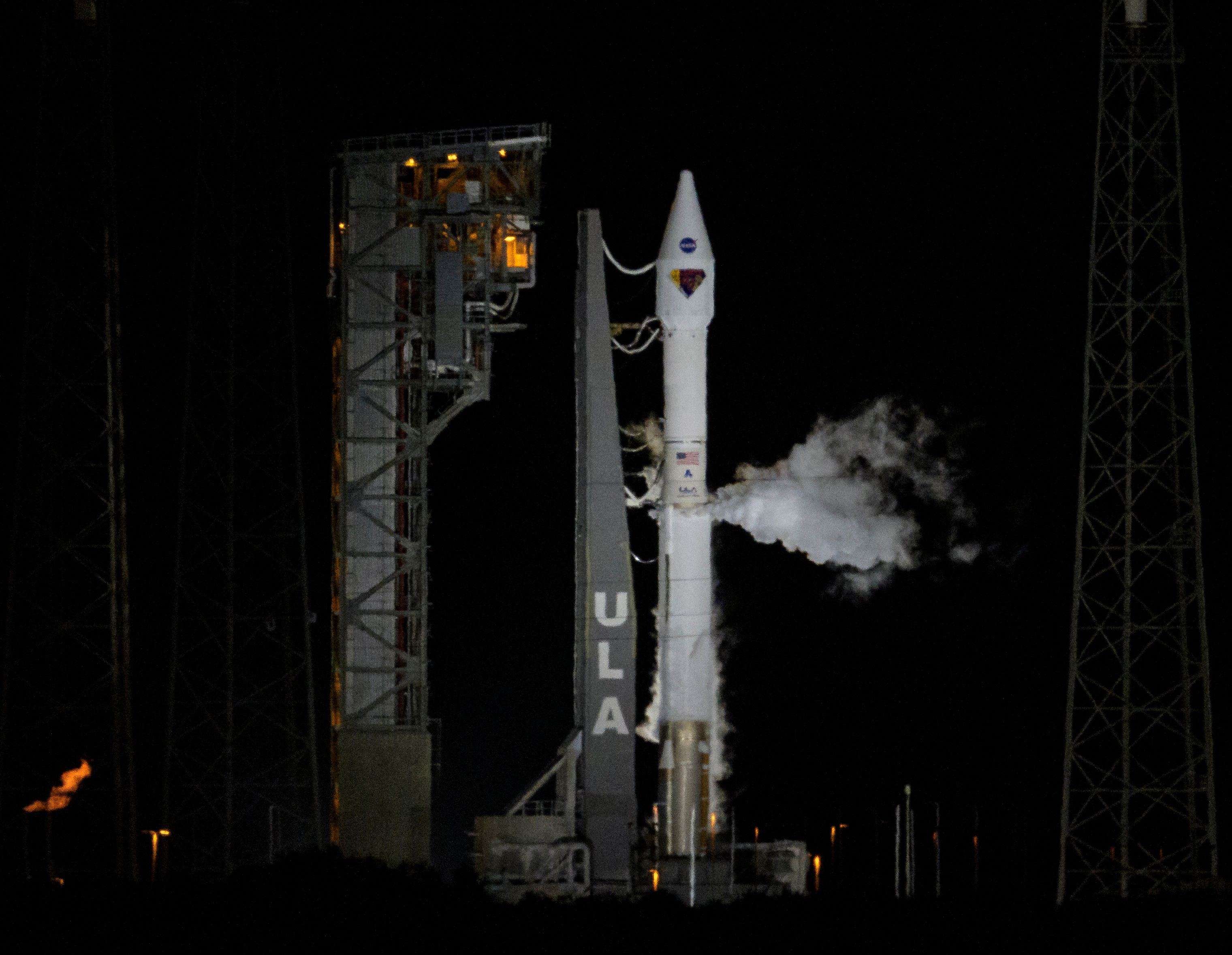
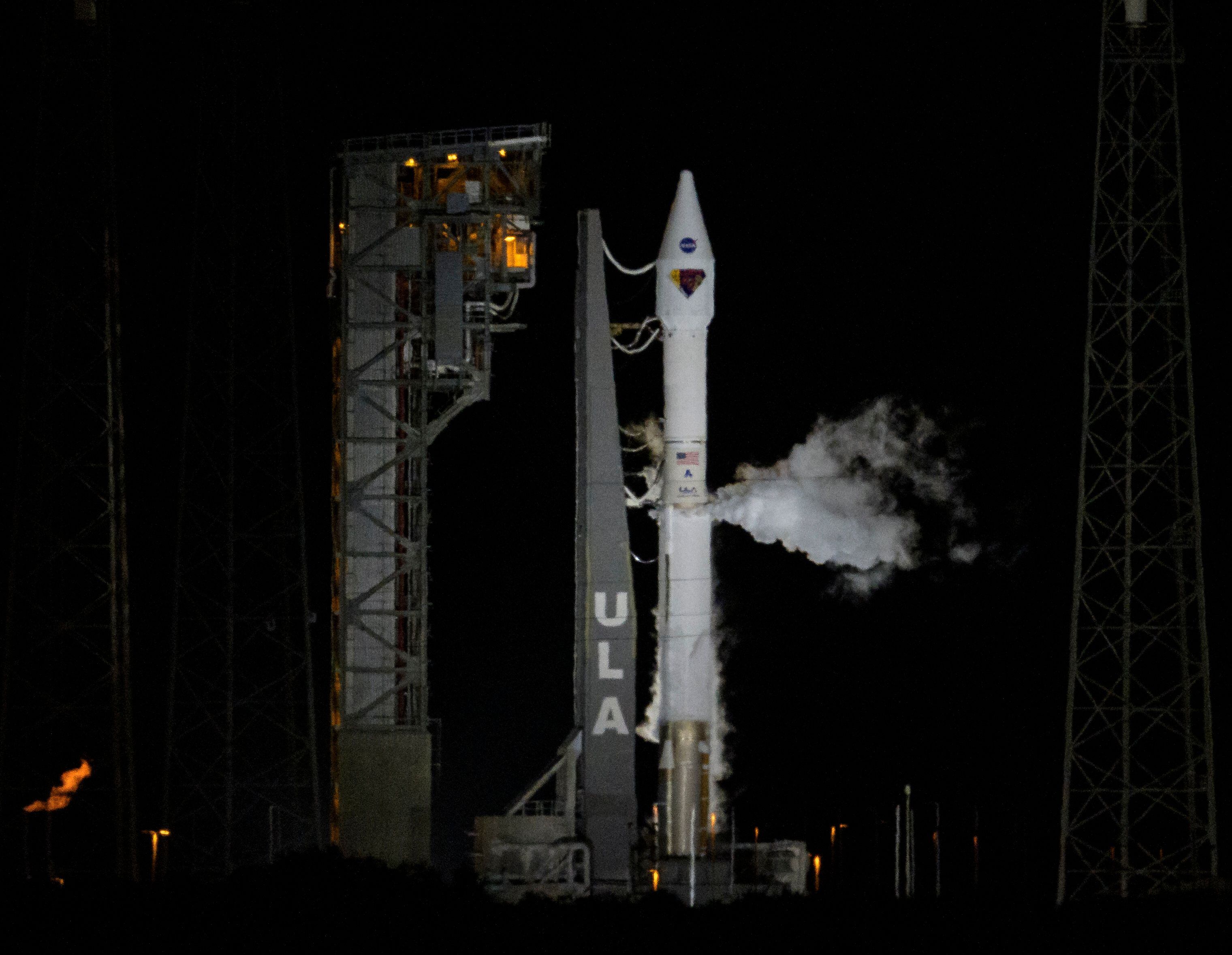
In this image released by NASA, a United Launch Alliance Atlas V rocket with the Lucy spacecraft stands ready to launch from Space Launch Complex 41, on October 16, 2021, at Cape Canaveral Space Force Station in Florida. - NASA launched Lucy on a 12-year mission to explore Jupiter's Trojan asteroids for the first time, gathering new insights into the solar system's formation. The Atlas V rocket responsible for propelling the probe lifted off at 5:34 am local time (0934 GMT) from Cape Canaveral. Named after an ancient fossil of a pre-human ancestor, Lucy will become the first solar-powered spacecraft to venture so far from the Sun, and will observe more asteroids than any probe before it -- eight in all. (Photo by Bill INGALLS / NASA / AFP) / XGTY / RESTRICTED TO EDITORIAL USE - MANDATORY CREDIT "AFP PHOTO / NASA / BILL INGALLS " - NO MARKETING - NO ADVERTISING CAMPAIGNS - DISTRIBUTED AS A SERVICE TO CLIENTS BILL INGALLS
Misión Lucy parte de la Tierra. El cohete Atlas V, encargado de propulsar la nave, partió desde Cabo Cañaveral, en una misión cuyo costo asciende a unos $981 millones. (BILL INGALLS/AFP)
Washington. Lucy, la primera misión de la NASA hacia los asteroides troyanos en la órbita de Júpiter, despegó este sábado desde Florida para un viaje de 12 años, que buscará entender mejor la formación de nuestro sistema solar.
El cohete Atlas V, encargado de propulsar la nave, partió desde Cabo Cañaveral, en una misión cuyo costo asciende a unos $981 millones. Es la primera nave de energía solar en aventurarse tan lejos del Sol, y observará más asteroides que cualquier otra nave anterior: ocho en total.
Cada uno de esos asteroides debe "ofrecer una parte de la historia de nuestro sistema solar, de nuestra historia", declaró durante una conferencia de prensa Thomas Zurbuchen, director de la división de ciencia de la agencia espacial estadounidense.
Lucy sobrevolará primero alrededor de 2025 un asteroide de la cintura principal, situada entre Marte y Júpiter, antes de visitar siete asteroides troyanos, los dos últimos en 2033. La nave se acercará a los objetivos a una distancia de entre 400 y 950 kilómetros, según su tamaño, a unos 24.000 km/h. El más ancho mide unos 95 kilómetros de diámetro.
Equipada con tres instrumentos científicos y una gran antena, los investigadores quieren estudiar la geología, composición, densidad, masa y volumen de los asteroides. Tales mediciones son imposibles de realizar con telescopios desde la Tierra.
“Lucy encarna la continua búsqueda de la NASA de adentrarse más en el cosmos en nombre de la exploración y la ciencia, para entender mejor el universo y nuestro lugar en él”, dijo Bill Nelson, jefe de la agencia espacial estadounidense, en un comunicado poco después del despegue.
Los asteroides troyanos, de los que se conocen unos 7.000, orbitan alrededor del sol en dos grupos, uno por delante y otro por detrás de Júpiter.
"Una de las cosas sorprendentes de los asteroides troyanos es que son muy diferentes entre sí, especialmente su color: algunos son grises, otros son rojos", dijo Hal Levison, investigador principal de la misión.
“Creemos que su color indica su procedencia”, añadió el científico.
Misión Lucy parte de la Tierra. Para generar energía, la nave cuenta con dos paneles solares de más de siete metros de diámetro cada uno. (BILL INGALLS/AFP)
Regresará luego de cumplir la misión
Copiado!
Lucy pasará tres veces cerca de la Tierra durante su viaje de 6.000 millones de kilómetros, para aprovechar la atracción gravitatoria para impulsarse. La nave será la primera en regresar a las proximidades del planeta azul desde los confines del sistema solar.
Para generar energía, la nave cuenta con dos paneles solares de más de siete metros de diámetro cada uno. La misión fue llamada Lucy en referencia al fósil de australopiteco descubierto en Etiopía en 1974, que ayudó a esclarecer el origen de la humanidad. La NASA pretende ahora esclarecer la evolución del sistema solar.
Los investigadores que encontraron este esqueleto estaban escuchando en ese momento la canción "Lucy in the sky with diamonds", de los Beatles. Como guiño, el logotipo oficial de la misión de la Nasa se ha dibujado en forma de diamante.
"Efectivamente, llevamos un diamante a bordo", sonrió Phil Christensen, responsable del Espectrómetro de Emisión Térmica, un instrumento científico que contiene la piedra preciosa.
El artefacto medirá la luz infrarroja, lo que permitirá conocer la temperatura en la superficie de los asteroides.
“Al comparar esas medidas de noche y de día podemos determinar si la superficie está compuesta de bloques de roca, o de polvo fino y arena”, pues la roca se enfría más lentamente que la arena de noche.