

Es un fenómeno tan nuevo en lo que se conoce del nuevo coronavirus, que hasta hace un par de semanas comenzaba a discutirse a nivel internacional: personas que habían sido infectadas experimentaban como primer (o único) síntoma la disminución o pérdida del sentido del olfato y variaciones en el sentido del gusto.
A esto se le conoce como hiponosmia (sentido del olfato reducido) o anosmia (pérdida total de la capacidad para oler) y disgeusia (alteraciones en el sentido del gusto).
“El 20% de casos (con covid-19) no cursan con síntomas respiratorios; de ellos de un 30% a un 60% sí registran pérdida o disminución del olfato o de gusto”, enfatizó Daniel Salas, ministro de Salud, en conferencia de prensa la tarde del viernes.
Salas añadió que a estas personas sí se les recomienda utilizar mascarillas, especialmente cuando están en la casa, para evitar que infecten a las personas con quienes conviven.
Por esta razón, el jueves se actualizaron los protocolos de definición de caso sospechoso. De acuerdo con esos ajustes, se le debe realizar la prueba a personas con pérdida de olfato, porque aunque se sientan bien, sí podrían transmitir la enfermedad.
A nivel internacional, un pronunciamiento de la Asociación Británica de Otorrinolaringología recalcó que personas con esas condiciones pueden representar entre el 10% y el 15% del total de pacientes con covid-19.
El fenómeno también se ve en el sentido del gusto porque está muy ligado al olfato.
¿Por qué se producen estos síntomas particulares? La respuesta es muy compleja y depende de varios factores, como los componentes de las células de la nariz, sus proteínas, la forma del virus y la forma en la que funciona el sentido del olfato.
La Nación revisó la literatura científica que ha buscado analizar esa característica de la enfermedad en particular. Como se trata de un virus muy nuevo y que recién comienza a estudiarse, no es mucho lo que se encuentra, los análisis son aún preliminares y no han sido revisados por pares.
La revisión por pares es una parte vital del método científico en donde un estudio es sometido a un grupo de expertos en la materia para que garanticen su veracidad, confiabilidad, integridad y consistencia. Por ello, estas investigaciones se consideran preliminares aún.
Nariz es parte trascendental en la enfermedad
Para entender por qué este órgano es tan importante en la acción del virus debemos repasar cómo es que ingresa el virus al cuerpo.
Una persona con el virus tose o estornuda y el virus viaja a través de pequeñas gotas que pueden transportarse hasta metro y medio, y caer en los ojos, nariz o piel de una persona sana e infectarla.
También puede suceder que una persona con el virus, estornude o tosa y que las gotas de saliva caigan sobre superficies, una persona sana puede tocarlas, y luego de eso tocarse los ojos, nariz o boca.
El virus ingresa por las mucosas de estas partes de la cara.
Ya con solo entrar por la nariz se multiplican las velocidades del virus de atacar la nariz, pero el proceso es más complejo, pudo haber ingresado por mucosas de ojos o boca y también dejarnos sin olfato.
La forma del virus, sus proteínas, y las proteínas de cierta parte de las células de nuestro cuerpo son el mapa de ingreso de este “inquilino”.
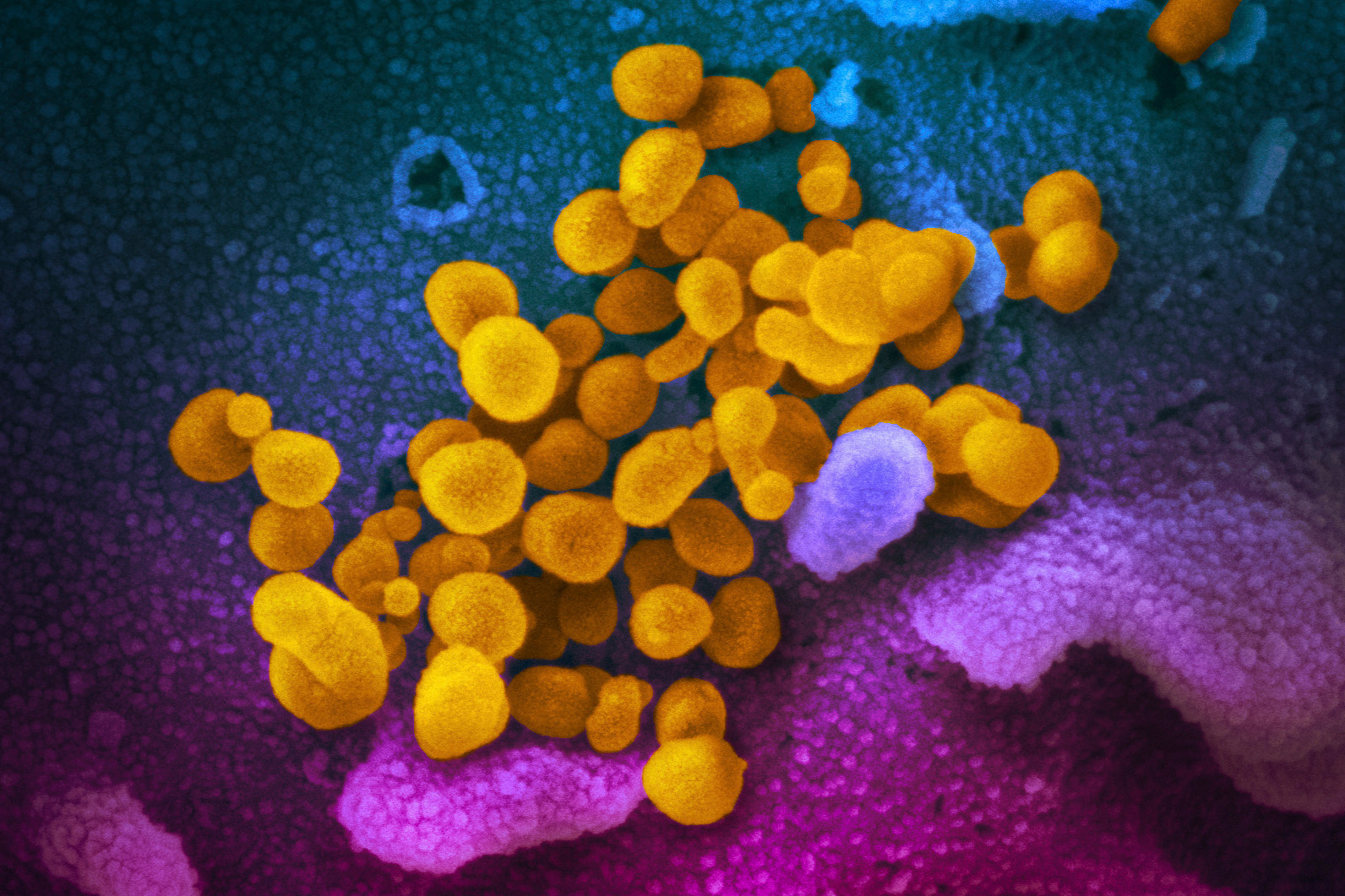
“Si vemos una imagen de este nuevo coronavirus, veremos que tienen ‘picos’ (los que le dan el nombre de coronavirus), esos son como una llave, pero esta llave necesita encontrar cuál candado (es decir, proteína celular) en nuestro cuerpo tiene una boca de cerradura que le permita abrir el candado e ingresar”, expresó el biotecnólogo y especialista en genética Osvaldo Vega.
Ese candado ya está identificado, y es el mismo candado que tuvo el virus del SARS, un coronavirus “hermano” de este, que causó una epidemia de males respiratorios en Asia en 2002 y 2003. Se trata de un receptor (proteína) llamado ACE2.
Pero eso no es suficiente. El ACE2 es la puerta de entrada a la membrana celular, pero con esto no es suficiente: solo pasaría el 10% de los virus.
Se requiere de otra proteína clave que le “corte” la corona al virus para que este pueda ingresar a la célula libremente. Esta proteína se llama TMPRSS2. En otras palabras, se necesita de dos factores: ACE2 y TMPRSS2.
Tanto el receptor como la proteína están presentes en nuestra nariz.
LEA MÁS: Costa Rica usará sangre de personas recuperadas por covid-19 para producir posible tratamiento
¿Por qué pacientes de covid-19 pierden el olfato?
Este síntoma se da entre el 30% y el 60% de las personas que no registran otros síntomas, o es la primera señal de otras personas.
FUENTE: BIORXIV, ASOCIACIÓN BRITÁNICA DE OTORRINOLARINGOLOGÍA w. s INFOGRAFÍA / LA NACIÓN.
¿Cómo ataca el virus la nariz?
Una investigación preliminar (aún no revisada por pares) desarrollada por el Departamento de Neurobiología de la Escuela de Medicina de la Universidad de Harvard (EE. UU.) y el Instituto de Ciencias Animales Waltham (Reino Unido) revisó la acción del virus en células de ratones y de seres humanos.
Para ello debemos entender primero que la nariz tiene dos sistemas o endotelios: el respiratorio y el olfativo. En este momento nos interesa el endotelio olfativo (EO).
Aquí hay varias células. Las que están directamente relacionadas con el virus se llaman neuronas sensoriales olfativas, pero también hay otras que le apoyan que se llaman sustentaculares. Las neuronas olfativas se regeneran constantemente, y, para ello hay una “reserva” de células madre que dan origen a estas neuronas.
Las neuronas sensoriales olfativas no expresan ni el ACE2 ni el TMPRSS2, pero las los otros dos tipos de células sí.
De acuerdo con el documento, entonces habría dos hipótesis.
La primera es que una vez que el virus ingresa a las células sustentaculares o las células madre las inflame y esto reduzca las posibilidades de las neuronas sensoriales olfativas de trabajar.
La segunda hipótesis más bien está relacionada con que el virus ataca las células madre que están listas para dar origen a las nuevas neuronas olfativas y las mate. Entonces cuando las neuronas que están actuando terminen su vida útil y necesiten relevo no tendrían cómo regenerarse, y por ello el olfato se perdería.
Los autores aseguran que esto solo está a nivel de hipótesis, pero esto ya da una idea de lo que podría suceder.
LEA MÁS: MEP suspende clases por tiempo indefinido a causa de covid-19
Fenómeno no es ‘rarísimo’ en otros virus respiratorios
Esta no es la primera vez que un virus de carácter respiratorio causa distorsiones en los sentidos.
Según el pronunciamiento de la Asociación Británica de Otorrinolaringología, el 40% de los casos de anosmia en adultos son consecuencia de la acción de un virus respiratorio.
No obstante, en los casos de otros virus la hiponosmia o anosmia se dan después de la infección y no como síntoma inicial, pero para los especialistas británicos esto más bien da una luz para actuar.
“Si hay adultos con anosmia pero ningún otro síntoma y se les pide aislarse y no salir del todo, es posible que podamos reducir el número de personas aparentemente asintomáticas que sí podrían contagiar a los demás”, subraya el pronunciamiento.
LEA MÁS: ¿Por qué Panamá tiene muchos más casos de coronavirus que Costa Rica?