Alemania cierra la era Angela Merkel y abre el capítulo Olaf Scholz
Merkel fue la primera mujer en dirigir el país y gobernó durante 5.860 días, nueve menos que su mentor, Helmut Kohl
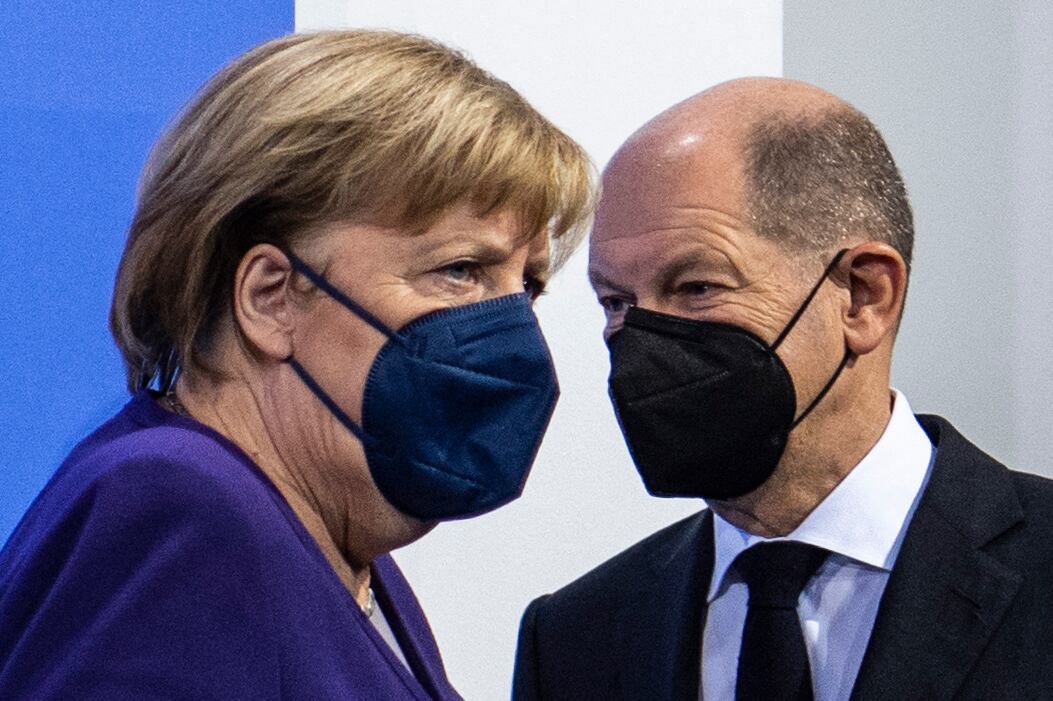
(FILES) In this file photo taken on December 02, 2021 German Chancellor Angela Merkel (L) and her designated successor Olaf Scholz arrive for a press conference following a meeting with the heads of government of Germany's federal states at the Chancellery in Berlin on December 2, 2021 on measures to be taken to curb the coronavirus (Covid-19) pandemic. - Two months after the SPD beat Angela Merkel's conservative CDU-CSU coalition in a general election, its negotiators put the finishing touches on the deal with the Social Democrats (SPD), the Greens and liberal Free Democrats (FDP) that will install outgoing Finance Minister Olaf Scholz (SPD), 63, as chancellor. (Photo by John MACDOUGALL / POOL / AFP) / TO GO WITH AFP PACKAGE JOHN MACDOUGALL
Berlín. Alemania pondrá punto final el miércoles a un capítulo importante de su historia contemporánea, los 16 años de Angela Merkel en el poder, cuando el Parlamento alemán elija al socialdemócrata Olaf Scholz como canciller.Merkel fue la primera mujer en dirigir Alemania. Gobernó durante 5.860 días, nueve menos que su mentor, Helmut Kohl. El miércoles pasará las riendas de la primera economía europea a Olaf Scholz, que fue su adversario político, aunque también su vicecanciller y ministro de Finanzas.
Después de su victoria en las legislativas de finales de setiembre, Scholz será elegido por el Bundestag para dirigir una coalición inédita de tres partidos, formada mucho antes de lo previsto, por socialdemócratas del SPD con los verdes y los liberales.
Este lunes los verdes votaron por 86% a favor de unirse a la coalición. Los socialdemócratas y los liberales ya habían validado el pacto de gobierno durante el fin de semana. Inmediatamente después, tendrá lugar el traspaso de poderes y el centro-izquierda regresará al poder en Alemania, algo que no ocurría desde el gobierno de Gerhard Schröder (canciller de 1998 al 2005).
‘Nuevo punto de salida’
Copiado!
Pese a un balance lleno de luces y sombras, marcado por momentos memorables como la acogida de migrantes en el 2015 y su aptitud para gestionar las crisis, aunque también por la falta de ambición en la batalla climática y en la modernización de Alemania, Merkel sigue siendo una de las personalidades más apreciadas por los alemanes después de sus cuatro mandatos.
“Angela Merkel fue una canciller que tuvo éxito”, elogió Olaf Scholz, homenajeando a una dirigente que “se mantuvo fiel a ella misma durante 16 años marcados por numerosos cambios”. El nuevo canciller, que ya se presenta como heredero de Merkel, quiere inyectar un nuevo aliento.
“Quiero que estos años signifiquen un nuevo punto de partida”, afirmó Scholz a la publicación alemana Die Zeit, manifestando que desea poner en marcha “la mayor modernización industrial” de la historia reciente “capaz de parar el cambio climático creado por el hombre”.
La canciller alemana Angela Merkel y su sucesor designado Olaf Scholz llegan para una conferencia de prensa luego de una reunión con los jefes de gobierno de los estados federales de Alemania en la Cancillería en Berlín, Alemania, el 2 de diciembre. (JOHN MACDOUGALL/AFP)
Su gobierno promete también una política muy proeuropea, con el objetivo de “incrementar la soberanía estratégica de la Unión Europea” y mejor defender “los intereses europeos comunes”. La futura responsable de las Relaciones Exteriores, la ecologista Annalena Baerbock, pretende a su vez adoptar una línea más dura frente a regímenes autoritarios como China y Rusia.
El futuro gobierno no tendrá tiempo que perder. Su primer gran desafío será gestionar la nueva ola de coronavirus que golpea al país. Para ello, nombrará en el ministerio de Salud al socialdemócrata Karl Lauterbach, uno de los expertos científicos más respetados desde la irrupción de la pandemia y partidario de restricciones más duras.
Scholz, experimentado aunque poco carismático, quiere que se vote rápidamente la vacunación obligatoria, que podría entrar en vigor en febrero o marzo. Esta medida radical, ya aprobada en Austria, tiene el visto bueno de dos tercios de los alemanes pero puede provocar el rechazo de una parte de la población, sobre todo en la ex-RDA.
El nuevo gobierno alemán tendrá por primera vez igual número de hombres que de mujeres y estas ocuparán puestos clave, anunció Scholz este lunes. “Estoy particularmente orgulloso de que las mujeres estén a partir de ahora dirigiendo ministerios que tradicionalmente” no han sido ocupados por ellas, agregó.
Además de Baerbock en Relaciones Exteriores, habrá mujeres dirigiendo los ministerios de Interior, Defensa, Desarrollo, Construcción, Medioambiente, Familia y Educación. El nuevo canciller también va a tener que hacer frente a una situación económica poco favorable, hundida por un crecimiento menor que el previsto y por el retorno de la inflación.
Scholz y su ejecutivo, compuesto esencialmente por personas sin experiencia de gobierno, tiene una lista larga de tareas pendientes que no siempre despiertan el entusiasmo de la población. El alza del salario mínimo, poner fin al carbón o el desarrollo de las energías renovables son aplaudidas, según un sondeo realizado el viernes por la cadena pública ARD.
Sin embargo, otras promesas de la coalición como la legalización del cannabis, la compra de drones armados o el derecho de votar a los 16 años generan un rechazo mayor.
Sobre el clima, donde el nuevo gobierno se jacta de tener “el programa más ambicioso que un gobierno alemán haya presentado”, el objetivo de limitar el calentamiento a 1,5 ºC parece en este momento algo inalcanzable, según un estudio realizado por la Alianza climática alemana.