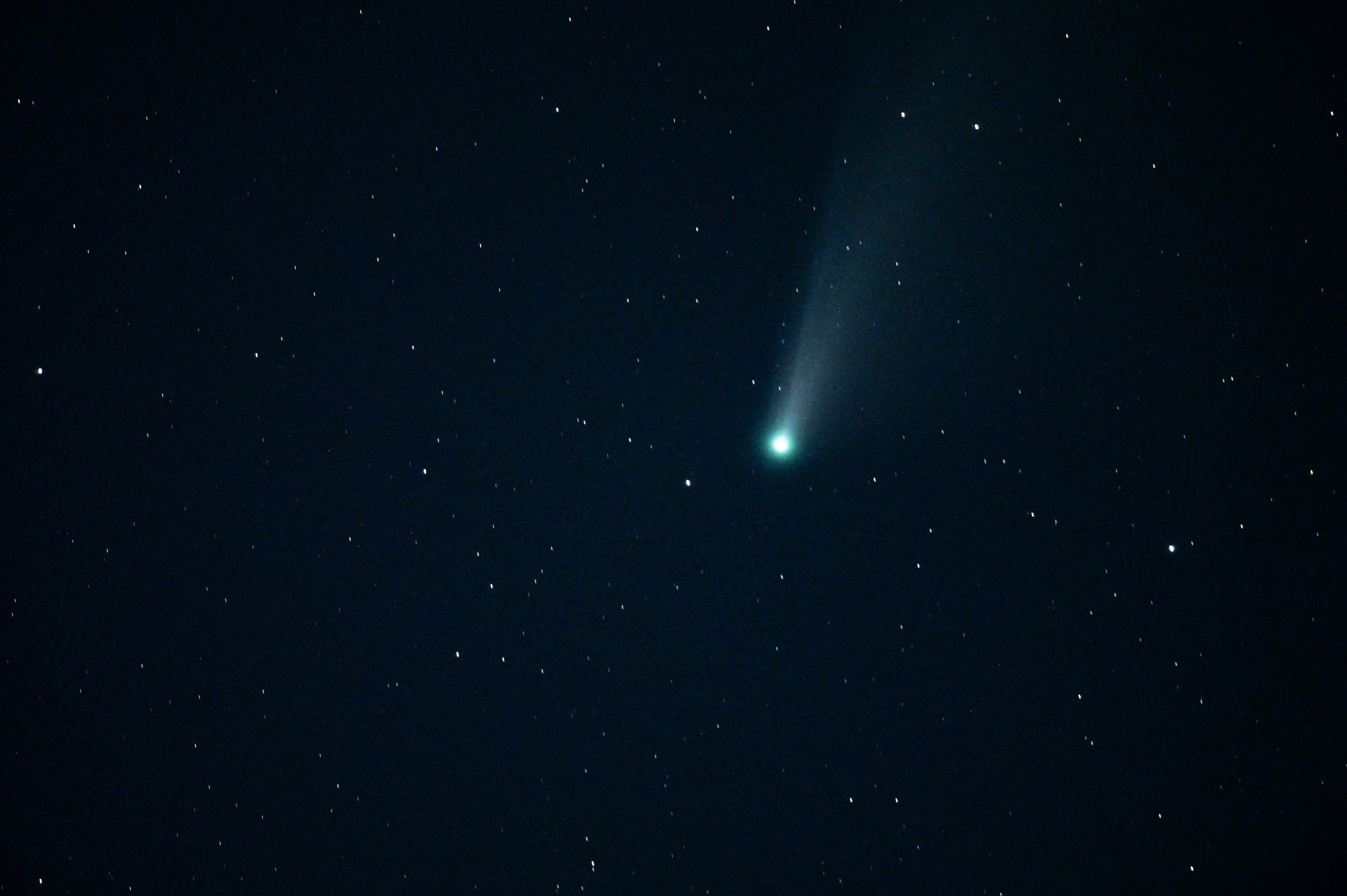


Un fenómeno poco común captó la atención de la comunidad científica: el cometa 3I/ATLAS, de origen interestelar, presentó una estructura completamente anómala en su aproximación al Sol.
Un telescopio ubicado en las Islas Canarias detectó una cola de gas y polvo que se extendía desde su núcleo, de unos 6 kilómetros de longitud, pero dirigida hacia el Sol, no en dirección opuesta como lo dicta la física cometaria.
Este comportamiento generó inquietud entre los investigadores, ya que, por lo general, las colas de los cometas se orientan en sentido opuesto al Sol, debido a la radiación y el viento solar que empujan las partículas del núcleo.
El astrofísico Avi Loeb, docente de la Universidad de Harvard, calificó el fenómeno como una anomalía significativa. Según su análisis, el objeto presentó una anticola, algo que contradice el funcionamiento conocido de los cometas. El científico cuestionó por qué otros especialistas continúan afirmando que se trata de un cometa convencional pese a esta evidencia.
Otro instrumento clave en estas observaciones, el Telescopio Espacial Hubble, registró un resplandor alargado apuntando hacia el Sol, con una forma diez veces más extensa que su ancho. Loeb señaló que esta estructura coincide con la geometría de un chorro dirigido al Sol, algo sin precedentes en la ciencia astronómica.
El especialista comparó la sorpresa de este hallazgo con una escena inusual: observar a un supuesto gato callejero y descubrir que le crece una cola en la frente.
De acuerdo con su análisis, algunos expertos celebraron estas imágenes como pruebas de un comportamiento natural del cometa. Sin embargo, omitieron un detalle relevante: el flujo de partículas se dirige hacia el Sol, una dirección contraria a lo previsto por los modelos físicos actuales.

Los registros, tanto desde la Tierra como desde el espacio, evidencian una emisión de partículas en una trayectoria que no debería ocurrir. Para Loeb, esto podría deberse a una expulsión de materiales más pesados, poco sensibles a la radiación solar, o a un mecanismo de expulsión desconocido.
Desde su detección en julio, Loeb advirtió que 3I/ATLAS podría no ser completamente natural. Estimó que existe entre un 30% y un 40% de probabilidad de que el objeto tenga un origen artificial, y se refirió al concepto de un “Caballo de Troya tecnológico”, es decir, un dispositivo camuflado como cometa.
Según explicó, un cometa verdadero debería fragmentarse al acercarse al Sol, debido a que la radiación solar sublima los hielos en su interior. Esta sublimación provoca una liberación de gases que arrastra polvo y rocas, lo cual genera presión interna que puede desintegrar el núcleo.
No obstante, Loeb planteó una posibilidad adicional: que el objeto no se destruya, sino que libere minisondas o funciones como una nave nodriza.
Durante los meses de noviembre y diciembre, observatorios de todo el mundo continuarán su seguimiento del cometa para determinar si muestra una desintegración convencional o si sorprende con características tecnológicas.
Por ahora, la NASA mantiene su postura: clasifica al 3I/ATLAS como un cometa natural.
El punto de mayor acercamiento al Sol ocurrirá el 29 de octubre. Este evento podría ofrecer respuestas definitivas sobre la naturaleza real de este enigmático objeto interestelar.
LEA MÁS: Tres hallazgos de 3I/ATLAS, el cometa interestelar que desconcierta a los científicos
*La creación de este contenido contó con la asistencia de inteligencia artificial. La fuente de esta información es de un medio del Grupo de Diarios América (GDA) y revisada por un editor para asegurar su precisión. El contenido no se generó automáticamente.