Alemania también sufre por el coctel tóxico de noticias falsas y xenofobia
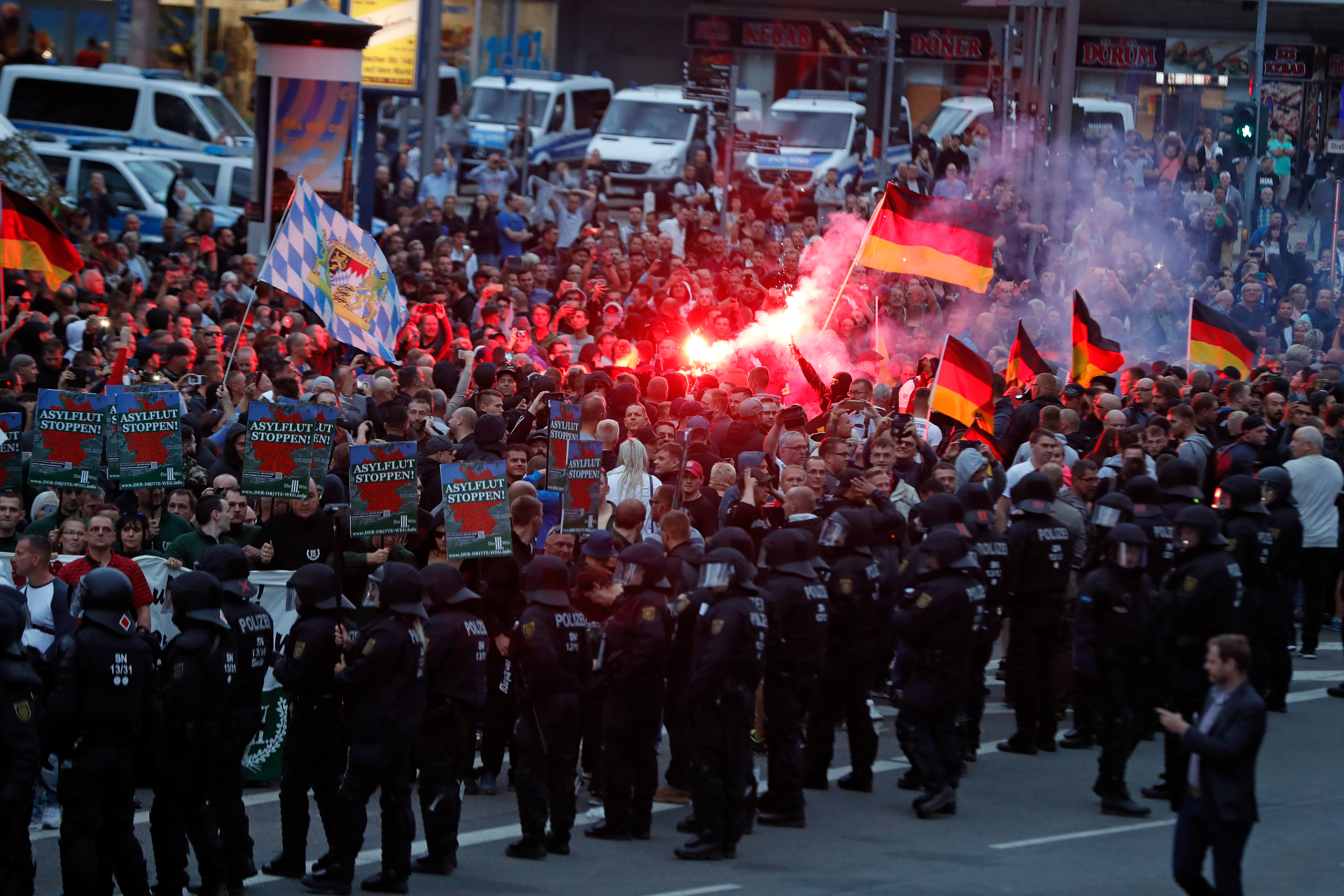
Right wing demonstrators light flares on August 27, 2018 in Chemnitz, eastern Germany, following the death of a 35-year-old German national who died in hospital after a "dispute between several people of different nationalities", according to the police.
The far-right street movement PEGIDA called for a second day of protests in Chemnitz in ex-communist eastern Germany after the alleged fatal stabbing of a German man by a foreigner. / AFP PHOTO / Odd ANDERSEN ODD ANDERSEN
La sutil línea entre el odio en Internet y la vida real, así se intitula la más reciente publicación del blog Posverdades de la periodista Hazel Feigenblatt. Cuando la leí me quedó resonando en la cabeza una pregunta: ¿Todavía existe línea, aunque sea sutil?
De entrada diría que cuando el odio es alimentando por contenidos falsos esa división entre Internet y la vida real es cada vez más ficticia. Las agresiones xenofóbicas que se presentaron en San José contra los nicaragüenses y las protestas neonazis de los últimos días en Alemania, lo dejan claro.
En Chemnitz, ciudad alemana del estado de Sajonia, el movimiento contra los migrantes se generó tras el asesinato de un ciudadano alemán el domingo y la difusión de una serie de contenidos falsos en las redes sociales.
Por el asesinato, que se produjo en un festival callejero, se detuvo a un sirio y a un iraquí. Sin embargo, en redes sociales se convocó a "cazar extranjeros” y a demostrar “a los inmigrantes quién manda” con informaciones falsas como que había un segundo muerto, que varias mujeres fueron violadas por los sospechosos y que al hombre lo mataron cuando trató de ayudar a una joven que estaba siendo violada.
Unas 800 personas acudieron al llamado de las redes y dejaron escenas de persecución contra extranjeros, varios heridos y saludos hitlerianos. La policía investiga ataques contra afganos, sirios y búlgaros.
“Está claro que la movilización se basa en informaciones falsas y teorías de la conspiración, por eso llamo a todas las personas que salieron a la calle a hacernos todas las preguntas que quieran sobre los hechos, yo mismo visitaré Chemnitz el día 30 y me pondré a disposición de los ciudadanos, pero debe quedar muy claro que nada justifica lanzarse a la calle a atacar a nadie”, dijo a los medios Michael Kretschmer, ministro presidente de Sajonia, sobre lo ocurrido.
El movimiento tiene lugar en una de las zonas con más influencia de la extrema derecha en Alemania. Sajonia es la principal cuna de la agrupación Alternativa por Alemania (AfD), partido euroescéptico y con tendencias racistas y xenofóbicas. En las elecciones generales del año pasado AfD logró en Sajonia un 22 % de los votos, casi diez puntos más que lo que obtuvo a nivel nacional (12,6 %).
Además, en 2014 en Dresde, capital de Sajonia, se originó el movimiento Patriotas Europeos contra la Islamización de Occidente (Pegida), organización que se opone a la "islamización” de Europa y que protagonizó multitudinarias marchas contra los migrantes en el pasado.
La canciller alemana Ángela Merkel condenó el movimiento, como lo ha hecho anteriormente con iniciativas de corte xenofóbico.
“Tenemos grabaciones de video que prueban que hubo persecuciones, que hubo motines, que hubo odio en las calles y eso no tiene nada que ver con nuestro Estado constitucional", dijo Merkel.
Por su parte, la diputada europea de AfD Beatrix von Storch justificó la iniciativa, su partido es el único con representación popular que no ha condenado lo ocurrido.
“Aquí lo que pasa es que mucha gente está muy enfadada y eso hay que tenerlo en cuenta. Lo que hemos visto es que el Estado ha perdido el control de las calles porque ha perdido el apoyo de los ciudadanos”, comentó Von Storch.