Una ola de leyes a favor y en contra del aborto inunda EE. UU.
Un total de 1.844 medidas relacionadas con la anticoncepción y el aborto se introdujeron en 46 estados entre el 1.° de enero y el 15 de marzo, señaló el Instituto de Investigación Guttmacher
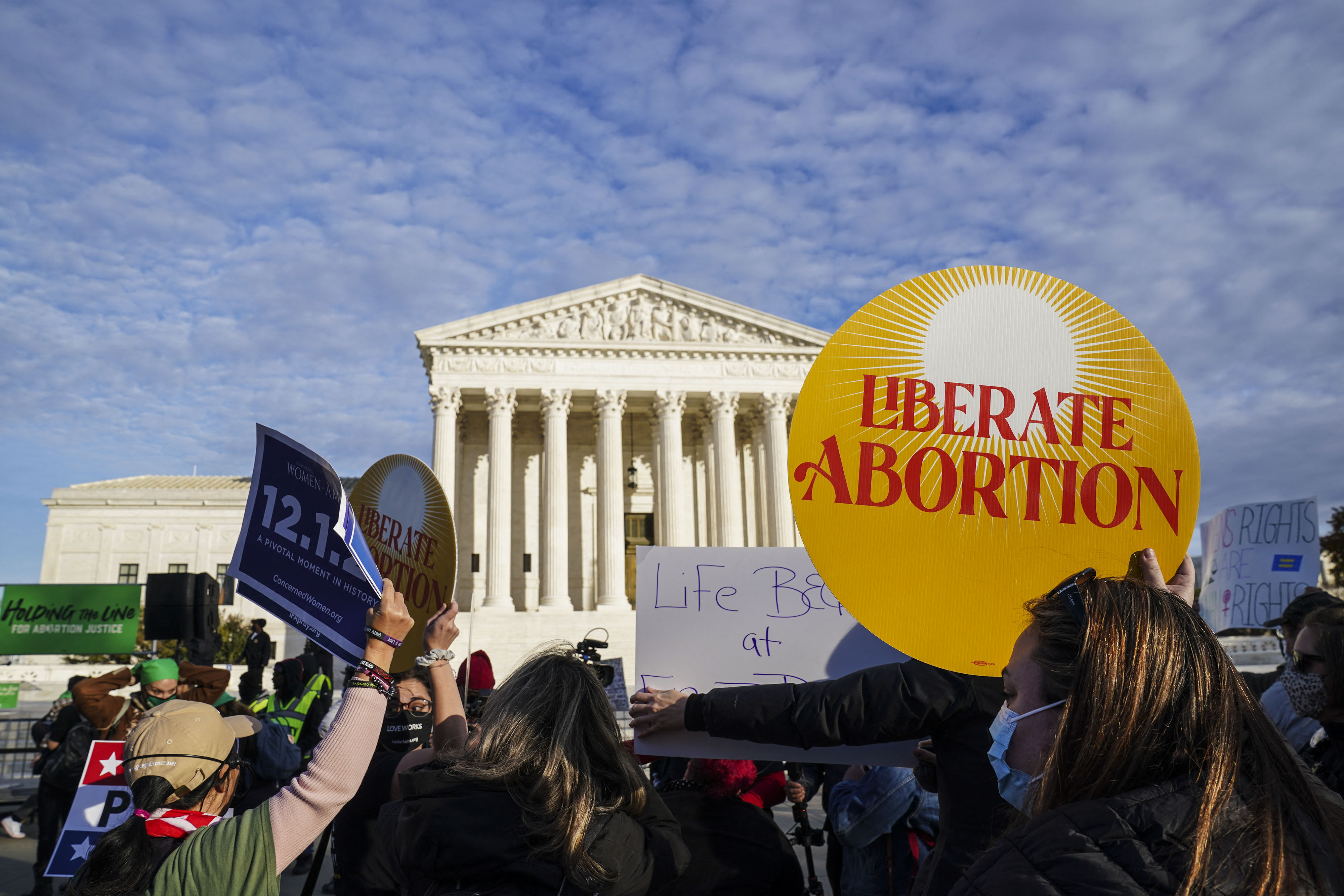
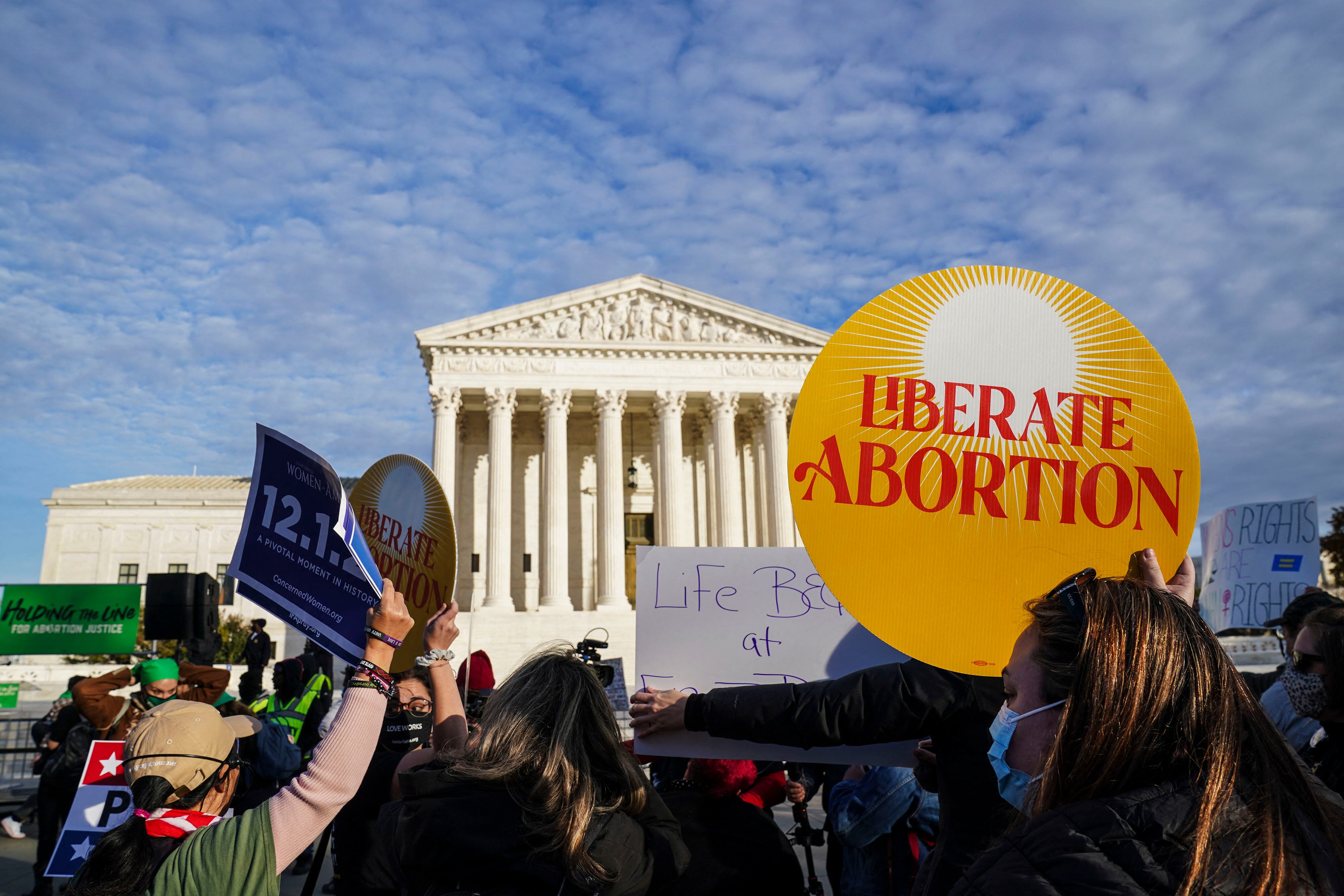
(FILES) In this file photo taken on December 1, 2021: participants hold signs during the Women's March "Hold The Line For Abortion Justice" at the US Supreme Court in Washington, DC. - The US Supreme Court on December 10, 2021, allowed abortion providers to pursue legal challenges to a near-total ban on abortions in Texas but let the restrictive law remain in effect for now. A majority of the justices on the conservative-leaning court agreed that lawsuits filed by abortion providers against the Texas law should proceed in federal court. (Photo by Leigh Vogel / GETTY IMAGES NORTH AMERICA / AFP) LEIGH VOGEL
Redacción. Los proyectos de ley sobre el aborto, tanto favorables como contrarios a ese derecho, están inundando los parlamentos de los estados de Estados Unidos en previsión de una decisión de la Corte Suprema que, probablemente, altere el marco legal vigente en el país desde hace casi 50 años.
Un total de 1.844 medidas relacionadas con la anticoncepción y el aborto se introdujeron en 46 estados entre el 1.° de enero y el 15 de marzo, señaló el Instituto de Investigación Guttmacher, que hace campaña por el derecho de las mujeres a controlar sus cuerpos.
En el sur y centro del país, las regiones más conservadoras y con mayor peso de la religión, los proyectos son por lo general restrictivos, mientras que en los estados costeros, más progresistas, se apunta a preservar el derecho al aborto.
Este frenesí comenzó luego que la Corte Suprema, reestructurada bajo la gestión presidencial de Donald Trump con el nombramiento de jueces conservadores, insinuó que podría revertir la decisión “Roe v. Wade” de 1973, la cual garantiza el derecho de las mujeres a abortar durante los dos primeros trimestres del embarazo.
En esta foto, tomada el 1.° de diciembre del 2021, las participantes sostienen carteles durante la Marcha de Mujeres 'Hold The Line For Abortion Justice' en la Corte Suprema de EE. UU. (LEIGH VOGEL/AFP)
En setiembre, el máximo tribunal –seis de cuyos nueve integrantes actuales son conservadores– se negó a bloquear una ley del estado de Texas (sur) que prohíbe los abortos después de las seis semanas de embarazo.
“La clase política tomó esto como una luz verde para avanzar con sus propias leyes inconstitucionales y desde entonces ha diezmado el acceso al aborto, estado por estado, región por región”, dijo Alexis McGill Johnson, presidente de la organización Planned Parenthood, que opera numerosas clínicas de aborto a lo largo del país.
En diciembre, la Corte envió una nueva señal a la derecha religiosa: durante el examen de una ley de Misisipi (sur), que reducía el plazo legal para el aborto a 15 semanas, algunos jueces plantearon abiertamente la posibilidad de revocar la sentencia “Roe v. Wade”.
“Esperamos que la Corte Suprema reconozca pronto que cada estado tiene derecho a aprobar leyes para proteger a los niños por nacer y a sus madres”, comentó entonces Sue Liebel, integrante de la asociación antiaborto SBA List.
Tomando nota de esta probable marcha atrás, los legisladores locales antiabortistas han presentado 519 medidas restrictivas desde principios de año, según el Instituto Guttmacher. Algunas de ellas son particularmente radicales.
En Misuri (centro), un legislador propuso prohibir la interrupción de los embarazos ectópicos, aunque no sean viables y pongan en peligro la vida de la paciente. Uno de sus colegas sugirió evitar que las mujeres de este estado aborten en otros lugares. Sus proyectos; sin embargo, se encuentran solo en una etapa preliminar.
Por otro lado, el Instituto Guttmacher señala que los proyectos de ley centradas en el punto de los plazos legales para poder autorizar una interrupción de embarazo (Florida, Arizona, West Virginia) o los abortos médicos (Dakota del Sur, Wyoming, Kentucky) avanzan rápidamente.
Varios estados han copiado a su vez la ley de Texas, que incita a los ciudadanos a denunciar a médicos o clínicas que realizan abortos más allá de las seis semanas de gestación a cambio de miles de dólares de “compensación”. Idaho aprobó el martes pasado una ley de este estilo, que solo espera la firma del gobernador. Oklahoma, Misuri y Wisconsin tienen a estudio textos similares.
Referendo
Copiado!
Dos días después de la adopción de la ley de Idaho, el gobernador demócrata del estado vecino de Washington firmó un texto que se parece mucho a una respuesta. En él se consigna que los médicos, enfermeras o cualquier personal médico que practique abortos nunca podrán ser procesados en ese estado.
Aunque ningún texto local los amenazara, “esta ley es necesaria en tiempos como los actuales, peligrosos para la libertad de elección”, justificó el gobernador Jay Inslee.