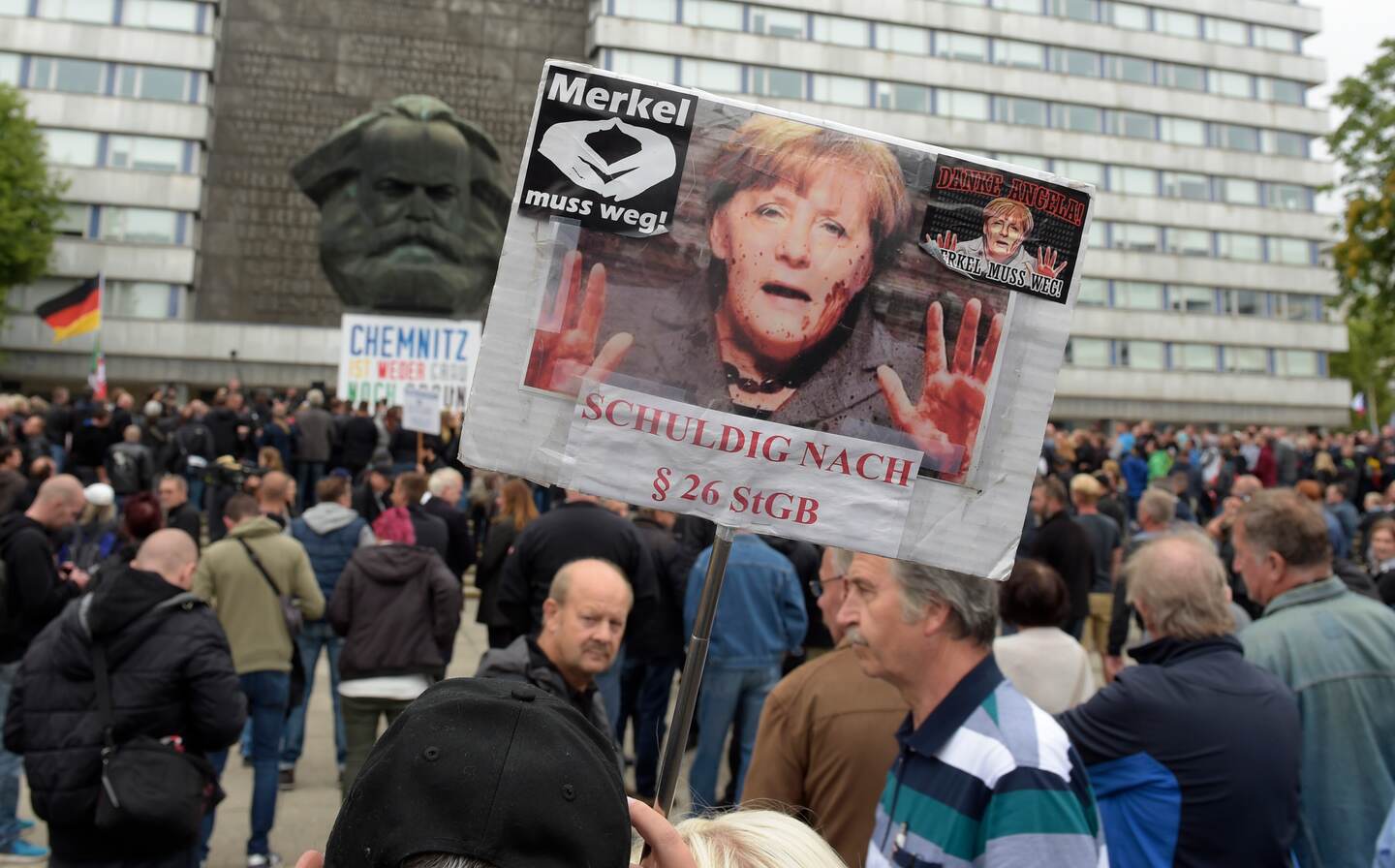

Berlín. Hace tres años, el 4 de setiembre del 2015, Ángela Merkel fue aplaudida por haber abierto las fronteras de Alemania a decenas de miles de refugiados que llegaron de Oriente Medio a través de los Balcanes.
Hoy, las imágenes de ultraderechistas xenófobos que desfilan por las calles de Chemnitz haciendo el saludo hitleriano destacan en las portadas de los diarios.
Un contraste que ilustra el enorme cambio que experimenta toda Europa, más allá de Alemania, con la “crisis de los refugiados”, que desde el 2015 llevó a más de tres millones de ellos a encontrar un destino en la Unión Europea.
Entre todas las crisis que sufrió Europa, desde la del euro hasta Ucrania, “esta es la más grave” y “no está resuelta”, opinaba el politólogo búlgaro Iván Krastev, en una reciente entrevista para el diario Die Welt.
"Provoca un conflicto enorme entre Europa del Oeste y del Este" y "hay un giro conservador en Europa" con tendencias hacia el repliegue identitario en una atmósfera de "pánico demográfico", explicó.
Reino Unido se dispone a abandonar la Unión Europea (UE) como consecuencia de un referendo muy marcado por el tema migratorio. Italia ha elegido al primer gobierno populista de Europa Occidental. En todos los países, los movimientos antimigrantes van viento en popa, y la posición de Merkel parece muy frágil.
Y el presidente estadounidense, Donald Trump, echa leña al fuego. ¡Fue un gran error en toda Europa dejar entrar a millones de personas que cambiaron tan fuerte y violentamente su cultura!", tuiteó en junio, acusando a Alemania en primer lugar.
Merkel, el blanco
El asunto migratorio “ha convertido a Ángela Merkel en un monstruo para una parte de los alemanes y casi le costó el puesto”, analiza el periódico Süddeutsche Zeitung.
La canciller afirma que no lamenta la decisión que tomó el 4 de setiembre del 2015 por motivos humanitarios, ya que muchos solicitantes de asilo de entonces huían de la guerra en Siria.

"Vamos a lograrlo", prometió entonces a los alemanes. Una frase de la que se ha distanciado desde entonces.
Como en otros muchos países, la canciller ha endurecido claramente su política migratoria en los últimos tres años. Tras la llegada de un millón de solicitantes de asilo en la primera economía europea en el 2015 y 2016, el número será probablemente inferior a los 200.000 este año.
Una tendencia que se puede ver en toda la UE, donde el año pasado el número total de solicitantes de asilo bajó hasta unos 650.000.
A pesar de todo, la integración de los demandantes de asilo a través del trabajo ha dado también casos exitosos en Alemania, gracias a una economía próspera.
Pero una parte de la opinión pública acusa a los solicitantes de asilo de ser responsables de un alza de la inseguridad. Desde el asesinato hace una semana de un alemán de 35 años en Chemnitz, cuyo principal sospechoso es un demandante de asilo iraquí, la extrema derecha alemana se moviliza en las calles contra los extranjeros.
Desafío para Europa
“La cuestión de la inmigración sigue siendo el mayor reto” de Europa, considera Stefen Lehne, profesor de la Fundación Carnegie Europe.
"Aunque disminuya el número de llegadas, la histeria crece en un contexto en que los movimientos populistas y también un creciente número de gobiernos más tradicionales se alimentan de sentimientos antimigrantes". Una tendencia que quedará probablemente de manifiesto en las urnas durante las elecciones europeas del próximo año.
El historiador británico Niall Ferguson se muestra aún más pesimista. “Lejos de llevar a una unión, la crisis migratoria de Europa lleva a una escisión (rompimiento)”, ya que cada Estado va por su cuenta, asegura en un análisis.
“Creo que, cada vez más, los historiadores verán el tema migratorio como el disolvente fatal de la Unión Europea” y el “brexit como un primer síntoma”.
Una opinión que no comparte Stefan Lehne. Desde su punto de vista, el debate actual “podría actuar como un catalizador hacia un cambio positivo” al permitir “aclarar” la situación y preparar el futuro.