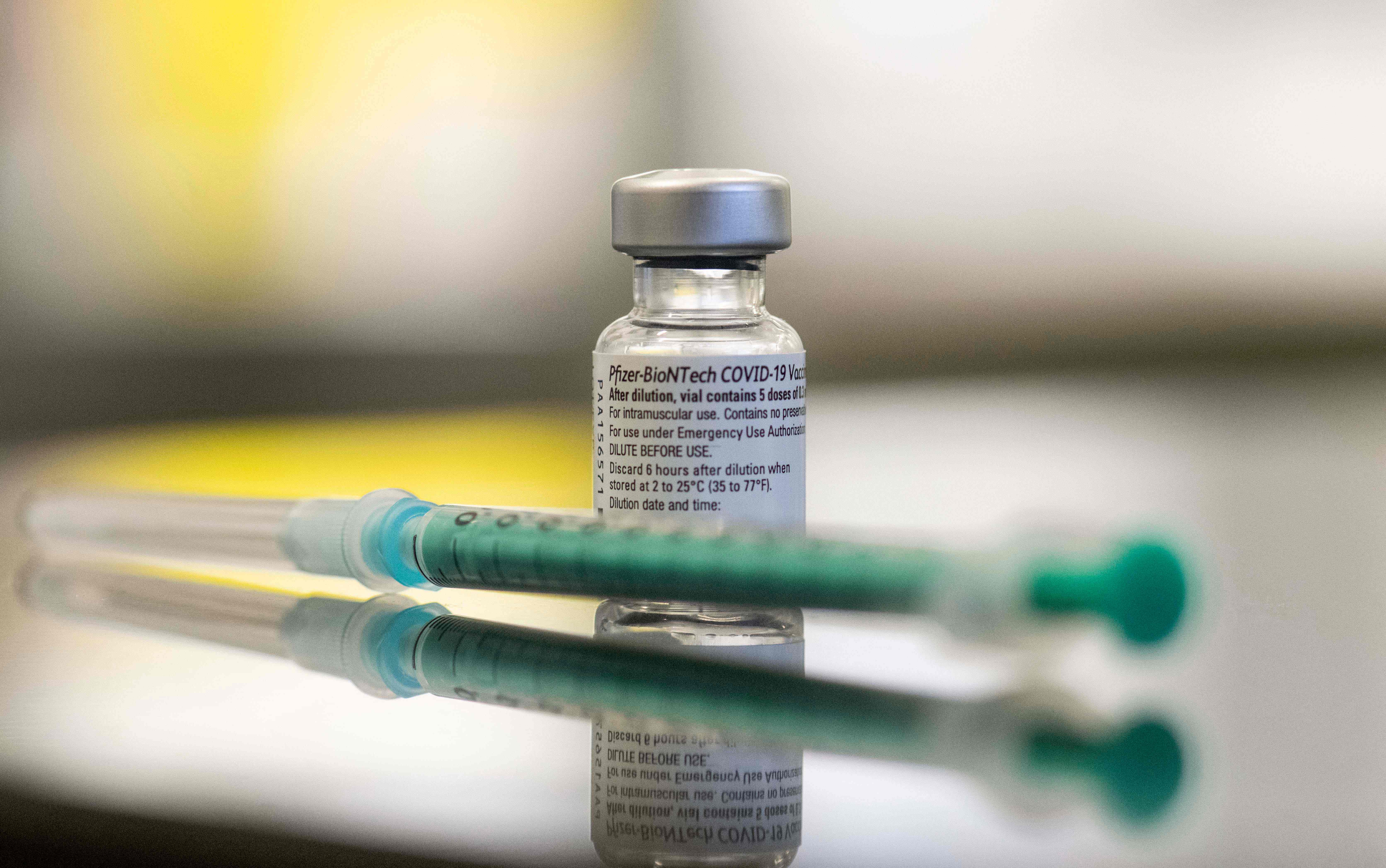


Los ensayos clínicos mostraron que la vacuna contra covid-19 de las empresas Pfizer y BioNTech funciona en población adulta, adulta mayor y adolescente.
¿Pero qué sucede con las mujeres embarazadas? ¿Qué pasa con los niños y bebés? ¿Qué ocurre con las personas con problemas inmunitarios o que están inmunosuprimidas y su sistema de defensas no funciona?
Esas preguntas son las que buscan responder nuevas pruebas clínicas iniciadas con las diferentes poblaciones.
La primera investigación biomédica de este tipo ya comenzó con las embarazadas. Se reclutaron 4.000 mujeres mayores de 18 años con entre 14 y 24 semanas de gestación.
Las participantes fueron divididas en dos grupos: a la mitad se le inyectará el fármaco y, a la otra mitad, un placebo. Quienes reciban la vacuna lo harán con la misma dosis que los otros grupos a los que ya se les inoculó anteriormente. Se les aplicarán dos dosis con 21 días de diferencia.
De acuerdo con el perfil en clinicaltrials.gov, sitio del Gobierno estadounidense que registra toda investigación biomédica, se espera terminar con estas pruebas en agosto próximo.
La Nación conversó con Gabriela Dávila, directora de investigación clínica para Europa, Canadá y Latinoamérica de Pfizer, acerca de estos estudios y su importancia.
LEA MÁS: Covid-19 en Costa Rica: vacunarse en Estados Unidos no es tan fácil como parece
Embarazadas y bebés
Hasta el momento, no hay datos científicos que digan si una mujer embarazada puede recibir este fármaco. Por ello, se lleva a cabo el análisis.
“Buscamos proteger, pero tener la certeza de esa protección”, resume la especialista.
Dávila narró que ya hubo un ejemplo de una enfermera mexicana a quien vacunaron a las 34 semanas de gestación y su bebé nació con anticuerpos.
La investigación se centrará primero en ver la protección a las madres gestantes y luego, ver hasta qué medida los anticuerpos llegan a su bebé.
Ese estudio ya se está en proceso.
Igualmente, se pretende tener un estudio de los bebés que nacieron antes de que la vacuna estuviera disponible y hoy tienen siete u ocho meses, se les pueda vacunar y ver cómo desarrollan defensas.
Sin embargo, este estudio demoraría más tiempo porque deben estudiarse el nivel de dosis adecuada, dado que por tamaño, peso y desarrollo, no sería la misma que para un adulto.
“No es lo mismo lo que le das a un bebé de uno o dos kilos que a un adulto de 60 o 70 kilos”, apuntó la experta.
LEA MÁS: Especial: La covid-19 en Costa Rica
Niños de diferentes edades
LEA MÁS: Menores de 60 años vacunados con AstraZeneca podrán recibir 2.ª dosis de Pfizer en España
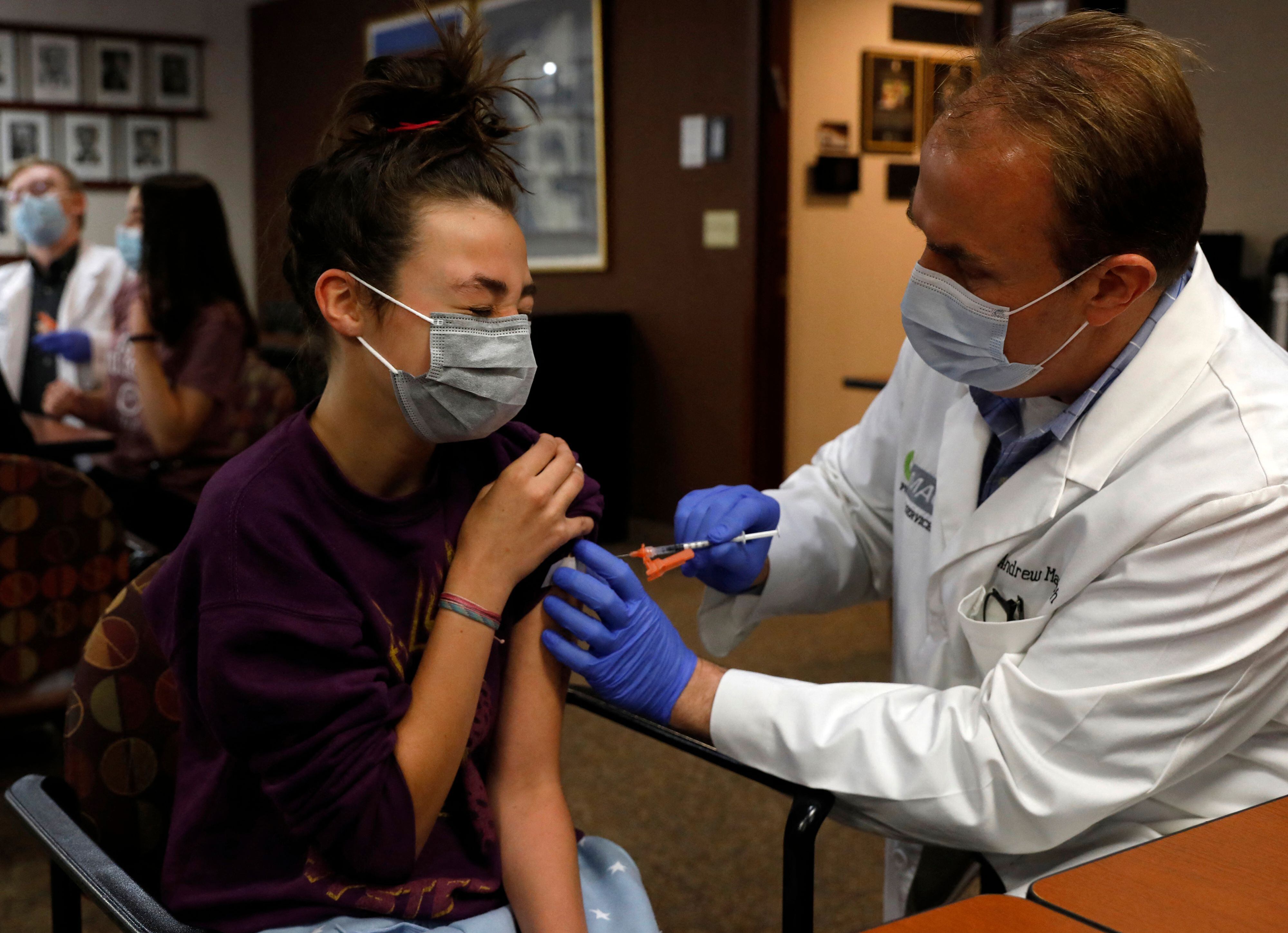
De acuerdo con un comunicado emitido por Pfizer, se están planeando dos protocolos de estudios: uno con niños de cinco a 11 años y otro con menores de cinco años.
El primero ya está reclutando participantes, el segundo comenzará “más adelante en 2021″.
En total, se reclutarán 4.644 menores, divididos por edades según ensayos, explicó un comunicado de la Universidad de Rutgers, en Estados Unidos (EE. UU.), una de las encargadas en realizar los análisis.
Habrá grupos según edad, de los 5 a los 11 años, de los 2 a los 5, y de los seis meses a los dos años.
Estos deberán enfocarse en ver qué dosis y con qué espacio de tiempo funcionan mejor en estas poblaciones.
Para Dávila, la dosis no es la única cosa que debe tomarse en cuenta. Las dinámicas sociales son importantes.
Por ejemplo, los menores muy rara vez tienen síntomas graves, pero sí pueden ser transmisores de la enfermedad.
“Los niños no viven solos. Tienen papás, abuelos, personas que pueden tener riesgo en sus familias. Protegerlos a ellos es proteger a la familia también”, recalcó Dávila.
La especialista aseguró que trabajan “a la velocidad de la luz” para tener los primeros resultados este año.
“Conforme se van incluyendo los sujetos, eso se va subiendo a nuestra red de información en tiempo real, lo que permite analizar más rápido”, señaló Dávila.
LEA MÁS: Argentina registra 35.000 casos y 745 muertes por covid-19 en un día
Problemas de defensas
¿Qué sucede con los pacientes que tienen su sistema inmunitario por una enfermedad? Las personas con cáncer, VIH, alguna hepatitis o personas trasplantadas estarían en este grupo.
Muchos de los fármacos utilizados en estas personas tienen una eficacia menor, porque el organismo no logra construir una respuesta completa.
“Hoy te podría decir que sí, que sí funciona, pero también necesitamos la evidencia científica, por eso estamos sobre ello”, manifestó la especialista.
LEA MÁS: Once países de América Latina y el Caribe aventajan a Costa Rica en porcentaje de vacunados
¿Cuánto dura la inmunidad?
“Cuando me preguntan ‘¿cuándo nos tendremos que volver a vacunar? ¿un año, dos?’ Yo les digo que nos den tiempo porque, en esto, nuestro mejor amigo es el tiempo”, expuso Dávila.
Para ello, se estudia a los primeros sujetos que fueron inoculados en el ensayo clínico para determinar hasta cuándo durarán los anticuerpos generados con la vacuna.
Estos son resultados que se ven en tiempo real, y, por lo mismo, aún no es posible determinarlo, dado que, de momento, todos los participantes siguen mostrando niveles de anticuerpos suficientes como para conferirles protección.
“Esta respuesta te la podré dar cuando acaben los estudios”, concluyó la especialista.
LEA MÁS: Así se ve la curva de casos confirmados de covid-19 en Costa Rica
Dávila también recordó que está en análisis una posible dosis de refuerzo.
Este estudio ya se realiza en parte de la población que participó de los primeros ensayos clínicos y a las que se le da otra dosis a los seis meses para ver cómo funcionaría esta tercera inyección.
En una entrevista a inicios de mes, Rodrigo Sini, director de Asuntos Médicos de Vacunas para América Latina en Pfizer, informó de que podría requerirse una tercera dosis a los 12 meses de la segunda, aunque todavía está en revisión.
Para Dávila, uno de los principales objetivos es establecer si la vacuna protege contra las variantes del virus SARS-CoV-2, causante de la covid-19, que vayan surgiendo en el tiempo.
“¿Cómo reaccionamos o qué tan protegidos estamos ante las nuevas variantes y de las posibles más agresivas? Ya vimos que la vacuna es eficaz en un 95% contra el virus ‘normal’. Maravilloso”, apuntó la experta.
“¿Pero cuál es la eficacia contra las variantes más agresivas? Para eso estamos analizando esta tercera dosis”, añadió.