El agente químico Novichok puede estar algún tiempo en el ambiente
Causa la pérdida del control de los músculos y puede provocar la muerte por sofocación o parada cardíaca
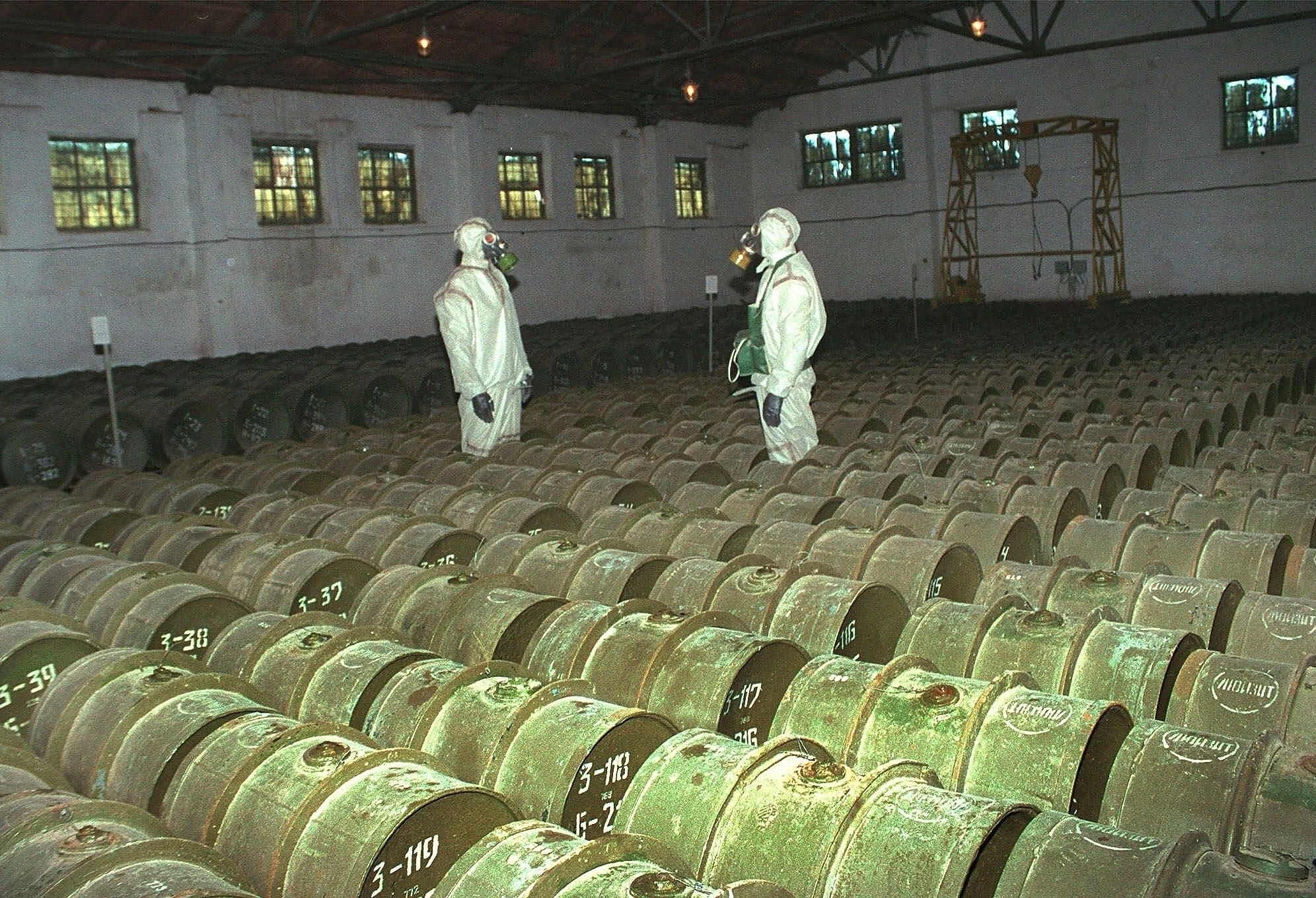
FILE - In this Saturday, May 20, 2000 file photo, two Russian soldiers make a routine check of metal containers with toxic agents at a chemical weapons storage site in the town of Gorny, 124 miles (200 kms) south of the Volga River city of Saratov, Russia. The Novichok _ a lethal nerve agent that nearly killed a former Russian spy and his daughter in March and recently sickened another couple in England, is a product of a highly secretive Soviet chemical weapons program. (AP Photo, File)
AFP
Dos soldados rusos hacían una revisión de rutina de contenedores metálicos con agentes tóxicos en un almacén de armas químicas en Gorni. La supervisión se hizo el 20 de mayo del 2000. (AP)
París. El agente nervioso Novichok, que dejó a dos británicos en estado crítico cuatro meses después del envenenamiento de un exagente ruso y de su hija, es un tóxico poco conocido y altamente peligroso.
Su concepción por científicos soviéticos se remonta a los años 1970-1980, último periodo de la Guerra Fría.
Esta sustancia que actúa sobre el sistema nervioso provoca la pérdida de control de los músculos, generando espasmos y parálisis. Puede provocar la muerte por sofocación o parada cardíaca.
“El hecho de que se trate del mismo producto que envenenó a los Skripal confirma muchas cosas que sospechábamos sobre la familia de los agentes nerviosos Novichok ”, afirmó el profesor Andrea Sella, químico de la universidad londinense UCL, citado por el Centro Science Media.
“Están hechos para permanecer en el ambiente y no evaporarse ni descomponerse rápidamente. Esto significa que si un recipiente o una superficie ha sido contaminada, puede ser peligrosa durante mucho tiempo”, explicó.
Por ello, “es vital saber dónde estuvo esta pareja para saber dónde pudieron entrar en contacto” con el veneno.
La pareja se halla en estado crítico en el hospital de Salisbury, donde también fueron tratados durante varias semanas el exespía ruso y su hija.
Los dos británicos están hospitalizados “en el único centro donde se logró tratar con éxito a pacientes expuestos a estas sustancias, por lo que todo permite pensar que el desenlace puede ser favorable para ellos”, indicó el doctor Chris Morris, toxicólogo en la Universidad de Newcastle.
“Pero hay que tener presente que las víctimas de este tipo de productos organofosforados pueden sufrir secuelas neurológicas de por vida, incluso si se recuperan de los efectos agudos del envenenamiento”, advirtió el profesor Sella.
Un conejo usado para prueba de laboratorio en un centro de investigación de armas químicas en Shikhany, Rusia (AP)
El Novichok es un agente nervioso, como otros venenos más conocidos, como el sarín y el VX.
¿Cómo actúa?
Estas sustancias atacan una enzima llamada acetilcolinesterasa, cuyo papel es crucial: destruye la acetilcolina, una molécula que actúa sobre la contracción de los músculos. Cuando un agente nervioso bloquea esta enzima, la acetilcolina se acumula, dañando el sistema nervioso.
Según los expertos, el procedimiento clásico para tratar los casos de envenenamiento con un agente nervioso se basa en estabilizar las funciones vitales del cuerpo (respiración, latidos del corazón).
Paralelamente, hay que administrar al paciente atropina, un medicamento de base para combatir los síntomas de estos agentes.Esta bloquea los receptores de acetilcolina para impedir su acumulación en el sistema nervioso, lo cual permite al cuerpo evacuar el agente nervioso y producir de nuevo la enzima que lo controlaba, siempre y cuando el tratamiento funcione.