Nuevo tratamiento revoluciona lucha contra tuberculosis resistente a fármacos
La tuberculosis era la principal causa de muerte infecciosa antes de la llegada de la covid-19, con 1,5 millones de víctimas anuales, pero un nuevo tratamiento busca cambiar este panorama
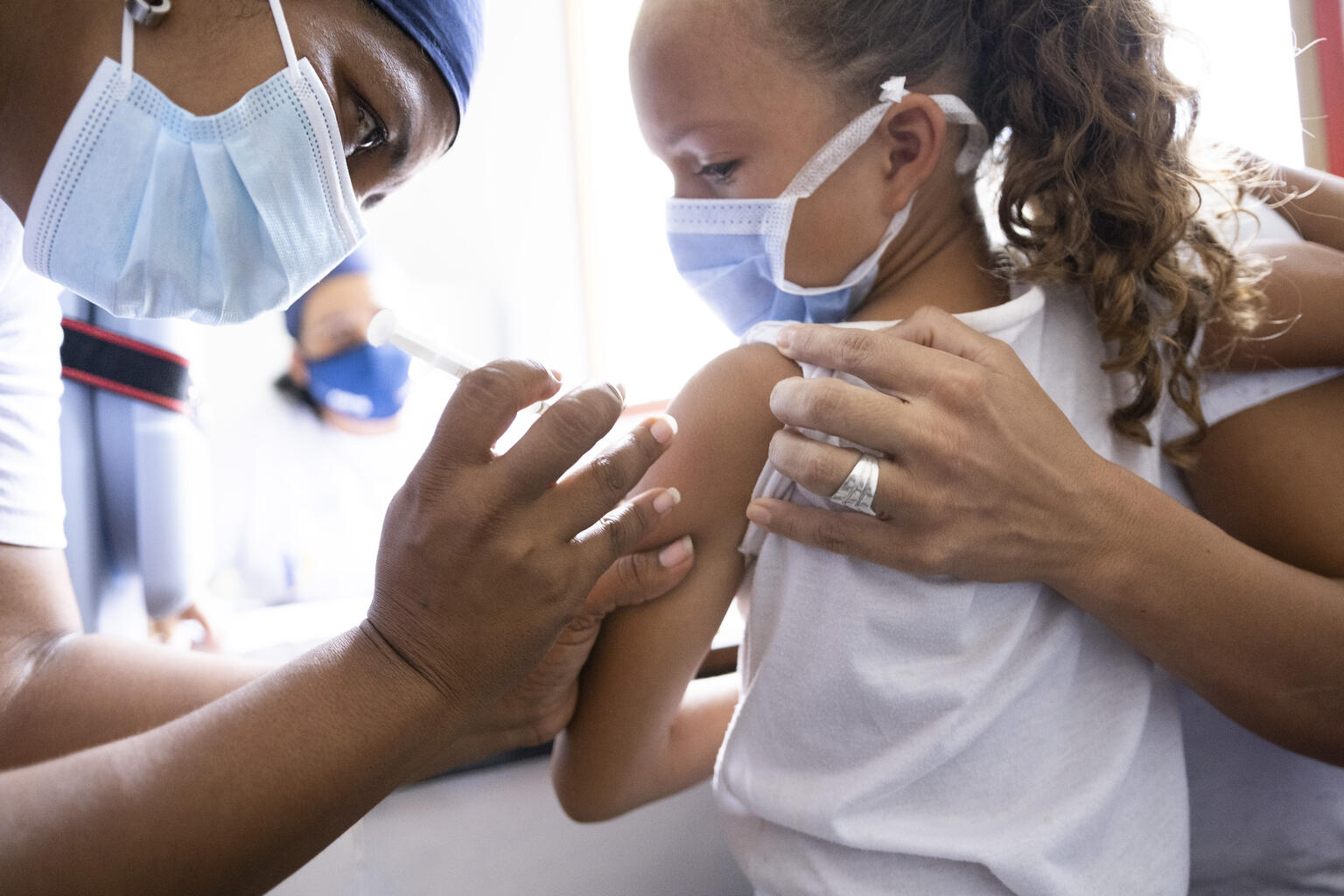
Karla Flores (7) is vaccinated during a mass vaccination day in San Vicente community, Miranda state, on September 03, 2021.
UNICEF supports vaccination days like these, made in San Vicente community which is located 2 hours from Caracas. In addition to receiving the necessary vaccines to stay healthy, children and adolescents who attended also received children’s rights conventions and recreation thanks to the support of UNICEF.
UNICEF supports the regular immunization programme and vaccination campaigns in Venezuela through vaccine procurement and technical assistance to the Expanded Programme of Immunization (EPI) for regular and supplemental immunization activities. This includes the support of the Ministry of Health’s (MoH) door-to-door immunization campaign for children and pregnant women in the Capital District and distributed of the Diphtheria, Tetanus, Pertussis, Hepatitis B and Hemophilus Influenzae, polio (IPV and bOPV) and yellow fever vaccines to cover national needs.
Furthermore, UNICEF has provided health workers PPE and has supported the MoH with transportation of equipment and staff, including to remote areas.
In 2020, UNICEF procured more than 7.3 million vaccines to protect children against tuberculosis, polio, yellow fever, diphtheria, tetanus, pertussis (DTP), hepatitis B, Haemophilus Influenza type b, measles, mumps, and rubella.
By June 2021, UNICEF has reached to over 160,074 children aged 0 to 12 months through measles vaccines and over 125,797 children aged 0 to 12 months have been vaccinated with three doses of pentavalent vaccine (Diphtheria, Tetanus, Pertussis, Hepatitis B and Haemophilus Influenzae vaccine).
Cesar Poveda
Pretoria. El médico ucraniano Volodimir recordará siempre el día que tomó la última dosis de un tratamiento contra la tuberculosis más corto, más eficaz y con menos efectos secundarios, que constituye un punto de inflexión en la lucha contra esta mortífera enfermedad y a él le cambió la vida.
Antes, Volodimir, de 25 años, un habitante de Kiev que prefirió no dar su apellido, seguía otro tratamiento casi dos veces menos eficaz, que suponía la toma de más comprimidos y que le había causado efectos neurológicos secundarios. Estos desaparecieron cuando se pasó al nuevo tratamiento, que ha durado solo seis meses contra los dos años del anterior.
“Fue muy fácil”, dijo Volodimir a AFP. El día de la última dosis, un escáner le mostró que ya no presenta restos de tuberculosis. La próxima semana ya quiere volver a trabajar tras ocho meses de baja. “Ahora, puedo volver a empezar a vivir”, se alegró.
La tuberculosis era la principal causa de muerte infecciosa antes de la llegada de la covid-19, con 1,5 millones de víctimas anuales. Alrededor de un 5% de los nuevos casos mostraban resistencia a los antibióticos prescritos, lo que dificultaba el tratamiento.
Pero un nuevo régimen de medicamentos, llamado BPaL porque combina los antibióticos bedaquilina, pretomanida y linezolida, supuso un gran avance desde su aprobación por la Administración de Alimentos y Medicamentos de Estados Unidos en 2019.
La investigación en 2020 demostró que el tratamiento BPaL curaba más del 90% de pacientes, pero que había una tasa elevada de efectos secundarios vinculados a la linezolida, especialmente dolor nervioso o depresión medular, una bajada de la producción de las células responsables de la inmunidad. Pero un estudio publicado el miércoles en el New England Journal of Medicine demostró que la dosis de linezolida puede reducirse a la mitad sin disminuir significativamente la eficacia del tratamiento.
Los investigadores realizaron un ensayo con 181 pacientes de tuberculosis resistente en Rusia, Sudáfrica, Georgia y Moldavia, los países con tasas más elevadas de esta enfermedad. La conclusión es que si 1.200 miligramos de linezolida durante seis meses resulta efectiva en un 93%, esta se mantiene en 91% con una dosis de 600 miligramos.
En este ensayo, el número de participantes que sufren neuropatía periférica (causante de los dolores nerviosos) pasó de 38% a 24%, y aquellos con supresión de la médula ósea de 22% al 2%.
”Es el principio del fin de la tuberculosis resistente a los fármacos”, dijo a AFP la autora principal del estudio, Francesca Conradie, de la Universidad de Witwatersrand de Sudáfrica. “Cuanto más rápido tratas la tuberculosis de alguien, menos contagioso es. Es como la covid en muchos aspectos”, añadió.
Además, el tratamiento es más fácil para los pacientes: pasan de tener que tomar hasta 23 píldoras al día y 14.000 en dos años a solo cinco pastillas diarias y menos de 750 en los seis meses de duración.
Para Natalia Lytvynenko, que supervisó el tratamiento BPaL en Ucrania, esta cantidad más gestionable de pastillas facilita el seguimiento del tratamiento para los pacientes desplazados a causa de la guerra. La Organización Mundial de la Salud (OMS) indicó este año que actualizará sus directrices para recomendar el BPaL con 600 miligramos de linezolida a la mayoría de pacientes de tuberculosis resistente. Se trata de “grandes avances”, señalaron dos expertos en este campo no implicados en el estudio del miércoles.
El tratamiento BPaL “es uno de los progresos determinantes de la investigación científica sobre la tuberculosis de este siglo”, escribieron Guy Thwaites de la Universidad de Oxford y Nguyen Viet Nhung del Programa Nacional de la Lucha contra la Tuberculosis de Vietnam en un editorial del New England Journal of Medicine. Estos avances ocurren entre temores de que la pandemia de la covid-19 frene la investigación en la lucha contra la tuberculosis.
Así es como se ve la bacteria de la tuberculosis bajo la lente de un microscopio. (NIAID)