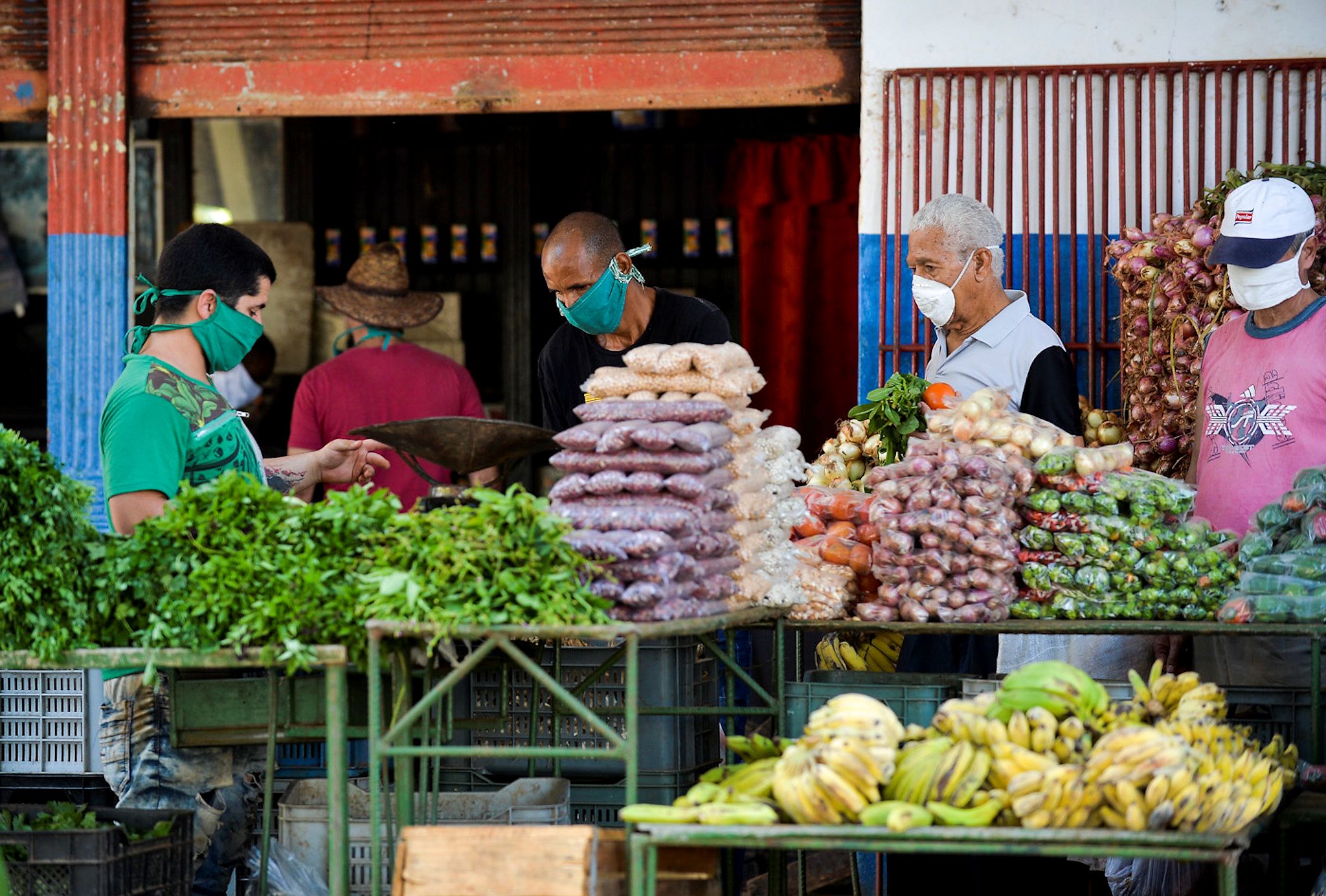
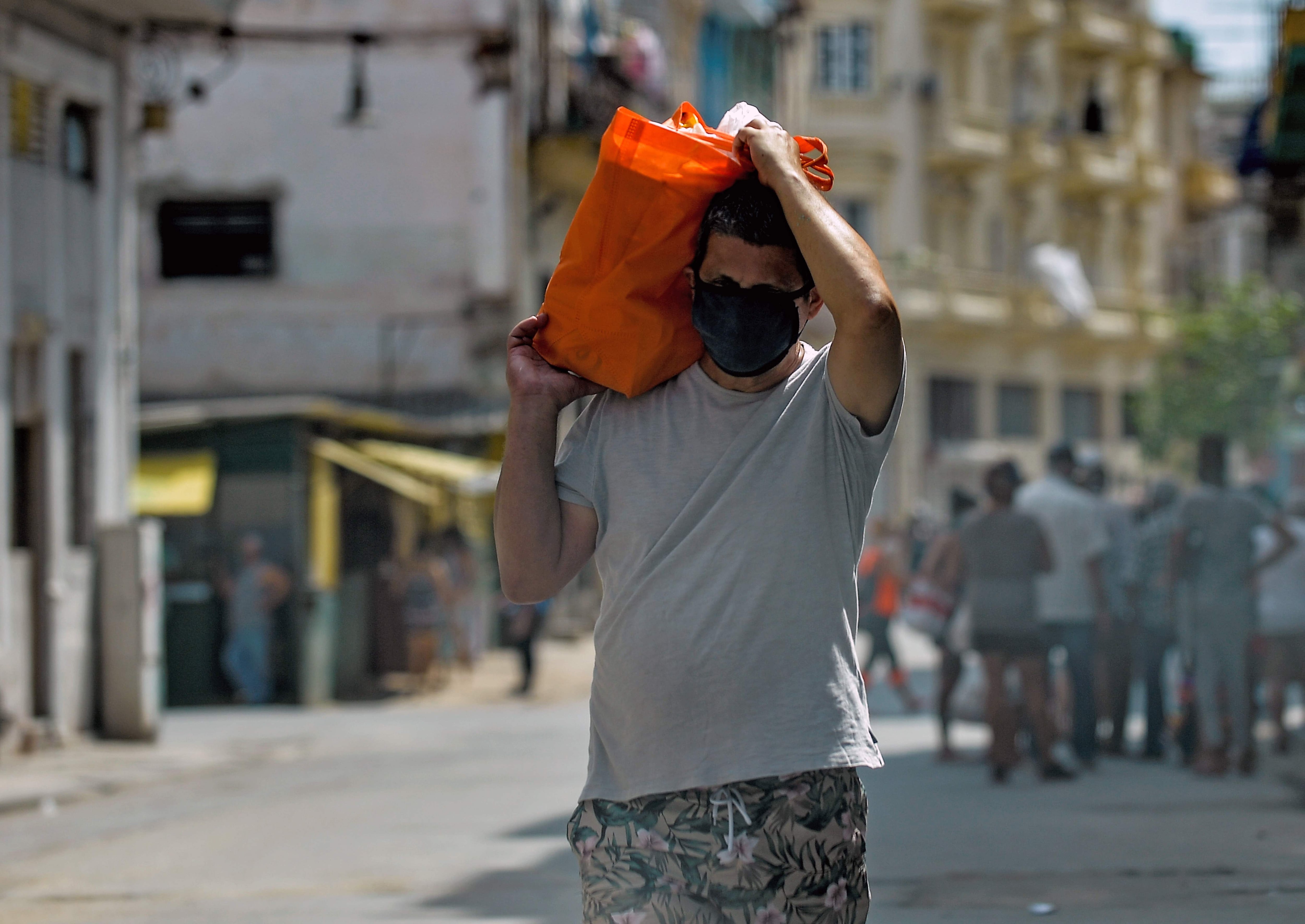
La Habana. "Hay pollo en 7ma y 28″, escribe Yadira en un grupo de WhatsApp por donde los habaneros se avisan de la llegada de alimentos a los mercados. En Cuba, que importa casi todo lo que come, el nuevo coronavirus complica el abastecimiento. Vienen días de resistencia.
“Salimos temprano y, como hormiguitas, volvemos a casa antes de las 6 de la tarde”, para cumplir el aislamiento, cuenta Ángela Martínez, 55 años, tras hacer compras en La Habana provista de mascarilla, de uso obligatorio.
Al cierre del jueves, la Isla tenía 1.235 casos (43 fallecidos) de la enfermedad covid-19. Hay cuarentena en algunos barrios, se suspendió el transporte público y las clases. Se aisló a los casos confirmados y sospechosos.
"No tenemos un incremento explosivo como ha ocurrido en otros países, y tiene que ver con las fortalezas para organizarse a través de sus trabajadores de salud", dice el representante de la OMS/OPS en Cuba, el peruano José Moya.
Según la Organización Mundial de la Salud (OMS), Cuba tiene 82 médicos por cada 10.000 habitantes, frente a los 32 de Francia y 26 de Estados Unidos.
Pero la pandemia llega en un momento complicado.
Palos y cuernos
El país enfrenta problemas de abastecimiento, tanto por la intensificación del embargo de Estados Unidos, la falta de liquidez y lentitud en la reforma de su modelo económico de corte soviético.
El cierre de fronteras golpea al turismo, motor económico que le representó $3.300 millones en el 2018.
“Cuba será el país que en peores condiciones emprenderá la remontada económica, por el bloqueo de EE. UU.”, que se suma al coronavirus y “a las limitaciones y problemas estructurales de la economía cubana”, dijo el politólogo Jorge Gómez Barata.
Además, su principal socio comercial, Europa, está muy golpeado por la pandemia.
El nuevo coronavirus amenaza el “suministro ante las restricciones de algunos países proveedores en la exportación de alimentos (...) El acaparamiento empeora la escasez, ya importante en Cuba”, detalló un reporte diplomático al que la AFP tuvo acceso.
Cuba importa el 80% de sus alimentos, unos $2.000 millones en el 2019.
En tanto, la crisis global amenaza la llegada de remesas, que estimulan el consumo interno.
Pocas lluvias perjudican las cosechas y generan escasez de agua. Además, el aislamiento social disparó el consumo doméstico de energía, activando el temor de apagones. Radio Rebelde hace llamados diarios al ahorro.
Las sanciones de Washington tienen contra las cuerdas a Venezuela, su aliado y proveedor de combustible.
Búsqueda de alimentos
“¿Dónde hay arroz?” “¿Pasta de dientes?”. Los mensajes en WhatsApp van y vienen. Desde la llegada de 3G a los celulares en la Isla, a fines del 2018, esta vía ha sido clave para localizar productos.
“La cola es muy lenta, fui a las 9 a. m. y salí a las 4 p. m. y compré de todo porque esa cola no la hago otra vez”, escribe Matilde en el grupo “Solo Comida”. La Policía cuida el orden y separación en la fila.

Los cubanos reciben una canasta básica mensual de alimentos subsidiados, pero resulta insuficiente y deben completar el menú.
Varios mercados grandes cerraron y se dispuso la venta de alimentos y productos de aseo en comercios de barrio.
La llegada de insumos de amplia demanda, como el pollo, genera grandes filas. Lo que hace al humorista cubano Luis Silva, “Pánfilo”, decir que el agente transmisor del coronavirus es... el pollo.
"En algunos lugares se concentra gran cantidad de población y es un riesgo, y eso lo estamos observando en muchos países", dice Moya de la OPS.
En días recientes, 18 personas se contagiaron en un centro comercial. Para evitar aglomeraciones se implementó la venta en línea, pero la fragilidad de la red y la poca costumbre ralentizan el servicio.
Es difícil hacer cuarentena cuando hay escasez, manifiesta el economista Omar Everleny Pérez.
Ajustarse a los líos
“Hay que ir buscando soluciones nacionales, porque no sabemos qué alimentos van a dejar de producir nuestros países proveedores”, dice el ministro de Economía, Alejandro Gil.
Los cubanos, que enfrentaron una grave crisis económica en los años 90, se han sobrepuesto a huracanes.
"Tenemos la convicción moral y política para resistir cualquier cosa. Tratamos de buscar la solución con lo que tenemos", asegura la señora Martínez.

“Esta es una experiencia única (la pandemia), que estamos aprendiendo. No es fácil”, manifiesta Roberto Sánchez, de 57 años, también de compras por La Habana.
Algunos hacen mascarillas con telas sobrantes y las regalan a sus vecinos, otros se apoyan con las compras o se avisan de la llegada de insumos.
“Ayer pude comprar pollo gracias a usted”, le responde un usuario anónimo a Yadira, por WhatsApp.