Aves marinas mueren de hambre y por intoxicación tras derrame de petróleo en Perú
Con petróleo en sus alas, las aves no pueden volar ni alimentarse. Además, su plumaje pierde su condición térmica y les causa hipotermia; otras comieron peces contaminados
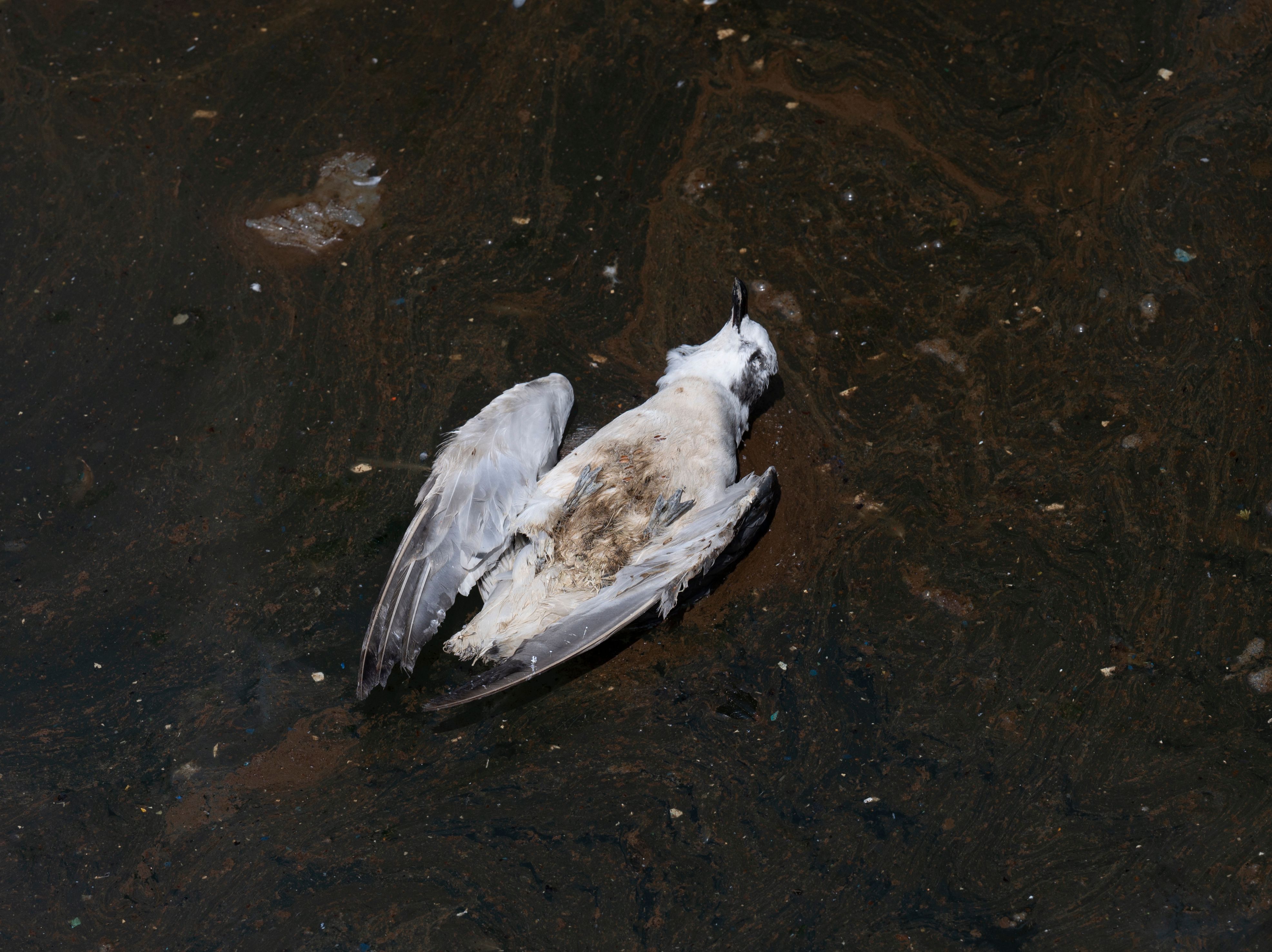
A dead seagull floats over oild waters in the bay of Ancon while investigators from the Peruvian National Service of Natural Areas Protected by the State (SERNANP) assess contamination levels and mortality rate of wildlife on the coast of Ancon, 35 kilometers north of Lima on January 29, 2022. - The spill, described as an "ecological disaster" by the Peruvian government, happened when an Italian-flagged tanker, the Mare Doricum, was unloading oil at the La Pampilla refinery, just off Peru's coast around 30 kilometers (19 miles) north of Lima. The oil slick has been dragged by ocean currents about 140 kilometers north of the refinery, prosecutors said, causing the death of an undetermined number of fish and seabirds. (Photo by Cris BOURONCLE / AFP) CRIS BOURONCLE
Un pelícano muerto flota sobre aguas contaminadas con petróleo en la bahía de Ancón. Los especialistas del Servicio Nacional de Áreas Naturales Protegidas (Sernanp) patrullan el área afectada y recogen las aves muertas que encuentran. (CRIS BOURONCLE/AFP)
Lima. El derrame de petróleo ocurrido hace 15 días en la costa central de Perú ha matado a muchas aves marinas que anidaban en islas de una reserva natural, otra cantidad importante permanece en riesgo de morir de hambre o por intoxicación.
Un equipo de la AFP navegó en una pequeña embarcación hasta una isla poblada solo por grandes colonias de aves marinas, en compañía de especialistas y guardaparques que cada día monitorean los efectos del derrame de casi 12.000 barriles de crudo, el 15 de enero.
Durante la travesía de seis horas en el mar, los especialistas del Servicio Nacional de Áreas Naturales Protegidas (Sernanp) van encontrando y recogiendo varias aves muertas flotando en el mar. También salvan a otras que agonizan por estar cubiertas de petróleo. Las autoridades peruanas no han divulgado el número de aves halladas muertas en el mar. Todas son recogidas, depositadas en bolsas y llevadas a tierra.
“Estos últimos días vemos algunas aves que ya no tienen el mismo nivel” alto de crudo en el cuerpo como en los días siguientes al derrame, pero “estamos encontrando bastantes muertas y posiblemente esto con los días continúe”, aseguró a la AFP el veterinario Giancarlo Inga Díaz, mientras la embarcación bordeaba la Isla Grande.
Esta isla de 14 hectáreas, llamada también Isla Pescadores, forma parte de la Reserva Nacional de Islas, Islotes y Puntas Guaneras. En sus aguas hay una variedad de peces que dan sustento a los pescadores del popular balneario de Ancón, al norte de Lima, quienes quedaron sin poder trabajar por el derrame.
Las aves rescatadas con vida son llevadas al zoológico del Parque de Las Leyendas, en Lima, donde las limpian y rehidratan. (CRIS BOURONCLE/AFP)
“La afectación es visible, sin contar que aún está pendiente que se hagan análisis a nivel de los peces que también forman parte del ecosistema”, indicó Carlos Mogollón, otro especialista del Sernanp a bordo de la embarcación.
No pueden volar ni comer
Copiado!
El derrame, calificado como "desastre ecológico" por el gobierno peruano, ocurrió mientras el buque tanque "Mare Doricum", de bandera italiana, descargaba en la refinería de La Pampilla en Ventanilla, 30 km al norte de Lima, de propiedad de la española Repsol. La empresa atribuyó el accidente al oleaje causado por la erupción volcánica en Tonga.
La mancha negra de petróleo fue arrastrada por las corrientes marinas hacia el norte hasta unos 140 km de la refinería, según la fiscalía, provocando la muerte de una cantidad indeterminada de peces, aves y mamíferos marinos.
Con petróleo en sus alas, las aves no pueden volar ni alimentarse. Además, su plumaje pierde su condición térmica por lo que sufren hipotermia, según los especialistas. Otras aves que no están “empetroladas” han comido peces contaminados con el crudo y murieron intoxicadas.
“Posiblemente esto con los días continúe y las aves sigan muriendo por toda una cadena de dónde están, de lo que están comiendo o dónde están paradas”, dijo el veterinario Inga.
El guanay (Leucocarbo bougainvilliorum) y el pelícano peruano (Pelecanus thagus) son las aves que sufrieron el mayor impacto por el derrame, explicó el jefe de la Reserva de las Islas Guaneras, Oscar García. También el cormorán azul (Sula nebouxii).
‘Ya no tienen fuerza’
Copiado!
“Todas las aves las entregamos con registros institucionales (datos, fotos y coordenadas de donde fueron halladas). Las aves muertas se almacenan en un contenedor gestionado por Repsol y la Municipalidad de Lima”, explicó un responsable del Sernanp.
La mayoría de las aves recolectadas tienen petróleo dentro del pico, incluso si su plumaje aparenta estar limpio. Los especialistas creen que muchas seguirán falleciendo porque se están quedando sin fuerzas para alimentarse, volar o incluso flotar en el agua. (CRIS BOURONCLE/AFP)
Los especialistas también están rescatando del agua a aves vivas cubiertas de crudo que sufren hipotermia e inanición. En la travesía del equipo de la AFP, un guanay rescatado estaba tan mal, que murió poco después a bordo de la embarcación, causando consternación entre los funcionarios del Sernanp.
“La hemos podido subir al bote pero han pasado pocos minutos y ha fallecido. Esto es algo que pasa porque ya las aves están intoxicadas y solamente están flotando en el mar, pero ya no tienen fuerza para poder nadar, para poder cazar, para poder volar”, explicó Inga.
“En la mayoría de los casos, cuando encontramos aves muertas, encontramos que el pico está lleno de petróleo negro. Aparentemente las plumas pueden estar más limpias, pueden no estar manchadas, pero dentro del pico incluso puede ir afectando ya a través del sistema digestivo el hígado”, agregó.
Las aves rescatadas con vida, entre ellas pingüinos de Humboldt en peligro de extinción, son llevadas al zoológico del Parque de Las Leyendas, en Lima, donde las limpian y rehidratan. La justicia peruana prohibió el viernes salir del país por 18 meses a cuatro directivos de la petrolera española Repsol y ordenó la “incautación” del buque tanque involucrado, que permanece fondeado a seis millas del puerto del Callao.