Países pro caza de ballenas impidieron crear santuario; Costa Rica sí votó a favor
Iniciativa se discutió en el segundo día sesiones de la Comisión Ballenera Internacional (CBI) que tiene lugar en Brasil; proyecto no obtuvo la mayoría calificada necesaria para su aprobación
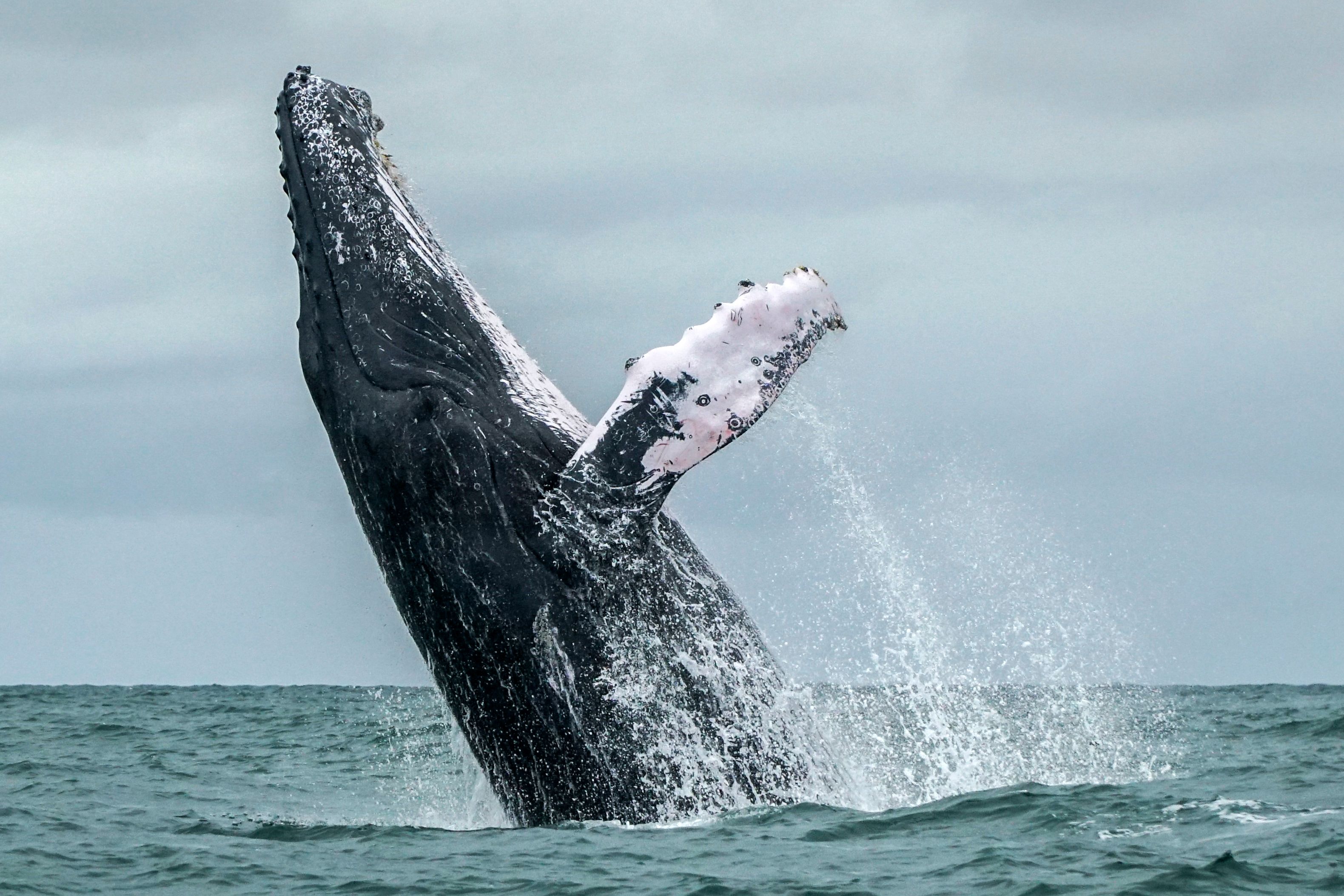
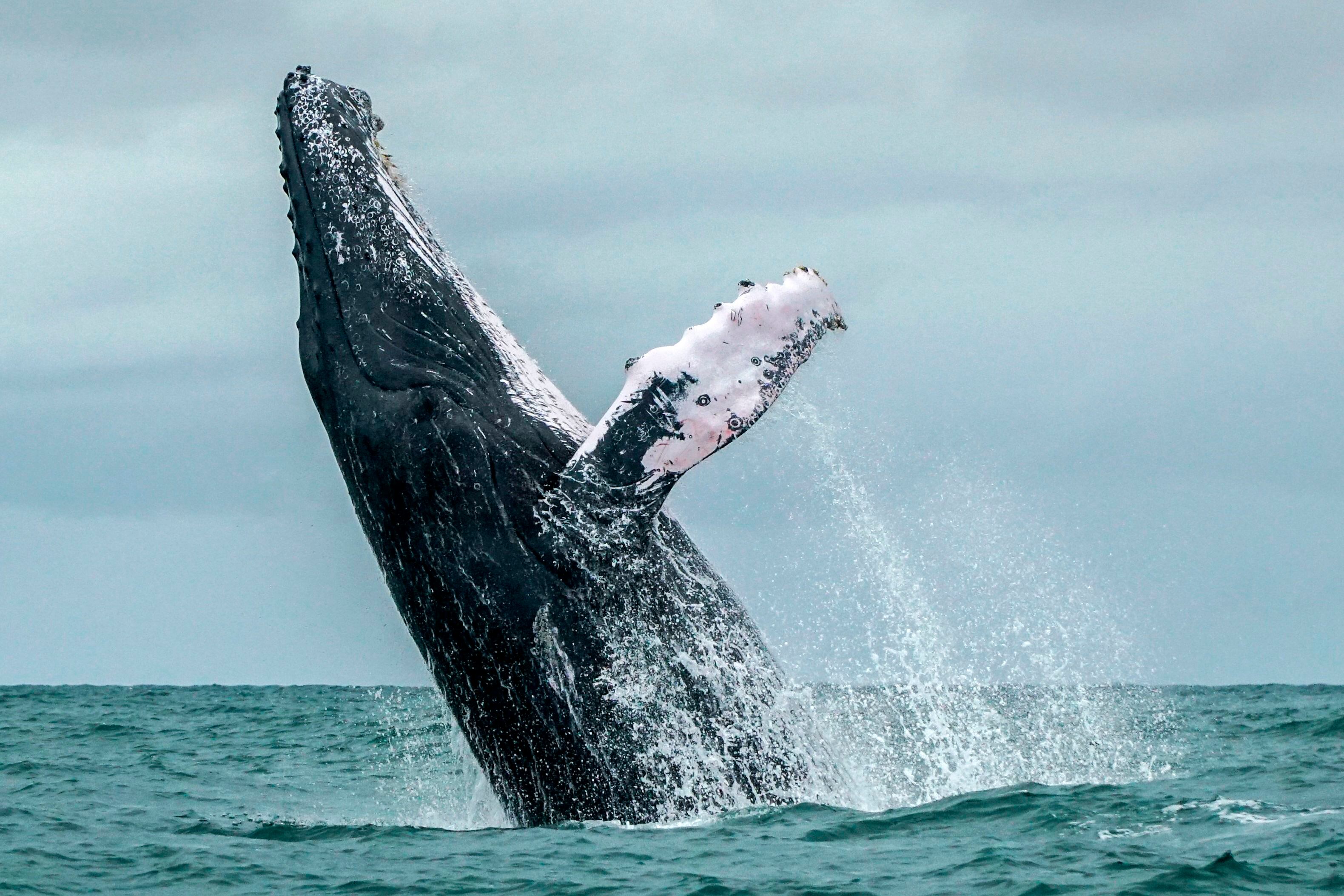
(FILES) In this file photo taken on August 12, 2018 a Humpback whale jumps in the surface of the Pacific Ocean at the Uramba Bahia Malaga National Natural Park in Colombia. - On September 10, 2018 pro- and anti-whaling nations gathered in Brazil for the week-long showdown, where the incoming chairman of the bitterly-divided International Whaling Commission (IWC) Joji Morishita said the crucial talks during the meeting could determine the future of whaling. (Photo by Miguel MEDINA / AFP) MIGUEL MEDINA
Ballena Una ballena jorobada brinca en la superficie del parque nacional Uramba Bahía Málaga, en la costa pacífica de Colombia. El futuro de la conservación de este y otros cetáceos, se discute actualmente en Brasil, en la reunión de la Comisión Ballenera Internacional (CBI). Foto: AFP (MIGUEL MEDINA/AFP)
Los países que apoyan la caza de ballenas impidieron el martes aprobar una iniciativa para crear un refugio en el Atlántico Sur para los mamíferos marinos en peligro de extinción, profundizando las divisiones en la reunión de la Comisión Ballenera Internacional (CBI) que tiene lugar en Brasil.
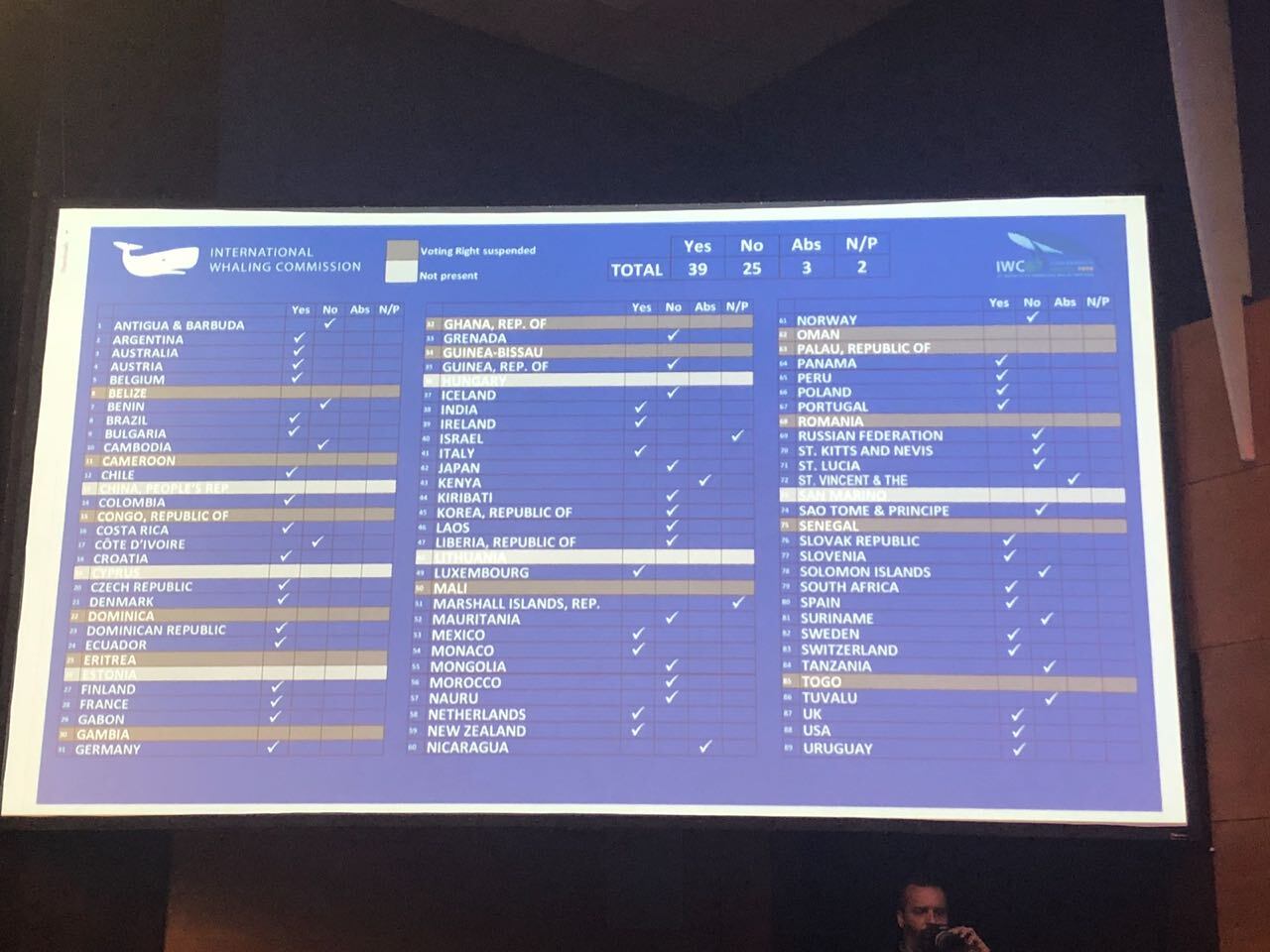
La propuesta, presentada por el país anfitrión, recibió 39 votos a favor (entre ellos el de Costa Rica), 25 en contra, tres abstenciones y dos países que no estuvieron en la votación, por lo que no fue capaz de lograr la mayoría calificada (75% de los miembros que votan), necesaria para su aprobación.
Apuntalada por Argentina, Gabón, Sudáfrica y Uruguay, la propuesta se debatió por primera vez en 1998 y se ha votado desde la cumbre del 2001 de la CBI.
Japón, que aboga por la caza de ballenas, votó en contra del proyecto del santuario junto con los estados balleneros comerciales de Islandia y Noruega, así como con Rusia.
Votación Ballenas Resultado de la votación de una iniciativa para crear un refugio en el Atlántico Sur para los mamíferos marinos en peligro de extinción. Foto: Minae
La delegación asiática ha presionado por un cambio en las reglas de la comisión para que las decisiones se tomen por mayoría simple en lugar de la mayoría actual de tres cuartos. Esto facilitaría a Japón poner fin a una moratoria de 32 años sobre la caza comercial de ballenas y reintroducir la 'caza sostenible de ballenas’.
Ese cambio también permitiría, como han subrayado funcionarios japoneses en la cumbre de Brasil, que avance finalmente la creación del santuario.
La delegación costarricense está integrada por Haydée Rodríguez, Viceministra de Agua y Mares del Ministerio de Ambiente y Energía (Minae), Eugenia Arguedas del Sistema Nacional de Áreas de Conservación (Sinac) y Javier Rodríguez, asesor científico.
Comisión Ballenera Internacional Costa Rica participa de forma activa en la reunión de la Comisión Ballenera Internacional, que se realiza en Brasil. Foto: Minae
Costa Rica y otros países, así como grupos ambientalistas, se oponen a la propuesta japonesa, conocida como “El camino hacia adelante” (The way forward), que permitiría abrir la caza comercial, por medio de la creación de un comité de “caza sostenible de ballenas”.
“Este comité decidiría incluso las cuotas para caza y estaría integrado por los mismos países interesados en abrir a la caza de ballenas. Para Costa Rica es prioritario asegurar que la caza comercial no se restablezca y que las cuotas para caza de subsistencia sean monitoreadas y se apeguen a rigurosos estudios científicos”, indicó Rodríguez.
Durante el encuentro, que se mantendrá hasta el próximo viernes, la representación de Costa Rica enfocará sus esfuerzos entorno a la discusión de la problemática actual por existencia de ‘redes fantasmas’, “para controlar mejor las redes de pesca que quedan a la deriva y que causan impactos importantes en cetáceos”.
Además, de promover acciones que disminuyan el impacto del ruido oceánico en las ballenas y la Declaración de Florianápolis, que busca dirigir las discusiones de la Comisión Ballenera Internacional hacia una agenda de conservación.
“Esto cambia la visión actual de la Comisión que aún sigue moviéndose alrededor de la caza de las ballenas”, indicó la funcionaria.
Pulso por las ballenas
Grettel Delgadillo, de la organización Humane Society International (HSI), dijo que la votación fue "una auténtica señal de mala fe y de intriga continua del bloque japonés, y augura muy poco para las votaciones cruciales que vendrán más adelante esta semana".
Australia ganó un caso contra Japón en la Corte Internacional de Justicia en 2014 por ignorar el santuario del océano austral y cazar alrededor de la Antártida como parte de su “programa científico”. Tras el fallo, Japón continúa cazando allí pero con una cuota de captura reducida.
Seis países miembros no enviaron delegaciones a la reunión de la CBI, mientras otros siete que sí lo hicieron -la mayoría de ellos africanos- no pudieron votar por no estar al día en el pago de sus aranceles.
Observadores dijeron que para algunos de los países pequeños abstenerse de votar sobre un tema altamente sensible es un gesto diplomático, y que es poco probable que estos países quieran ser fotografiados con alguno de ambos bandos.
Sin embargo, algunos delegados contrarios a la caza de ballenas admitieron que esto demostraba que Japón era mucho más eficiente en la preparación del terreno político.
El resultado extiende casi dos décadas de un punto muerto entre las partes pro y anticaza de ballenas de la CBI.
Nicolas Entrup, de la ONG suiza OceanCare, evocó un plan de acción para proteger a las ballenas en el Atlántico Sur aprobado por unanimidad por las partes en la Convención de Naciones Unidas sobre la Conservación de Especies Migratorias (CMS) el año pasado.
Arremetiendo contra el “bloqueo destructivo de algunos países”, Entrup dijo que los estados firmantes del CMS deberían avanzar en el establecimiento de un santuario sin la aprobación de la CBI.
“Un santuario en esta región proporcionaría una fuerte protección a una amplia gama de especies de ballenas y delfines”, dijo por su parte Patrick Ramage, del International Fund for Animal Welfare.
“La investigación no letal de ballenas en esta área ya ha proporcionado datos valiosos sobre las ballenas y un santuario se habría construido en base a esto, brindándonos información mucho más útil y precisa que la que se ha obtenido de la llamada cacería científica”, usada por Japón para aniquilar este año más de 300 ballenas minke.
“Las naciones de la región quieren crear -y tienen todo el derecho a crear- un refugio seguro para las ballenas, bajo continuas amenazas de la caza comercial, la muerte por enredarse en artes de pesca, la contaminación marina y las lesiones causadas por embarcaciones”, agregó Delgadillo.