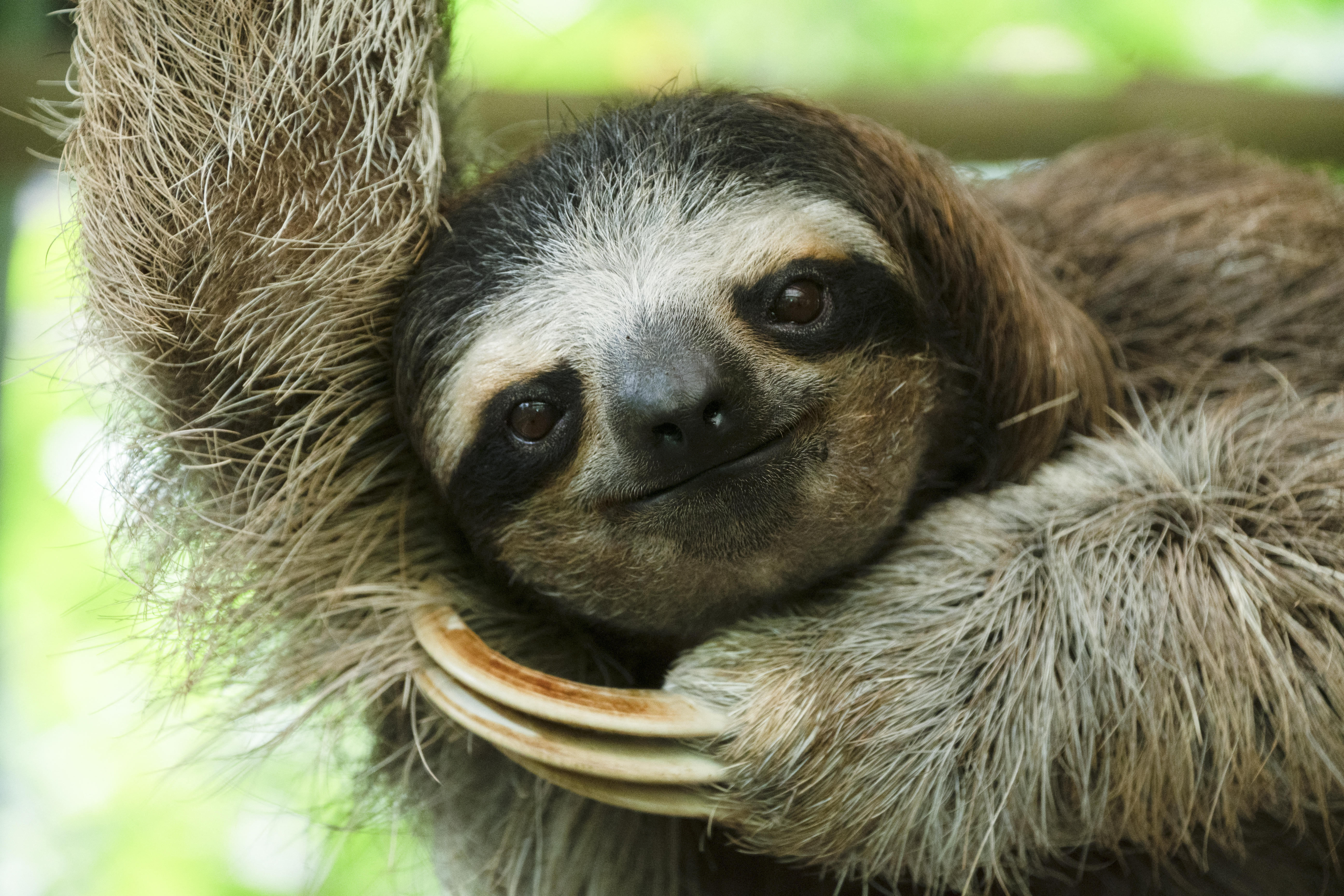

Cahuita. Los perezosos de Costa Rica demuestran tener en su pelaje unas bacterias que producen antibióticos que mantienen a raya a los patógenos que pueden enfermar al animal. ¿Podría este hallazgo tener aplicación en los seres humanos?
Esa pregunta trata de contestar el investigador Max Chavarría, de la Universidad de Costa Rica, tras descubrir en el pelaje de estos peculiares mamíferos tropicales un bioma único de insectos, hongos, algas y bacterias en un delicado balance que evita enfermedades.
LEA MÁS: Perezosos: ¿Por qué no hay que tocarlos?
“Si uno ve el pelaje de un perezoso uno ve movimiento, ve polillas, ve diferentes tipos de insectos (...), tenemos un hábitat muy amplio y claramente cuando hay coexistencia de muchos tipos de organismos tiene que haber sistemas también que los controle”, explica Chavarría a esta agencia.
El investigador comprobó que son "microorganismos capaces de producir antibióticos que permitían regular la presencia de patógenos en el pelaje" de los perezosos.
“Son bacterias pertenecientes al orden de los micrococcales, principalmente de los géneros Rothia y Brevibacterium”, precisa el investigador, cuyo descubrimiento se publicó en la revista científica Environmetal Microbiology (Microbiología Ambiental).
Tras descubrir estos antibióticos en los perezosos, Chavarría se pregunta si su hallazgo puede tener en el futuro usos en la medicina que ayuden a contrarrestar la resistencia a los antibióticos que desarrollan los seres humanos.

Dos especies
El perezoso es parte del imaginario colectivo en Costa Rica, emblema nacional y atractivo natural para los turistas. Hay dos especies en el país: Bradypus variegatus o perezoso de tres dedos y Choloepus hoffmanni o perezoso de dos dedos.
Viven en las copas de los árboles de las selvas de la costa Caribe de Costa Rica, con clima húmedo y caluroso (entre 22° y 30° grados Celsius).
La población de ambas especies se encuentra en situación de "disminución", según la Lista Roja de Especies Amenazadas de la Unión Internacional para la Conservación de la Naturaleza.
También hay perezosos en las selvas de Bolivia, Brasil, Colombia, Ecuador, Honduras, Nicaragua, Panamá, Perú y Venezuela.
Santuario
En esta zona caribeña de Costa Rica se encuentra el santuario de perezosos de Cahuita, creado por la estadounidense Judy Avey y su fallecido marido costarricense Luis Arroyo, donde son rehabilitados perezosos heridos por acción de personas o de otros animales.
“Principalmente rescatamos, rehabilitamos, estudiamos e investigamos perezosos”, dice la mujer a esta agencia, quien antes de llegar a Costa Rica vivía en Alaska y ni siquiera sabía que existían estos mamíferos.
Desde que recibieron al primer perezoso en 1992, al que llamaron ‘Buttercup’, se preocuparon de cuidarlos y curarlos. Desde entonces unos 1.000 ejemplares pasaron por este santuario situado a 200 kilómetros por ruta desde San José.
Chavarría acudió a Avey para utilizar en su investigación a algunos de los perezosos que estaban en rehabilitación por haberse electrocutado con cables de alta tensión, haber sido atropellados por vehículos, atacados por perros o separados de sus madres siendo pequeños.
"Nunca hemos recibido un perezoso enfermo (...). Algunos tienen quemaduras de cables de alta tensión y sus brazos están destrozados", cuenta Avey. "Pero no tienen infección (...), eso nos dice que algo hay en el ecosistema de su cuerpo", agrega.
Chavarría cortó pelo de la espalda de 15 ejemplares de cada especie para llevarlo al laboratorio para examinar las muestras, cultivarlas y confirmar su hipótesis.
LEA MÁS: Perezosos tienen nuevo centro de cuido en reserva del Braulio Carrillo
¿Aplicación humana?
En 2020 Chavarría puso en marcha su investigación y tres años después ya tiene "delimitados" 20 microorganismos "candidatos" a ser identificados. Pero faltan aún muchos pasos antes siquiera de pensar en la aplicación humana.
"Antes de pensar en una aplicación en salud humana es importante entender primero el sistema y cuáles son el tipo de moléculas que están implicadas", afirma el investigador, quien piensa que la naturaleza es un laboratorio natural.
Muestra de ello es la penicilina, descubierta en 1928 por el británico Alexander Fleming, procedente de hongos que sintetizan naturalmente la molécula que genera antibióticos y que le valió a su descubridor el Premio Nobel en Medicina en 1945.
La Organización Mundial de la Salud estima que para 2050 la resistencia a los antibióticos podría causar 10 millones de muertes al año.
“La búsqueda de nuevas estrategias para combatir la resistencia a los antibióticos quedó en manos de la academia”, señala Chavarría.
“Por eso proyectos como el nuestro pueden contribuir para encontrar, por qué no, nuevas moléculas que puedan, en un mediano o largo plazo, utilizarse en esta batalla que tenemos de resistencia a los antibióticos”, agrega.


