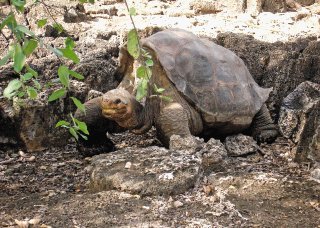
El cierre del programa “incluye la devolución de los 15 adultos reproductores”, entre los que está Diego, un supermacho de la especie Chelonoidis hoodensis, padre de al menos el 40% de las crías que actualmente están en la isla Española, de donde es originario, informó este viernes el Parque Nacional Galápagos (PNG) en un comunicado.
Junto al centenario Diego, que fue repatriado en 1976 desde un zoológico estadounidense, volverán a Española en marzo 12 hembras y dos machos, con los que el Parque inició el programa de reproducción a mediados de la década del 1960 en la isla Santa Cruz.
Desde entonces la población de esta especie de tortuga ha aumentado hasta alcanzar unos 2.000 ejemplares, apuntó el PNG.
"Se han devuelto cerca 1.800 tortuguitas a Española y ahora contando con reproducción natural tenemos aproximadamente unas 2.000 tortugas", dijo a la AFP Jorge Carrión, director del Parque.
Esto demuestra que "son capaces de crecer, son capaces de reproducirse, son capaces de desarrollar su vida natural", agregó.
Diego volverá a su isla de origen "casi ocho décadas después de haber sido extraído", indicó el PNG, al recordar que durante 30 años el quelonio vivió en el zoológico de San Diego, que le da su nombre. Esta tortuga es la antítesis de George, el último ejemplar de la especie "Chelonoidis abigdoni" que murió en 2012 tras negarse a aparearse en cautiverio.
Diego es "la tortuga macho que ha aportado en gran porcentaje al linaje que estamos devolviendo a Española" y hay un sentimiento de "felicidad al tener la posibilidad de devolver a esa tortuga a su estado natural", comentó Carrión.
Antes de regresar a su isla, las tortugas deberán pasar por una cuarentena para evitar que lleven con ellas semillas de plantas que no son propias de Española.
Carrión estimó que los animales "no van a tener ningún tipo de impacto al momento de retornar" a Española, pues en el Parque están "en las condiciones más naturales posibles, la alimentación no es exagerada, es limitada justamente tratando de imitar las condiciones" de su hábitat.
El PNG mantendrá el programa de reproducción en cautiverio para otras cuatro especies de las islas Floreana, San Cristóbal e Isabela, que son parte del archipiélago ubicado a 1.000 Km de la costa ecuatoriana y considerado Patrimonio Natural de la Humanidad por su flora y fauna únicas.