Aplicaciones Científicas

La NASA escoge un antiguo delta de Marte para buscar evidencias de vida

Vehículo Mars 2020 aterrizará en el cráter Jezero, que fue la cuenca de un lado de 500 metros de profundad que se abría a una rede de ríos hace más de 3.500 millones de años.

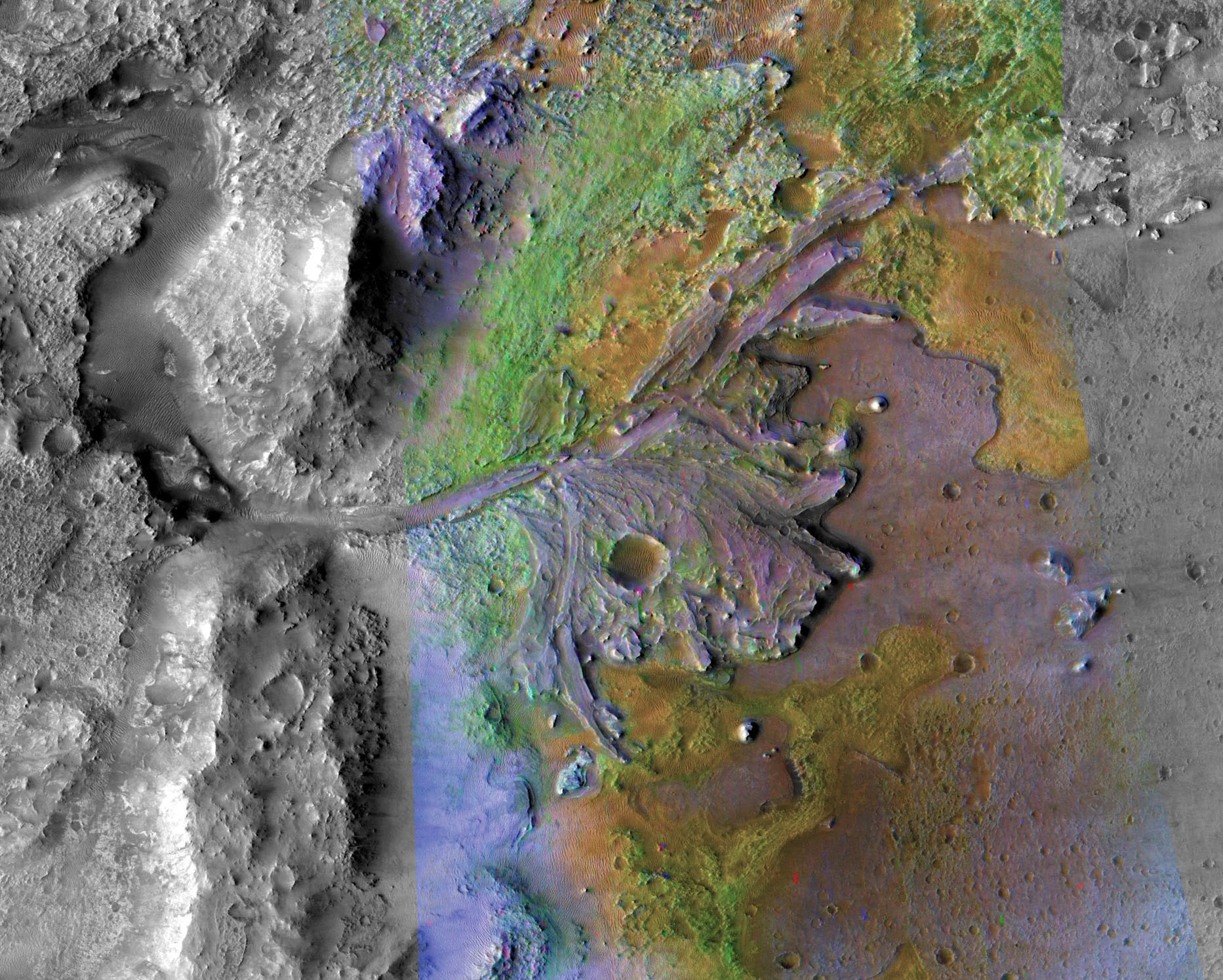
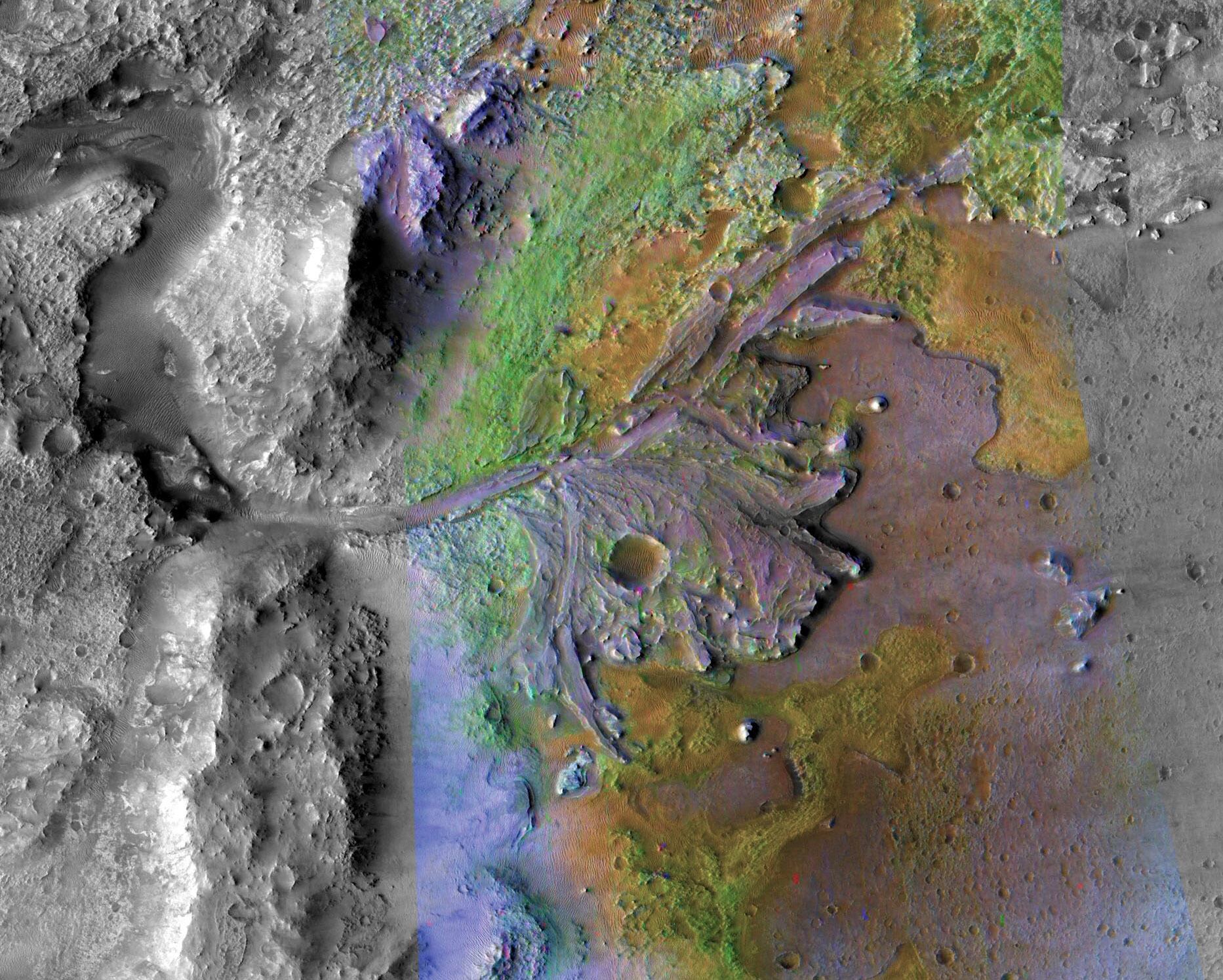
This NASA file image released on November 19, 2018 shows on ancient Mars, water carved channels and transported sediments formING fans and deltas within lake basins. - Examination of spectral data acquired from orbit show that some of these sediments have minerals that indicate chemical alteration by water. Here in Jezero Crater delta, sediments contain clays and carbonates. The image combines information from two instruments on NASA's Mars Reconnaissance Orbiter, the Compact Reconnaissance Imaging Spectrometer for Mars and the Context Camera. NASA has chosen Jezero Crater as the landing site for its upcoming Mars 2020 rover mission after a five year search, during which every available detail of more than 60 candidate locations on the Red Planet was scrutinized and debated by the mission team and the planetary science community. (Photo by HO / NASA / AFP) / RESTRICTED TO EDITORIAL USE - MANDATORY CREDIT "AFP PHOTO / NASA/JPL-CALTECH/MSSS/JHU-APL" - NO MARKETING NO ADVERTISING CAMPAIGNS - DISTRIBUTED AS A SERVICE TO CLIENTS
This NASA file image released on November 19, 2018 shows on ancient Mars, water carved channels and transported sediments formING fans and deltas within lake basins. - Examination of spectral data acquired from orbit show that some of these sediments have minerals that indicate chemical alteration by water. Here in Jezero Crater delta, sediments contain clays and carbonates. The image combines information from two instruments on NASA's Mars Reconnaissance Orbiter, the Compact Reconnaissance Imaging Spectrometer for Mars and the Context Camera. NASA has chosen Jezero Crater as the landing site for its upcoming Mars 2020 rover mission after a five year search, during which every available detail of more than 60 candidate locations on the Red Planet was scrutinized and debated by the mission team and the planetary science community. (Photo by HO / NASA / AFP) / RESTRICTED TO EDITORIAL USE - MANDATORY CREDIT "AFP PHOTO / NASA/JPL-CALTECH/MSSS/JHU-APL" - NO MARKETING NO ADVERTISING CAMPAIGNS - DISTRIBUTED AS A SERVICE TO CLIENTS HO
La NASA escoge un antiguo delta de Marte para buscar evidencias de vida Los científicos debatieron dónde aterrizar el rover durante los últimos cuatro años y llegaron a su decisión tras evaluar un total de 64 sitios posibles. Al final se eligió esta cuenca de 45 kilómetros de ancho. (Photo by HO / NASA / AFP) (HO/AFP)

Tampa. La Administración Nacional de la Aeronáutica y del Espacio (NASA) eligió un antiguo delta como el lugar de aterrizaje de su rover Mars 2020, un vehículo no tripulado de exploración espacial, para buscar evidencias de vida en el planeta rojo, dijeron el lunes funcionarios.

Aunque en la actualidad Marte es frío y seco, el sitio de aterrizaje escogido, el cráter Jezero, fue la cuenca de un lago de 500 metros de profundidad que se abría a una red de ríos hace entre 3.500 y 3.900 millones de años.

‌
‌

‌

‌
‌

‌

‌