Estado Islámico dejó más de 200 fosas comunes en Irak, revela la ONU
Organismo procura obtener pruebas de crímenes cometidos por grupo terrorista contra la minoría étnica yazidí y otras personas
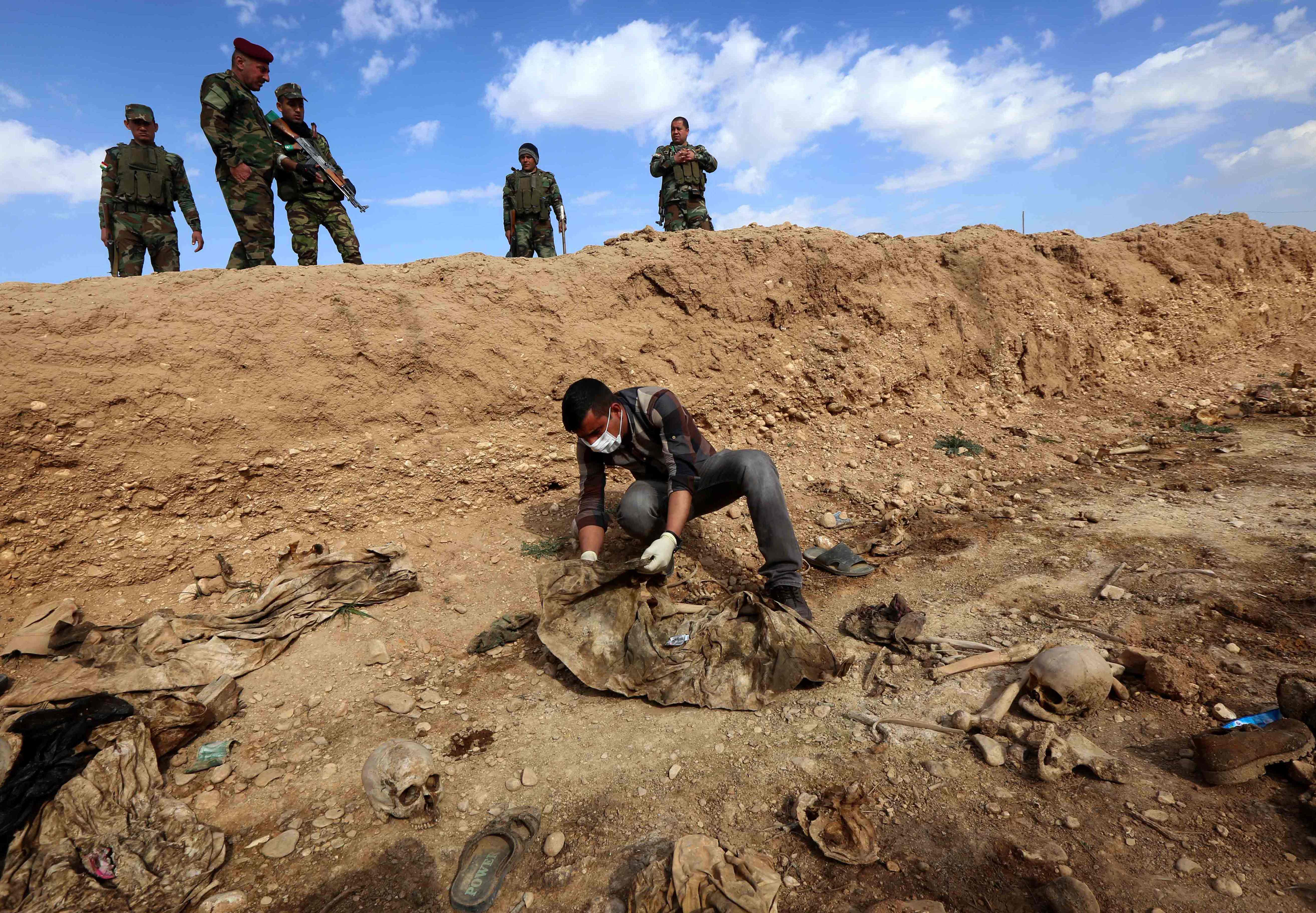
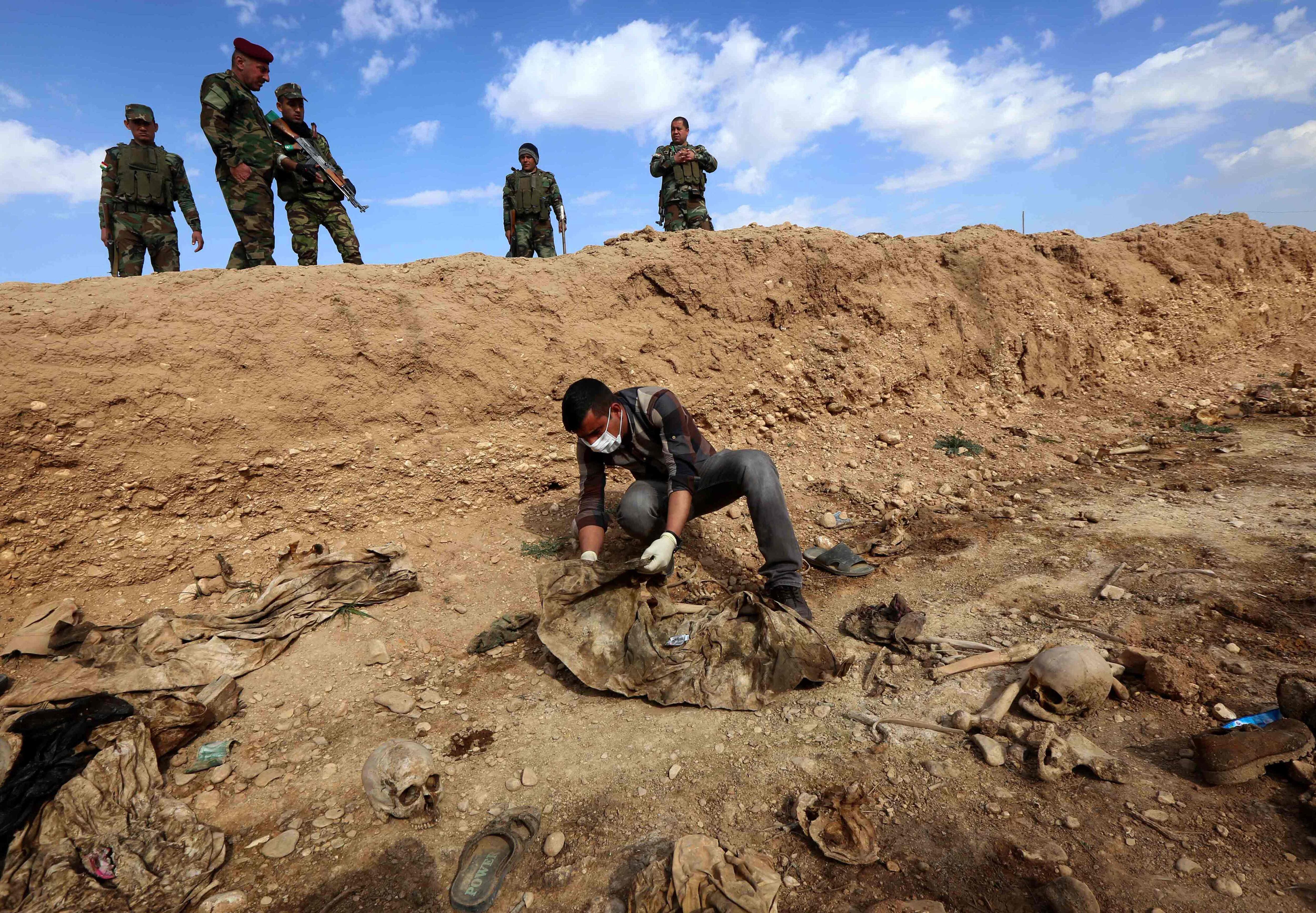
(FILES) In this file photo taken on February 03, 2015 An Iraqi man inspects, the remains of members of the Yazidi minority killed by the Islamic State (IS) jihadist group after Kurdish forces discovered a mass grave near the village of Sinuni, in the northwestern Sinjar area. - The Islamic State group left behind more than 200 mass graves in Iraq containing up to 12,000 victims that could hold vital evidence of war crimes, the UN said November 6, 2018.
The United Nations in Iraq (UNAMI) and its human rights office said they had documented a total of 202 mass graves in parts of western and northern Iraq held by IS between 2014 and 2017. (Photo by Safin HAMED / AFP)
AFP
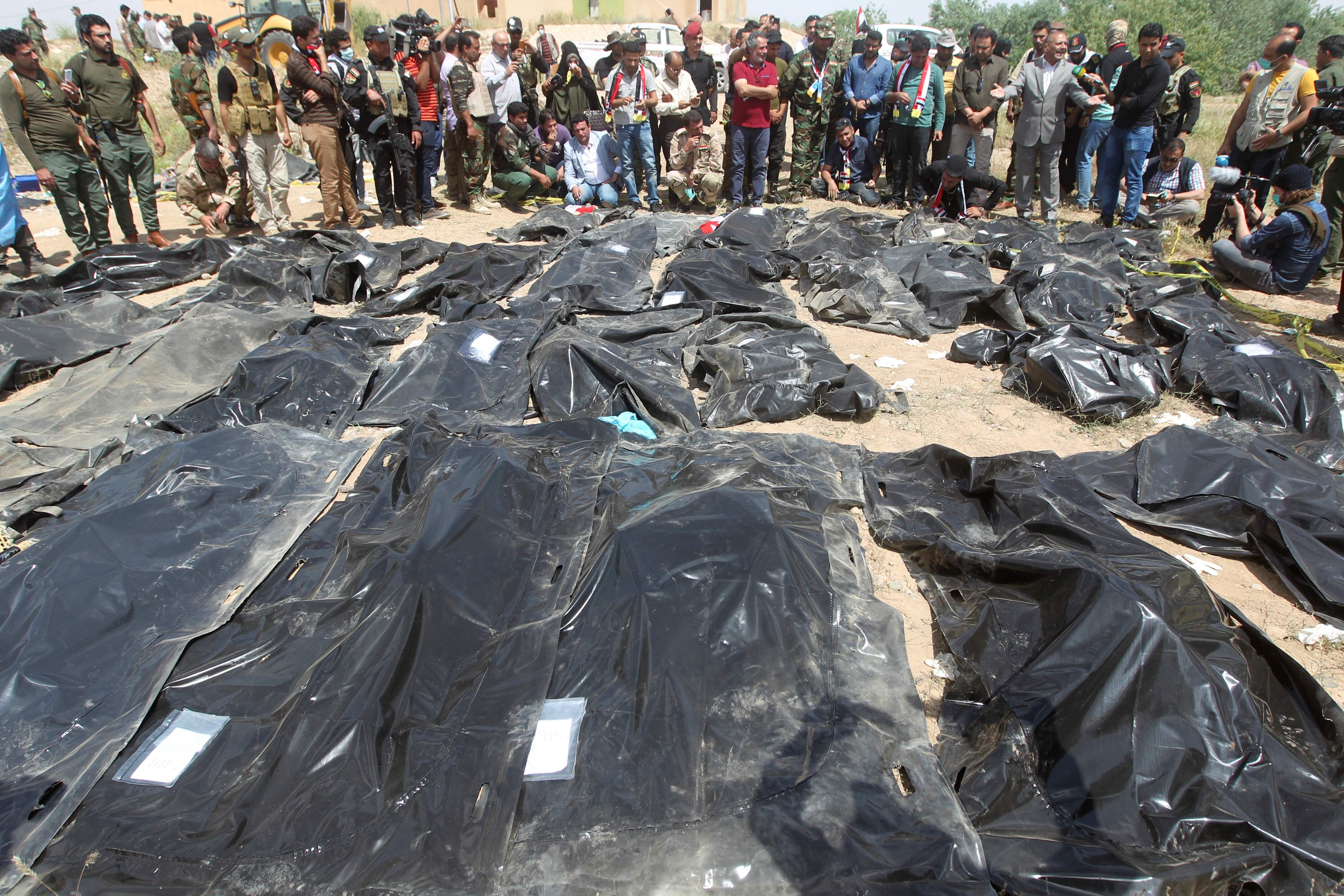
Iraquíes contemplaban bolsas con estos humanos de personas que se creía fueron asesinadas por el grupo Estado Islámico. Fue en abril del 2015. AFP Iraquíes contemplaban bolsas con estos humanos de personas que se creía fueron asesinadas por el grupo Estado Islámico. Fue en abril del 2015. (AFP)
Bagdad. El grupo Estado Islámico (EI) dejó más de 200 fosas comunes en las regiones de Irak que controló entre el 2014 y el 2017, anunció este martes la ONU, que pide obtener pruebas de los crímenes yihadistas y aportar respuestas a las familias de desaparecidos.
Según un informe de la Misión de Asistencia de las Naciones Unidas para Irak y la oficina de derechos humanos de la ONU, estas 202 tumbas colectivas en varias provincias del norte y del oeste del país podrían contener hasta 12.000 cuerpos.
“Podría haber muchas más”, añadió el informe, debido a que algunas zonas son inaccesibles por la cantidad de minas colocadas en ellas o por seguir bajo la amenaza de células yihadistas clandestinas.
Solo en la provincia de Nínive, donde se halla Mosul, la antigua “capital” del EI en el norte de Irak, más de 7.200 personas siguen dadas por desaparecidas, entre ellas 3.117 de la minoría yazidí, según la comisión gubernamental iraquí de los derechos humanos.
Para dar información a las familias, Irak tendrá que desenterrar los restos de las fosas comunes halladas en las provincias de Nínive (casi la mitad de ellas), Kirkuk y Saladino, en el norte de Irak, así como en Al Anbar, en el oeste.
Más de 200 fosas comunes del EI en Irak
Por el momento se cavaron 28 tumbas colectivas y se exhumaron 1.258 cuerpos, según la ONU. La tarea es enorme porque algunas contienen miles.
Es probablemente el caso de una cueva natural al sur de Mosul llamada Jasfa (precipicio en árabe) donde, según los habitantes, los yihadistas ejecutaban a diario a decenas de iraquíes, sobre todo a miembros de las fuerzas de seguridad.
Búsqueda de pruebas
Casi un año después de que Irak proclamase la “victoria” frente al EI, “las pruebas reunidas en estos lugares serán esenciales”, estimó el informe que pidió la protección de estos sitios y que las exhumaciones se lleven a cabo respetando las normas.
Solo estos elementos -añadió- podrán “garantizar investigaciones creíbles, juicios y condenas en conformidad con los estándares internacionales”.
Los investigadores de la ONU comenzaron a recabar pruebas de las matanzas y otras atrocidades del EI, sobre todo contra los yazidíes, unos actos que pueden constituir “crímenes de guerra, crímenes contra la humanidad y un posible genocidio”.
Además, recordó Michelle Bachelet, alta comisionada de la ONU para los derechos humanos, "aunque los crímenes horribles del EI ya no acaparan titulares, el trauma de las familias de las víctimas sigue existiendo y se desconoce la suerte que han corrido miles de mujeres, hombres y niños".
Este hombre inspeccionaba restos de miembros de la etnia yazidí, asesinados por el grupo terrorista Estado Islámico en el Kurdistán iraquí. La fosa se halló en febrero del 2015. AFP Este hombre inspeccionaba restos de miembros de la etnia yazidí, asesinados por el grupo terrorista Estado Islámico en el Kurdistán iraquí. La fosa se halló en febrero del 2015. (AFP)
"Determinar las circunstancias de estos numerosos muertos será una etapa importante en el proceso de duelo de las familias y en el recorrido para garantizar el derecho a la verdad y a la justicia", afirmó el representante especial de la ONU en Irak, Jan Kubis.
Familias y autoridades locales se suelen quejar de la falta de progresos en el tema de los desaparecidos.
En el 2003, cuando Sadam Husein fue derrocado, ya había en Irak al menos un millón de desaparecidos.
Después, tras la invasión liderada por Estados Unidos, desaparecieron miles de personas en medio de la espiral de violencia interconfesional y el auge de las milicias.
Según el informe de la ONU, la burocracia, un problema recurrente en el país, tampoco facilita las cosas. Las familias tienen que dirigirse a cinco administraciones distintas, "un proceso que toma mucho tiempo y es frustrante".
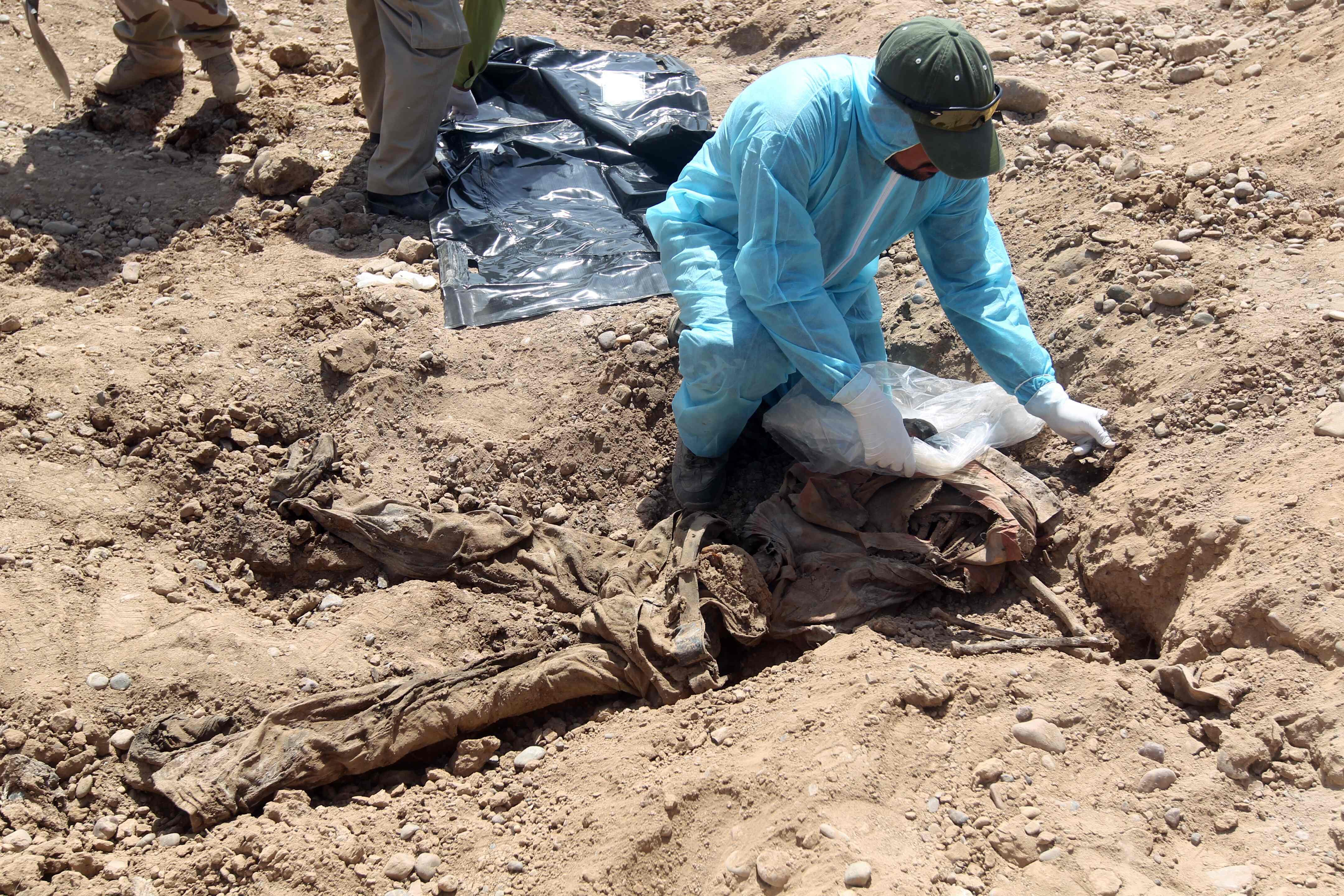
Un miembro de las fuerzas iraquíes inspeccionaba -en abril del 2015- una fosa común con restos de personas que se creía fueron asesinadas por el grupo terrorista Estado Islámico. AFP Un miembro de las fuerzas iraquíes inspeccionaba -en abril del 2015- una fosa común con restos de personas que se creía fueron asesinadas por el grupo terrorista Estado Islámico (AFP)
Unas familias que quedan a expensas de lo que revelen las fosas comunes que, según Kubis, son “el testimonio de terribles pérdidas humanas, de un sufrimiento profundo y de una crueldad chocante”.