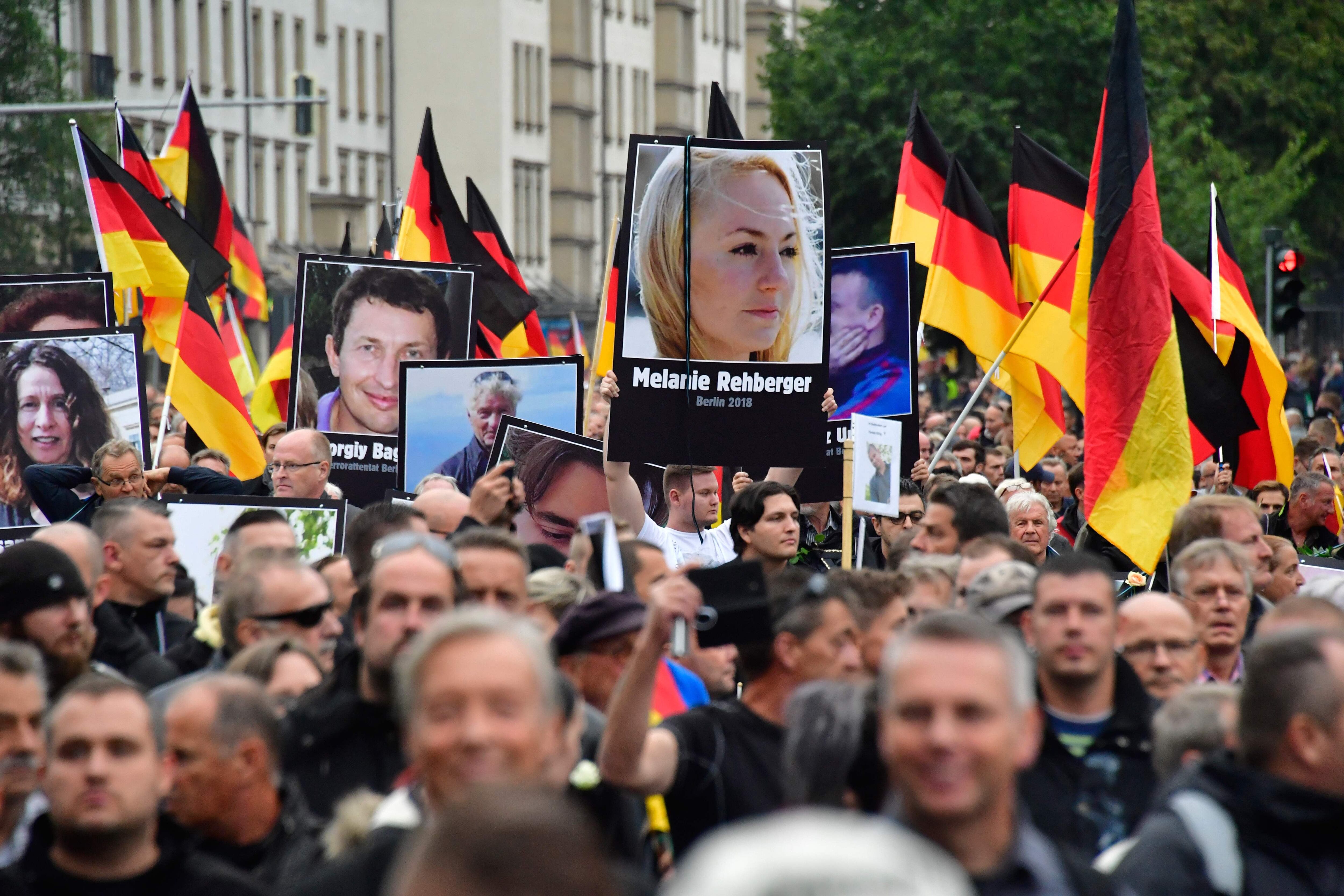
Una forma eficaz de destilar su discurso en un país políticamente alterado por la llegada de más de un millón de migrantes.
Alternativa para Alemania (AfD) prevé repetir en las elecciones europeas está fórmula, que le permitió convertirse desde el 2017 en la primera fuerza de oposición en el Parlamento Federal, en un país en el que la extrema derecha era casi inexistente desde la Segunda Guerra Mundial.
“Alemania no puede seguir acogiendo migrantes”, dice Jorg Meuthen, cabeza de lista de AfD para las elecciones al Parlamento Europeo.
“Los ataques con cuchillo, violaciones y violencia contra las mujeres son perpetrados proporcionalmente más por personas procedentes de una cultura musulmana que por personas de aquí”, afirma.
Según datos de la Policía, 38,6% de los “actos delictivos violentos” en el 2018 fueron cometidos por extranjeros. Pero, al mismo tiempo, la criminalidad llegó a su mínimo desde la reunificación de Alemania.
“Cada suceso en el que están implicados extranjeros, sobre todo migrantes, es exagerado y generalizado”, considera Miro Dittrich, de la fundación contra el racismo Amadeu Antonio.
El punto de partida del impulso a la ultraderecha nacional fueron las agresiones sexuales de decenas de mujeres la noche de Fin de Año del 2015 en Colonia, atribuidas en su mayoría a jóvenes solicitantes de asilo, un hecho que chocó al país.
Luego llegó el asesinato, dos años después, a puñaladas de una adolescente alemana de 15 años por su exnovio, afgano, en una tienda de Kandel. Durante meses, la rama local de AfD organizó en esta pequeña ciudad occidental manifestaciones para denunciar la política migratoria de Angela Merkel.
Continuó con el asesinato con arma blanca de un alemán en Chemnitz, en la región de Sajonia, en agosto del 2018, un caso por el que se juzga actualmente a un solicitante de asilo sirio. Sajonia es un bastión de AfD, que salió a la calle en varias ocasiones para manifestarse contra los migrantes.
‘Hechos’ inventados
Mientras estos actos criminales son ciertos, otros fueron completamente inventados para alimentar un clima de ansiedad y presentar a todos los solicitantes de asilo musulmanes como potenciales asesinos o violadores de mujeres.
Un blog de extrema derecha presenta la vida de las mujeres alemanas "desde la invasión" marcada por las agresiones sexuales y los asesinatos. En una publicación se cuenta que el cuerpo de una mujer fue lanzado a un foso tras ser violada por un migrante.
La historia, retuiteada miles de veces, era falsa en parte ya que el sospechoso fue rápidamente identificado como un allegado de la víctima.
La Policía sajona acusa al partido de difundir “noticias falsas incendiarias, infames y simplistas”.
“Es un viejo método de comunicación: el mensaje no es importante, al final siempre queda algo en la cabeza de la gente”, analiza Dittrich.
En Chemnitz y en Cottbus, en los actos de AfD se muestra un fotomontaje que dice mostrar 16 mujeres que fueron "agredidas" en Europa por "migrantes" o "musulmanes", a pesar de que es falso.
“En mi opinión, estas imágenes eran de mujeres víctimas de ataques”, mantiene Christoph Berndt, representante de la asociación patriótica Zukunft Heimat, que organiza manifestaciones mensuales en Cottbus pidiendo al gobierno “cerrar las fronteras”.
Para él, el temor de buena parte de la población de ser invadidos por migrantes musulmanes es muy real.
"No debemos olvidar por qué se producen estas manifestaciones", añade este reciente miembro de AfD.
¿Son políticamente rentables para su partido las repetidas campañas sobre la criminalidad de los inmigrantes? Durante mucho tiempo lo impulsaron. Pero parece que a la larga se pasa el efecto: AfD apenas cuenta con 10% u 11% de apoyo según los últimos sondeos, por debajo del 15% de hace medio año.