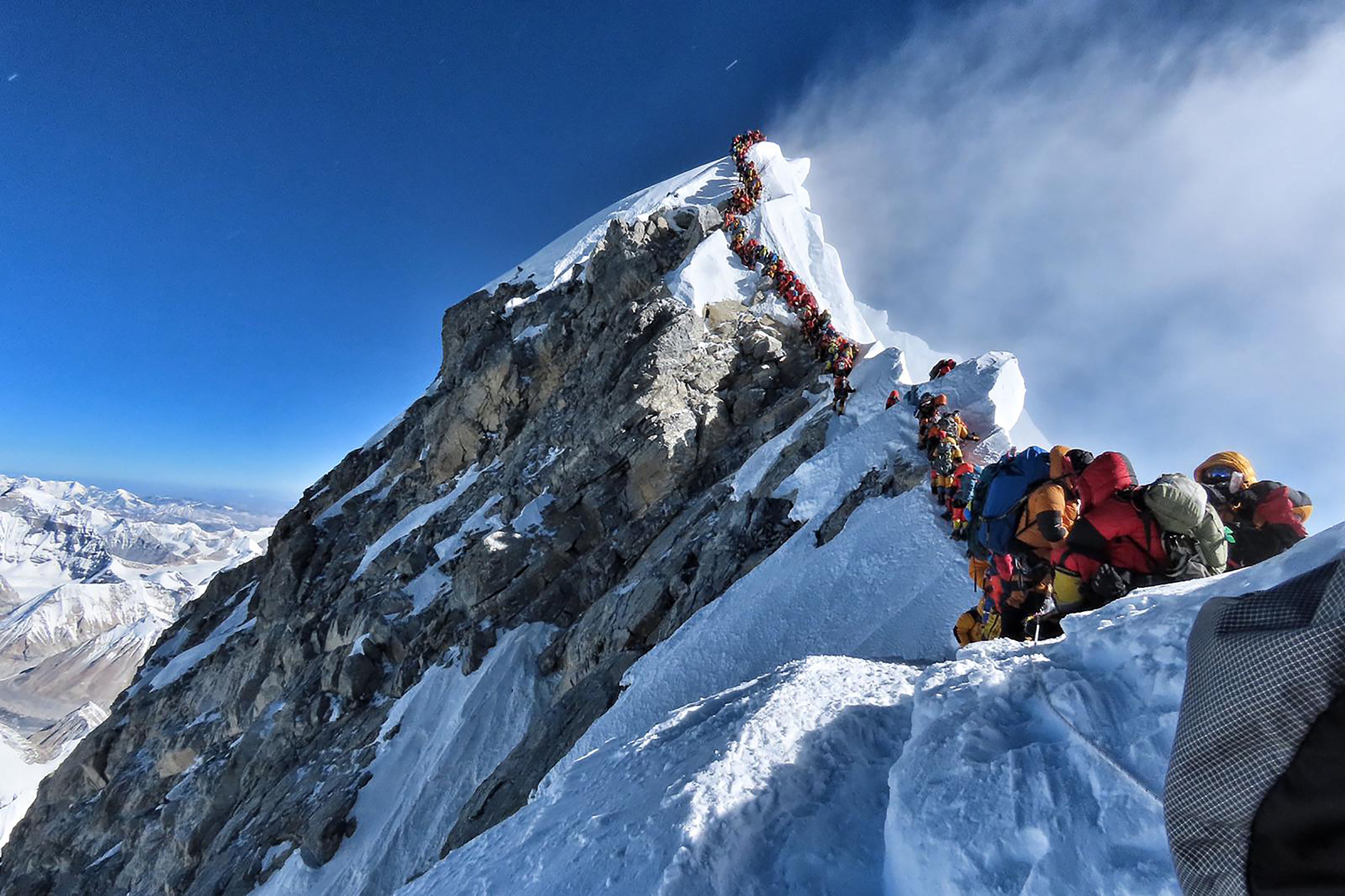
Este año también se han formado atascos impresionantes en esta montaña de 8.848 metros. Se debe a las condiciones meteorológicas porque entre finales de abril y finales mayo esas condiciones son menos extremas en la cima del mundo y más ventajosas para el ascenso.
“Dos alpinistas indios murieron en el Everest ayer (jueves)”, declaró a la AFP Mira Acharya, portavoz del departamento de Turismo de Nepal. Organizadores de expediciones anunciaron además el fallecimiento de un tercer alpinista.
La india Kalpana Das, de 52 años, llegó a la cima pero murió el jueves por la tarde cuando bajaba. Otro montañero indio, Nihal Bagwan, de 27 años, también falleció en el descenso.
"Estuvo bloqueado en el embotellamiento durante más de 12 horas y estaba agotado. Unos guías sherpa lo trajeron al campo 4 y allí murió", relató Keshav Paudel de la agencia Peak Promotion.
En el lado tibetano de la montaña, menos frecuentado que el nepalés, murió un montañero austríaco de 65 años, anunció un organizador de expedición.
Impresionantes fotos han mostrado en los últimos días una larga fila de muy abrigados alpinistas, muy cerca unos de otros, arrastrando sus botas de escalada en la cresta ubicada entre la cima y el desfiladero sur, donde se halla el último campamento en la vertiente nepalí.
Según los expertos, este atasco se debe también a la proliferación de permisos de escalada así como al reducido número de ventanas meteorológicas adecuadas para llegar a la cima. Así, todas las expediciones lanzan el asalto final al Everest durante los mismos días.
A esta altura extrema, el óxígeno es más escaso en la atmósfera y los alpinistas deben recurrir a botellas de oxígeno para llegar a la cima. Una altura superior a 8.000 metros sobre el nivel del mar es considerada como la "zona de la muerte".
LEA MÁS: Muere estadounidense tras desvanecerse tomando fotos en la cima del Everest
Riesgo de muerte
"Permanecer mucho tiempo en la zona de la muerte, aumenta los riesgos de congelación, de sufrir mal de las alturas o incluso de muerte" explica a la AFP Ang Tsering Sherpa, expresidente de la Asociación de Alpinistas de Nepal.
En los últimos días, dos alpinistas indios y un estadounidense perecieron en el Everest. Otro montañista irlandés habría fallecido presuntamente, tras haberse resbalado y caer en una zona situada a 8.300 metros de altura, aunque su cuerpo no ha sido hallado.
El año pasado murieron cinco personas en el Everest.
Desde que las autoridades nepalesas liberalizaron el ascenso a esta montaña en los años 1990, las expediciones comerciales aumentaron y por lo tanto el número de alpinistas.
Este año Nepal concedió para la temporada de primavera un récord de 381 permisos, al precio de $11.000 por persona, según los últimos datos disponibles.
Cada titular de un permiso va acompañado de un guía. Esto significa que unas 750 personas coinciden en la ruta.
Al menos otras 140 recibieron permisos para escalar el Everest desde el flanco norte, en el Tíbet.
La cima del Everest fue alcanzada por primera vez en 1953 por el neozelandés Edmund Hillary y el nepalí Tenzing Norgay.