Robot de la NASA buscará antiguos microbios en la superficie de Marte
Perseverance aterrizaría el 18 de febrero del 2021 en el cráter de Jezero, donde corrió un río hace entre 3.000 y 4.000 millones de años
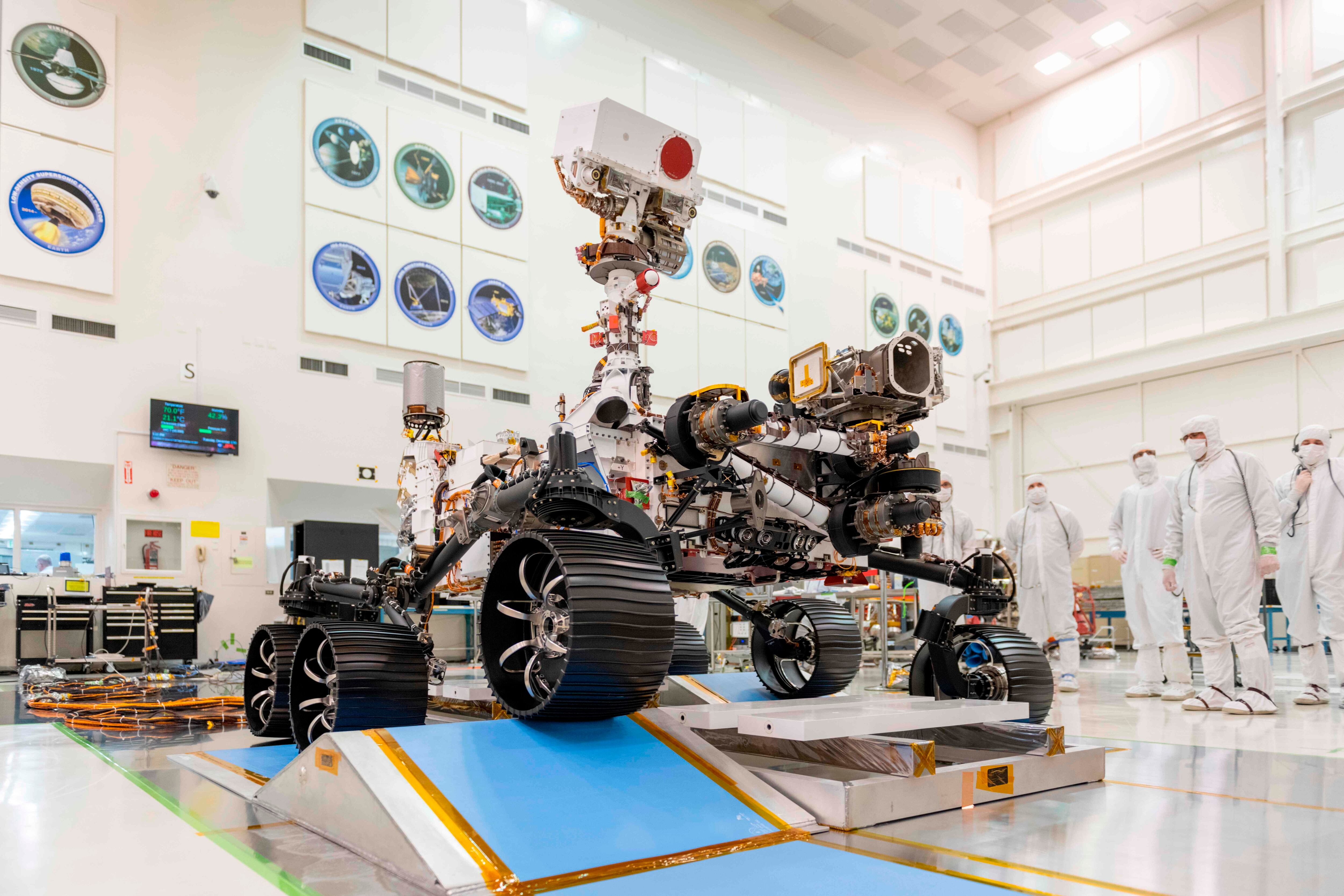
In this image obtained from NASA, engineers in a clean room at NASA's Jet Propulsion Laboratory in Pasadena, California, observe the first driving test for NASA's Perseverance rover on December 17, 2019. - NASA's most advanced Mars rover, Perseverance, launches from Earth on July 30, on a mission to seek out signs of ancient microbial life on what was once a river delta three-and-a-half billion years ago. The interplanetary voyage will last six months. (Photo by - / NASA/JPL-CALTECH / AFP) / RESTRICTED TO EDITORIAL USE - MANDATORY CREDIT "AFP PHOTO / NASA/JPL-Caltech" - NO MARKETING - NO ADVERTISING CAMPAIGNS - DISTRIBUTED AS A SERVICE TO CLIENTS / TO GO WITH AFP STORY by Ivan COURONNE "NASA's Perseverance rover will scour Mars for signs of life" -
AFP
El vehículo Perseverance en una habitación esterilizada en el Laboratorio de Propulsión a Chorro en Pasadena, California, en diciembre del 2019. AFP El vehículo Perseverance en una habitación esterilizada en el Laboratorio a Propulsión de Chorro en Pasadena, California, en diciembre del 2019. (-/AFP)
Pasadena, EE. UU. Estados Unidos lanzará a Marte el 30 de julio su vehículo más sofisticado, un gran robot explorador de seis ruedas bautizado Perseverance, para intentar encontrar evidencias de que hace 3.500 millones de años auténticos microbios poblaban sus ríos.
El viaje interplanetario durará más de seis meses y, si el robot aterriza ileso, comenzará una exploración científica de varios años para recolectar y acondicionar decenas de muestras de rocas que serán recuperadas por un futuro aparato y traídas a la Tierra en el 2031.
Perseverance tomará el relevo de los cuatro vehículos, todos estadounidenses, que desde fines de la década de 1990, con la ayuda de satélites y robots fijos, transformaron nuestro conocimiento de Marte al demostrar que no siempre había sido seco y frío como ahora.
El Planeta Rojo una vez tuvo los ingredientes de la vida: agua, compuestos orgánicos y un clima favorable.
En las muestras que recabará Perseverance, los científicos esperan encontrar fósiles de bacterias o de otros microbios y confirmar que la vida existió en aquel cuerpo celeste.
La Administración Nacional de Aeronáutica y el Espacio (NASA) ha estado teletrabajando durante meses debido a la pandemia de covid-19, pero el calendario no ha cambiado para esta misión en la que se han invertido $2.700 millones.
NASA enviará robot a buscar microbios en Marte
"Esta es una de las dos misiones que hemos cuidado para estar seguros de lanzar en julio", dijo el jefe de la NASA, Jim Bridenstine. La Tierra y Marte están en el mismo lado del Sol cada 26 meses, una ventana que no están dispuestos a perder.
Solo los estadounidenses han logrado posar sobre Marte robots intactos; concretamente cuatro aterrizadores (fijos) y cuatro vehículos exploradores: Pathfinder, Spirit, Opportunity y Curiosity, el único que sigue activo.
En los últimos 20 años se confirmó que el planeta tuvo océanos, ríos y lagos.
Pero fue Curiosity el que constató la presencia de moléculas orgánicas complejas, aunque los instrumentos con los que cuenta este vehículo no pueden determinar si su origen fue biológico.
Los primeros módulos de aterrizaje estadounidenses, el Viking 1 y 2, intentaron hallar señales de vida en 1976, pero un poco al azar.
“Los experimentos de detección de vida fueron un fracaso total”, dijo a la AFP Scott Hubbard, quien lanzó el programa actual de exploración marciana en la década del 2000.
Ajustes en la búsqueda
La NASA decidió entonces proceder por etapas: gracias al estudio de los suelos, el análisis químico y molecular de las rocas y las múltiples observaciones satelitales, los geólogos y los astrobiólogos gradualmente han comprendido dónde fluyó el agua y qué zonas podrían haber sido propicias para la vida.
"Entender dónde pudo haber sido habitable Marte en el pasado, y qué huellas de vida estamos buscando, fueron pasos necesarios para enviar una misión, muy cara, a este lugar cuidadosamente elegido para recolectar muestras", explicó Hubbard.
Perseverance aterrizaría el 18 de febrero del 2021 en el cráter de Jezero, donde corrió un río hace entre 3.000 y 4.000 millones de años, depositando lodo, arenas y sedimentos “en uno de los deltas mejor conservados de la superficie de Marte”, según Katie Stack Morgan, del equipo científico.
En la Tierra, se han encontrado fosilizados microbios de miles de millones de años en rocas de deltas similares.
El explorador robótico mide tres metros de largo, pesa una tonelada, tiene ojos (19 cámaras), oídos (dos micrófonos) y un brazo robótico de dos metros.
Sus instrumentos más importantes son dos láseres y un equipo de rayos X que, proyectados sobre rocas, ayudarán a analizar su composición química y molecular, e identificar posibles compuestos orgánicos.
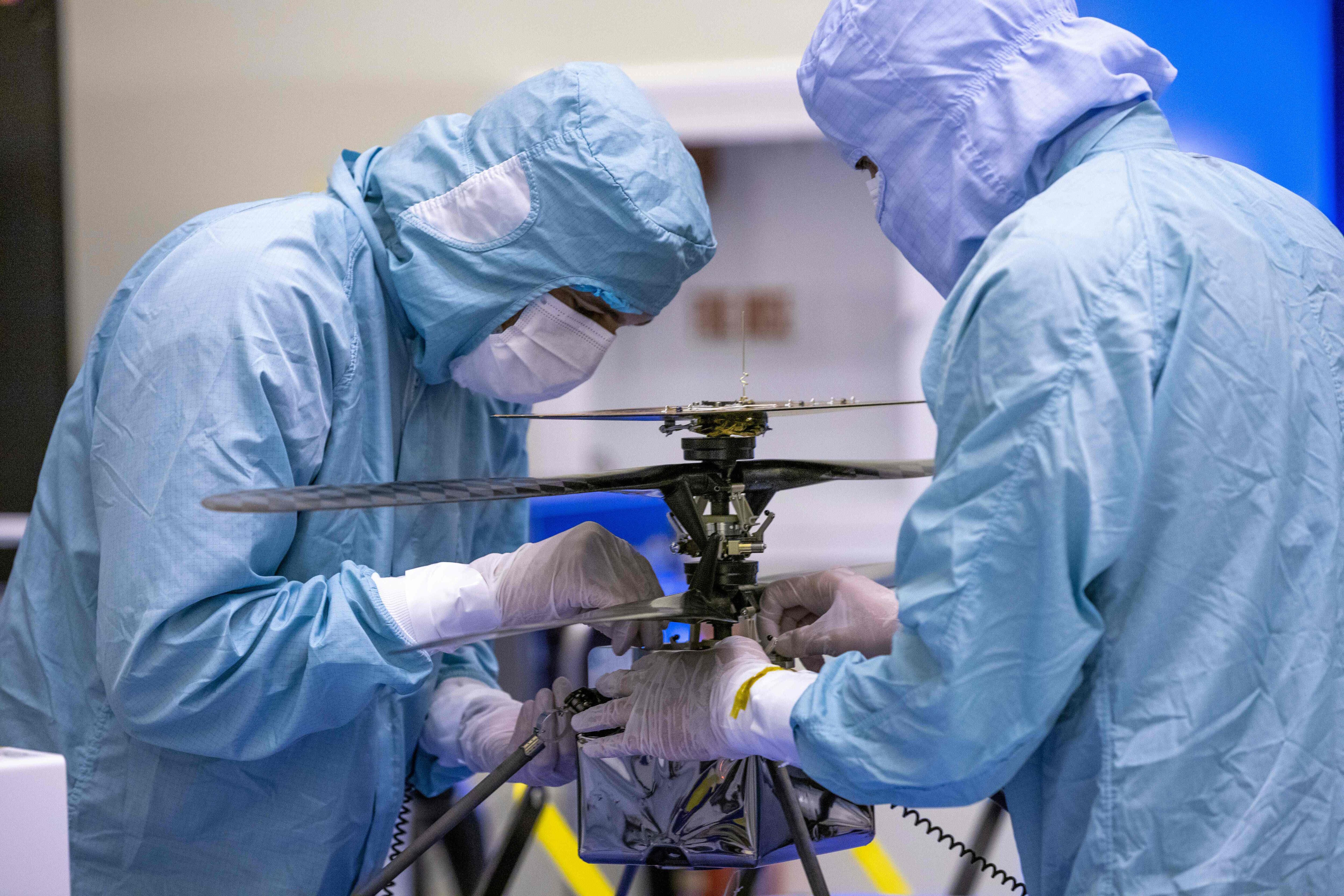
A bordo también hay un minihelicóptero experimental de 1,8 kg, Ingenuity, que intentará el primer vuelo de ese tipo de nave en otro planeta.
Pero Perseverance probablemente no podrá decir si una roca contiene microbios antiguos. Para tener certeza, será necesario que las muestras sean finamente diseccionadas en la Tierra utilizando equipos enormes, para eventualmente distinguir rastros microscópicos de organismos antiguos.
Ingenieros trabajaban en detalles del minihelicóptero Ingenuity en las instalaciones del Centro Espacial Kennedy, el 10 de marzo del 2020. AFP Ingenieros trabajaban en detalles del minihelicóptero Ingenuity en las instalaciones del Centro Espacial Kennedy, el 10 de marzo del 2020. AFP (CORY HUSTON/AFP)
“Alcanzar un consenso científico real de que la vida existió en Marte requerirá el retorno de la muestra, lo que sea que observemos con Marte 2020”, aseguró Ken Williford, subdirector del proyecto científico, utilizando el nombre original que tuvo este vehículo explorador.
Y no se debe esperar, aclaró, encontrar antiguas conchas marinas fosilizadas, como en una ocasión se pensó que había sucedido a partir de unas imágenes. Los científicos piensan que la vida, en caso de haber existido en Marte, no tuvo tiempo para evolucionar a formas complejas antes de que el planeta se secara por completo.