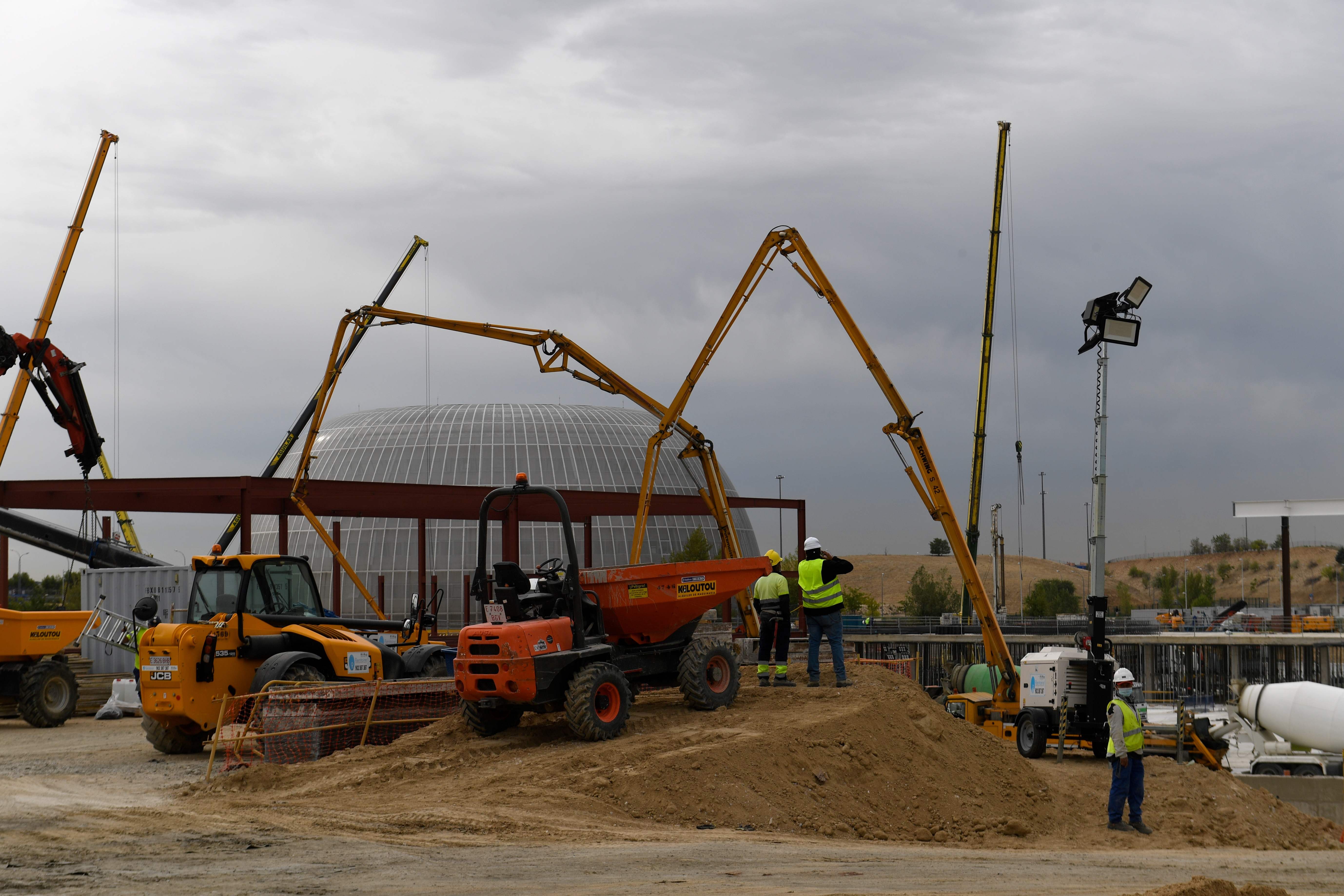
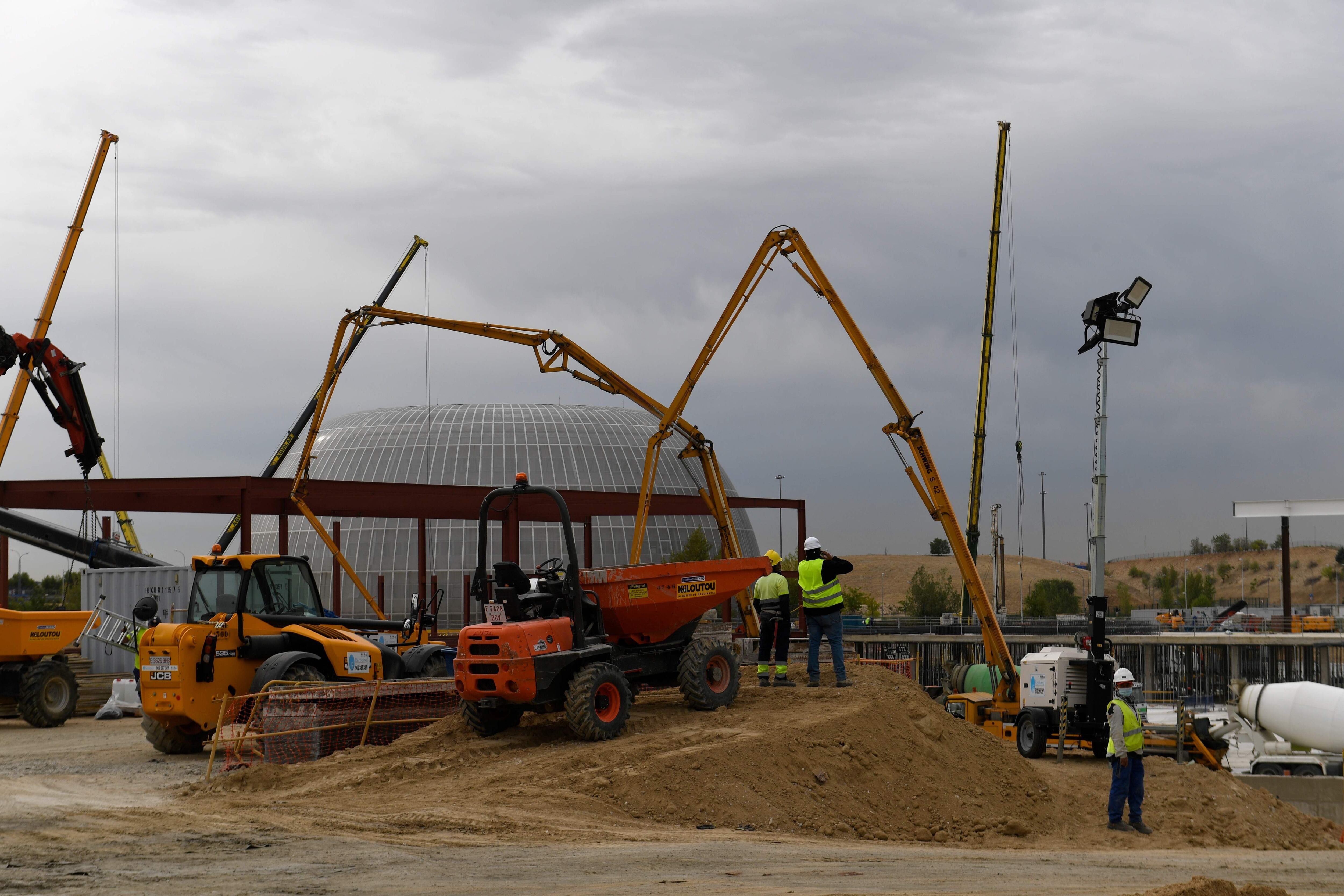
Madrid. Cerca del aeropuerto de Madrid, las grúas funcionan las 24 horas del día para terminar en noviembre el ‘hospital de pandemias’. Sin embargo, la segunda ola del covid-19 llegó antes de lo esperado, poniendo a prueba el sistema sanitario de la capital española.
En un inmenso terreno a orillas de la autopista, entre nubes de polvo que levantan decenas de camiones, 400 obreros trabajan día y noche desde julio.
Las hormigoneras giran a toda máquina, las mangueras escupen litros y litros de cemento y los soldadores hacen saltar las chispas de las altas columnas que componen el esqueleto del edificio.
"Hace dos meses no había nada aquí", dice Alejo Mirando, director general de infraestructuras de la región de Madrid, principal foco de la epidemia en España en los meses de marzo y abril.
LEA MÁS: Madrid vuelve a ser foco de contagios de covid-19 en España
Con un coste superior a los 50 millones de euros (unos $59 millones), el hospital Isabel Zendal, rebautizado como “hospital de pandemias”, dispondrá de 45.000 m2 para acoger a más de 1.000 enfermos en caso de crisis sanitaria.
Ventanales para vigilar a los pacientes sin contaminarse, enormes vestíbulos sin habitaciones individuales, salas con presión negativa para realizar autopsias: la arquitectura está pensada para "evitar la transmisión de carga viral" y se inspira en el pabellón de congresos Ifema, convertido entre marzo y mayo en hospital de campaña, explica Mirando.
Prometido para preparar mejor a la región ante una segunda ola de la epidemia, el hospital se entregará demasiado tarde para atender el incremento de pacientes con los que ya está lidiando el sistema sanitario.
"Nos preocupa el estado de la salud pública y de la evolución de la epidemia en Madrid", admitió el lunes el jefe de gobierno español, Pedro Sánchez.
Madrid, con más de 6,5 millones de habitantes, representa desde el inicio de la epidemia cerca de un tercio de los 29.000 fallecidos por covid-19 en el país. 73 de las 191 defunciones de la última semana proceden de la región capitalina.
“La situación es muy, muy preocupante”, coincide la doctora Silvia Durán, vocera de la asociación de médicos Amyts, preocupada por la “rápida progresión” de la curva de contagios “similar a la del comienzo de la pandemia”.
"Los centros de salud (de atención primaria, ndlr) son los que están ahora mismo conteniendo esta segunda ola", pero "los hospitales ya se están preparando", con un 16% de sus camas ocupadas por pacientes covid (contra un 6% en el resto del país), explica esta facultativa.
"Estamos al borde del colapso", señala José Molero, del sindicato CSIT. "El siguiente nivel va a ser cuando la población va a acudir directamente al hospital, y no va a pasar por los centros de salud" primaria, dice.
Los médicos se quejan de falta de personal, de recursos y de descanso. Están "exhaustos", agotados porque reciben "hasta 60 pacientes" diarios, dice.
‘Zona de alto riesgo’
Densamente poblada y muy conectada con el resto del país, Madrid es “una zona de alto riesgo”, señaló el lunes Fernando Simón, el epidemiólogo jefe del ministerio de Sanidad.
Sin embargo, el gobierno regional, que tiene las competencias de la gestión sanitaria, llama a la calma.
La situación no es para nada "comparable a los meses de marzo y abril", ya que los positivos son mucho más jóvenes y la mortalidad muy inferior, aseguró este viernes el ministro regional de Salud, Enrique Ruiz Escudero, antes de anunciar no obstante nuevas medidas, como la limitación de reuniones privadas en espacios interiores y exteriores a 10 personas o la prohibición de bailar en las bodas.
Gobernada por el conservador Partido Popular, la región acabó por pedir ayuda para rastrear contactos a 150 militares puestos a disposición por el gobierno de izquierdas de Pedro Sánchez.
LEA MÁS: Manifestantes protestan en Madrid contra el uso obligatorio de la mascarilla
El anuncio fue insuficiente: un colectivo médico se plantea demandar al gobierno regional, y cientos de profesionales le pidieron "actuar para evitar un nuevo colapso del sistema".
El personal sanitario pide asimismo más contrataciones y fomentar el teletrabajo cuando sea posible para evitar verse infectados.
“Somos nosotros los que vamos a caer enfermos”, asegura Silvia Durán, recordando que España tuvo en abril el récord mundial de trabajadores sanitarios infectados (un 20% del total de casos), según un informe de la agencia de salud europea.