Las lunas heladas de Júpiter, nuevo horizonte para la búsqueda de vida extraterrestre
El principal atractivo de estos satélites del mayor planeta del sistema de solar son los océanos de agua líquida que esconden bajo su superficie congelada, un ambiente propicio para la vida
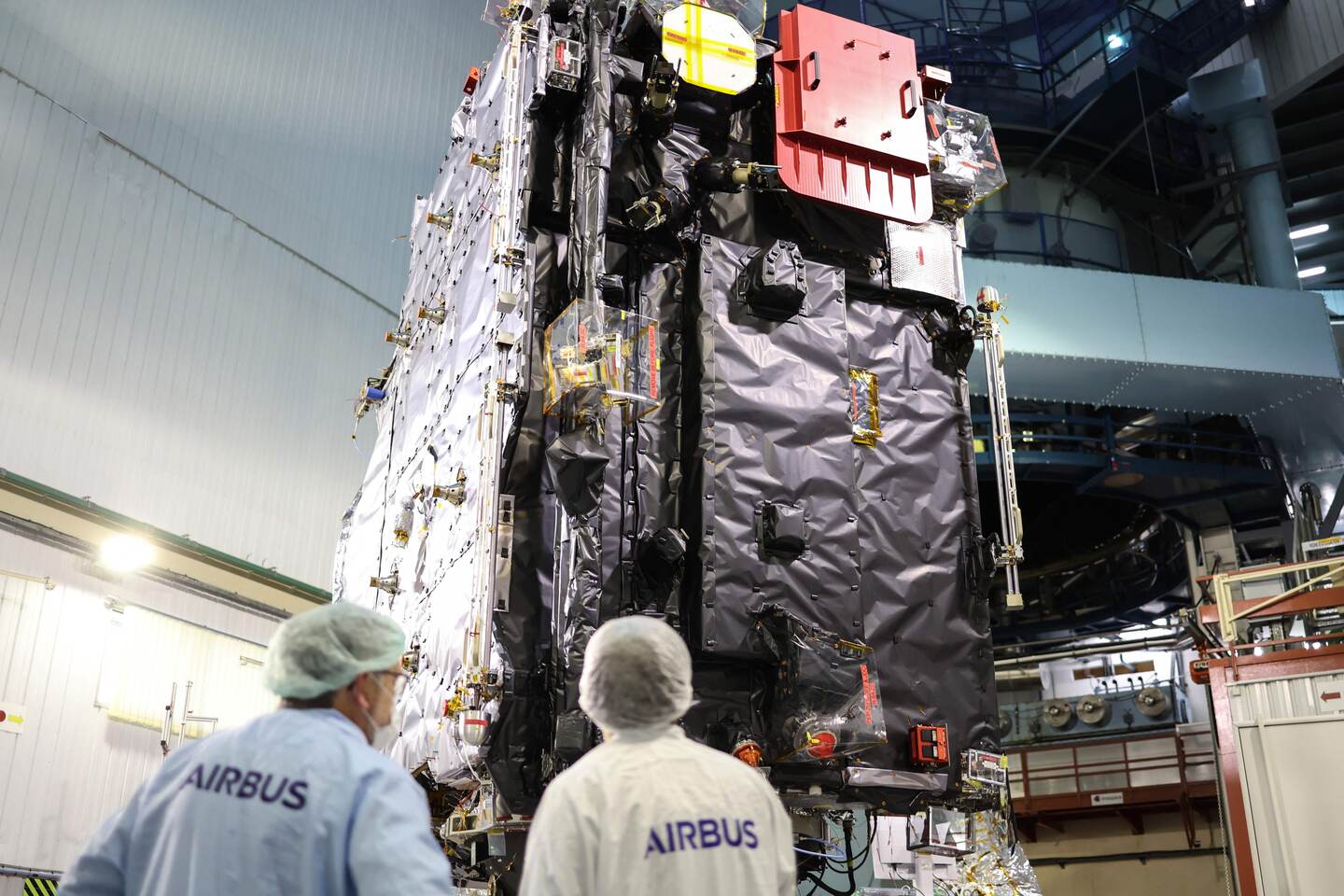
(FILES) In this file photo taken on January 20, 2023, engineers work around the ESA's (European Space Agency) "Juice" probe during its unveiling for media in Toulouse, southwestern France, a few days ahead of its departure to Kourou space center. - Scheduled for launch in April 2023, Juice will make detailed observations of Jupiter and its three large ocean-bearing moons � Ganymede, Callisto and Europa � with a suite of instruments. The mission will characterise these moons as both planetary objects and possible habitats, explore Jupiter�s complex environment in depth, and study the wider Jupiter system as an archetype for gas giants across the Universe. (Photo by Charly TRIBALLEAU / AFP) CHARLY TRIBALLEAU
Kourou, Francia. Debajo de su banquisa se mueven enormes océanos de agua líquida, terrenos propicios para la emergencia de vida. La exploración de las lunas heladas de Júpiter, el objetivo de la misión JUICE, abre un nuevo capítulo en la búsqueda de otros mundos habitables.
Estos entornos están tan alejados del Sol que los astrónomos los habían excluido hace mucho tiempo de la zona considerada habitable del sistema solar, que “hasta hace poco terminaba en Marte”, explica la astrofísica Athéna Coustenis, una de las responsables científicas de la sonda europea.
Pero los descubrimientos aportados por las sondas Galileo (1995) alrededor de Júpiter y Cassini (2004) alrededor de Saturno ampliaron el campo de investigación.
Esta no se centra en estos planetas gigantes y gaseosos, no propicios para la vida, sino en sus lunas heladas: Europa y Ganimedes, en Júpiter; y Encélado y Titán, en Saturno.
Hacia allí partirá el jueves la misión JUICE (Jupiter Icy Moons Explorer, Explorador de las Lunas Heladas de Júpiter) de la Agencia Espacial Europea (ESA), que se centrará especialmente en Ganimedes, mientras que la próxima misión de la NASA, Europa Clipper, tendrá el foco en Europa.
El principal atractivo de estos satélites del mayor planeta del sistema de solar son los océanos de agua líquida que esconden bajo su superficie congelada, un ambiente propicio para la vida.
"Es la primera vez que vamos a explorar hábitats más allá de la línea de hielo, allí donde el agua líquida ya no puede existir en superficie", explicaba Nicolas Altobelli, responsable de JUICE para la ESA en enero desde la sede de Airbus, que concibió la sonda.
La sonda debe llegar en 2034 a la órbita de Ganimedes, el mayor satélite del sistema solar y también el único que dispone de su propio campo magnético para protegerlo de las radiaciones.
En esta foto de archivo tomada el 20 de enero de 2023, los ingenieros trabajan alrededor de la sonda "Juice" de la ESA (Agencia Espacial Europea) durante su presentación para los medios en Toulouse, suroeste de Francia, unos días antes de su partida al centro espacial de Kourou. (CHARLY TRIBALLEAU/AFP)
Océano gigantesco
Copiado!
Todas estas características sugieren un entorno estable, otra condición para la emergencia de la vida y su mantenimiento.
"No se trata de que aparezca vida, sino de que se mantenga", afirma Athéna Coustenis, investigadora en el laboratorio LESIA del Observatorio de París.
A diferencia de las misiones a Marte, que rastrean restos de una vida hoy desaparecida, la exploración de las lunas heladas busca ambientes todavía habitables, lo que no ocurre en el planeta rojo.
La habitabilidad requiere también de una fuente de energía. Pero en las temperaturas heladas del entorno de Júpiter, esta no procede del Sol sino de la gravedad que el enorme planeta ejerce en sus satélites, con "efectos de mareas" parecidos a los que ocurren en la Tierra con su luna.
Este fenómeno permite "disipar el calor en el interior de las lunas y mantener el agua en estado líquido", explica Francis Rocard, planetólogo del Centro Nacional de Estudios Espaciales (CNES).
El océano de Ganimedes es "gigantesco", describe Carole Larigauderie, jefe de proyecto de JUICE en el CNES. Encajado entre dos espesas capas de hielo, puede tener varias decenas de kilómetros de profundidad.
"En la Tierra, hemos llegado a encontrar formas de vida al fondo de los abismos", apunta.
En efecto, algunos ecosistemas terrícolas son capaces de mantenerse sin luz y son un hervidero de microorganismos como bacterias y arqueas.
Misiones complementarias
Copiado!
Dicho ecosistema necesita de nutrimientos para mantenerse.
"La pregunta es saber si el océano de Ganimedes los contiene", afirma Coustenis.
Sería necesario, por ejemplo, que el océano pueda absorber componentes depositados en su superficie para disolverlos después en el agua, desarrolla la astrofísica.
Los instrumentos de JUICE inspeccionarán este océano por todos los costados para evaluar su profundidad, su distancia de la superficie y, esperan, también la composición.
La sonda orbitará alrededor de ocho meses alrededor del satélite y podrá acercarse hasta a 200 km de altura, cobijado de las radiaciones.
Sin esta magnetosfera, su hermana Europa es menos hospitalaria para una aeronave espacial. La sonda estadounidense Europa Clipper, que llegará a su destino a la par que JUICE, solo podrá sobrevolarla.
Sin embargo, los datos recogidos por las dos misiones serán complementarios, señalan los científicos.
Si se demuestra que Ganimedes cumple todos los requisitos para albergar vida, "el siguiente paso lógico" sería enviar un módulo de aterrizaje, apuntó Cyril Cavel, responsable científico de Airbus.
“Esto forma parte del sueño”, aunque todavía no del proyecto en este momento, agregó.