OMS advierte que aumento de casos de ómicron podría crear variantes más peligrosas
‘Cuanto más se extienda ómicron, más se transmite y más se replica y más probabilidades tiene de generar una nueva variante’, afirma la responsable de emergencias de la organización en Europa
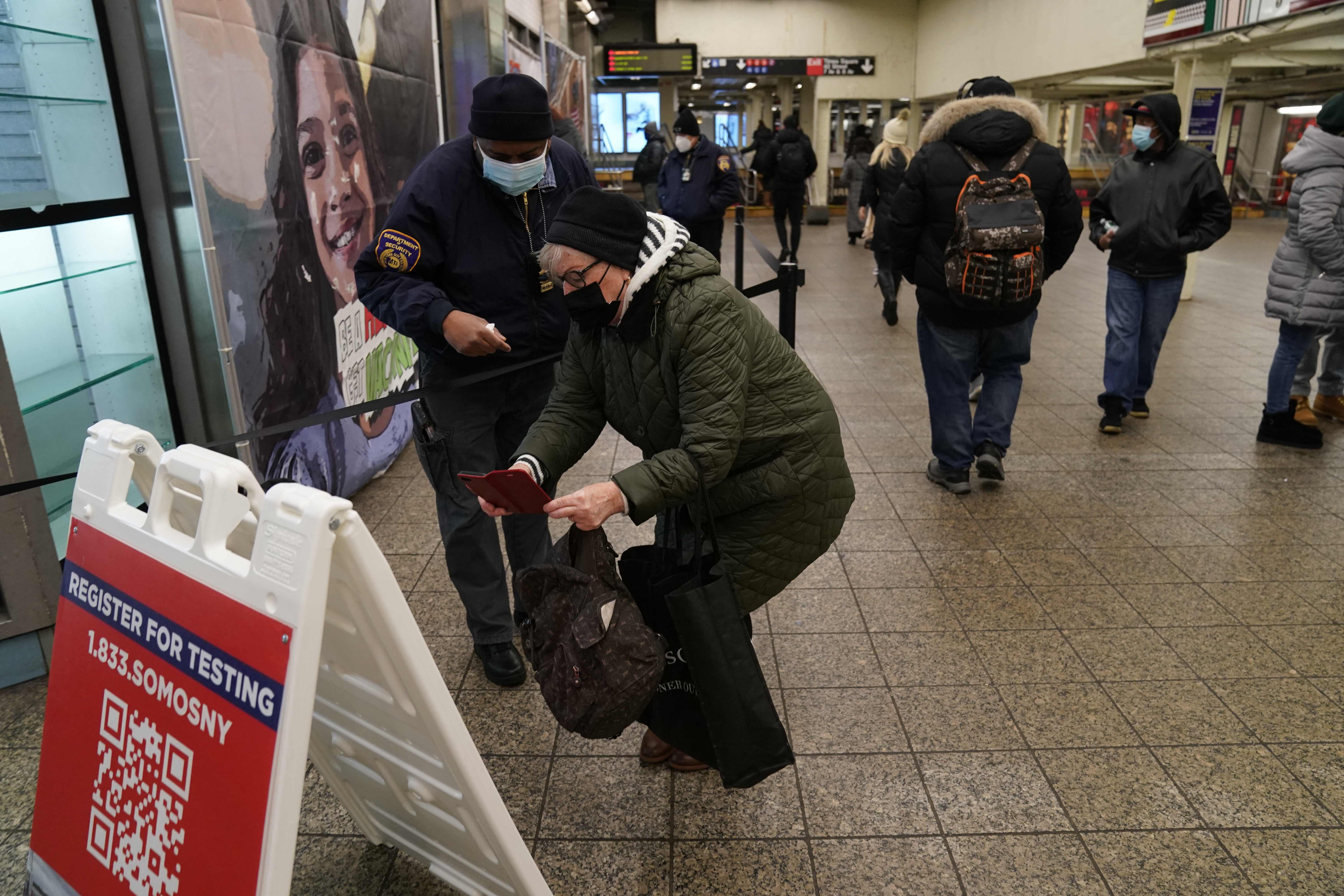
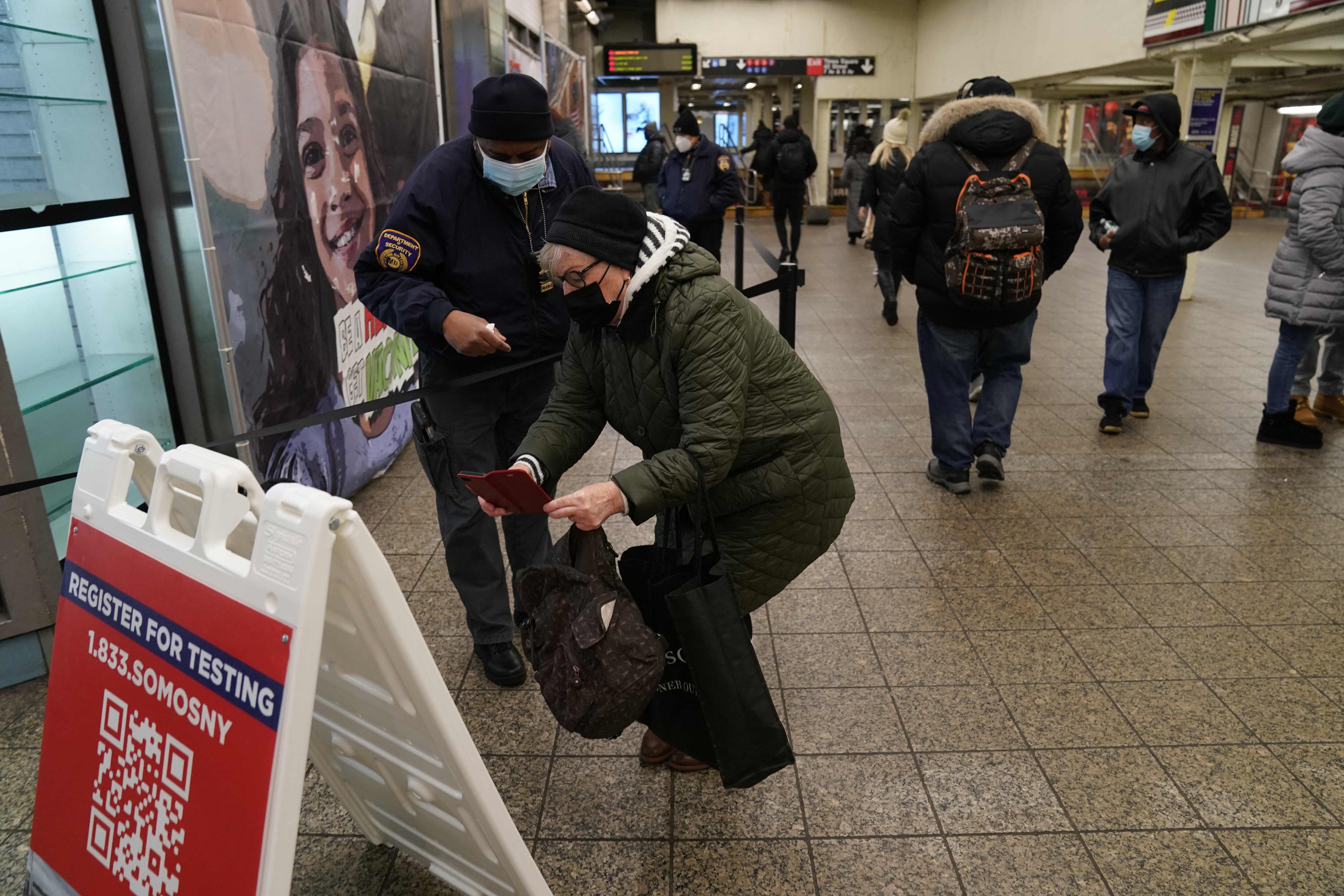
A woman gets registered for Covid-19 testing at the Times Square Subway stop on January 4, 2022, in New York City. - The US recorded more than 1 million Covid-19 cases on January 3, 2022, according to data from Johns Hopkins University, as the Omicron variant continues to spread at a blistering pace. Johns Hopkins also reported 1,688 deaths for the same period, a day after top US pandemic advisor Anthony Fauci had said the country is experiencing "almost a vertical increase" in Covid-19 cases but the peak may be only weeks away. (Photo by TIMOTHY A. CLARY / AFP) TIMOTHY A. CLARY
Estocolmo. El aumento de los casos de ómicron en todo el mundo podría aumentar el riesgo de que aparezcan nuevas variantes más peligrosas, advirtió este martes la Organización Mundial de la Salud (OMS) en Europa.
Aunque ómicron se está extendiendo rápidamente por todo el mundo, parece ser mucho menos grave de lo que se temía y ha suscitado esperanzas de que la pandemia de coronavirus pueda superarse.
Sin embargo, la responsable de emergencias de la OMS, Catherine Smallwood, afirmó que el aumento de las tasas de infección podría tener el efecto contrario.
“Cuanto más se extienda ómicron, más se transmite y más se replica y más probabilidades tiene de generar una nueva variante”, dijo Smallwood.
Europa ha registrado más de 100 millones de casos de covid desde el inicio de la pandemia, y más de cinco millones de casos nuevos en la última semana del 2021, “casi eclipsando lo que hemos visto en el pasado”, subrayó.
“Estamos en una fase muy peligrosa, estamos viendo que las tasas de infección aumentan de forma muy significativa en Europa occidental y el impacto total de esto aún no está claro”, añadió.
Según Smallwood, la crisis sanitaria del Reino Unido, provocada por la falta de personal debido a la oleada de infecciones por ómicron, podría repetirse en otros países europeos.
Una mujer se registra para la prueba de covid-19 en la parada del metro de Times Square, el 4 de enero del 2022, en la ciudad de Nueva York. (TIMOTHY A. CLARY/AFP)