Herramienta tecnológica repercute en la traducción, se aplica sobre todo en la edición científica y jurídica, es todavía marginal en la creación literaria
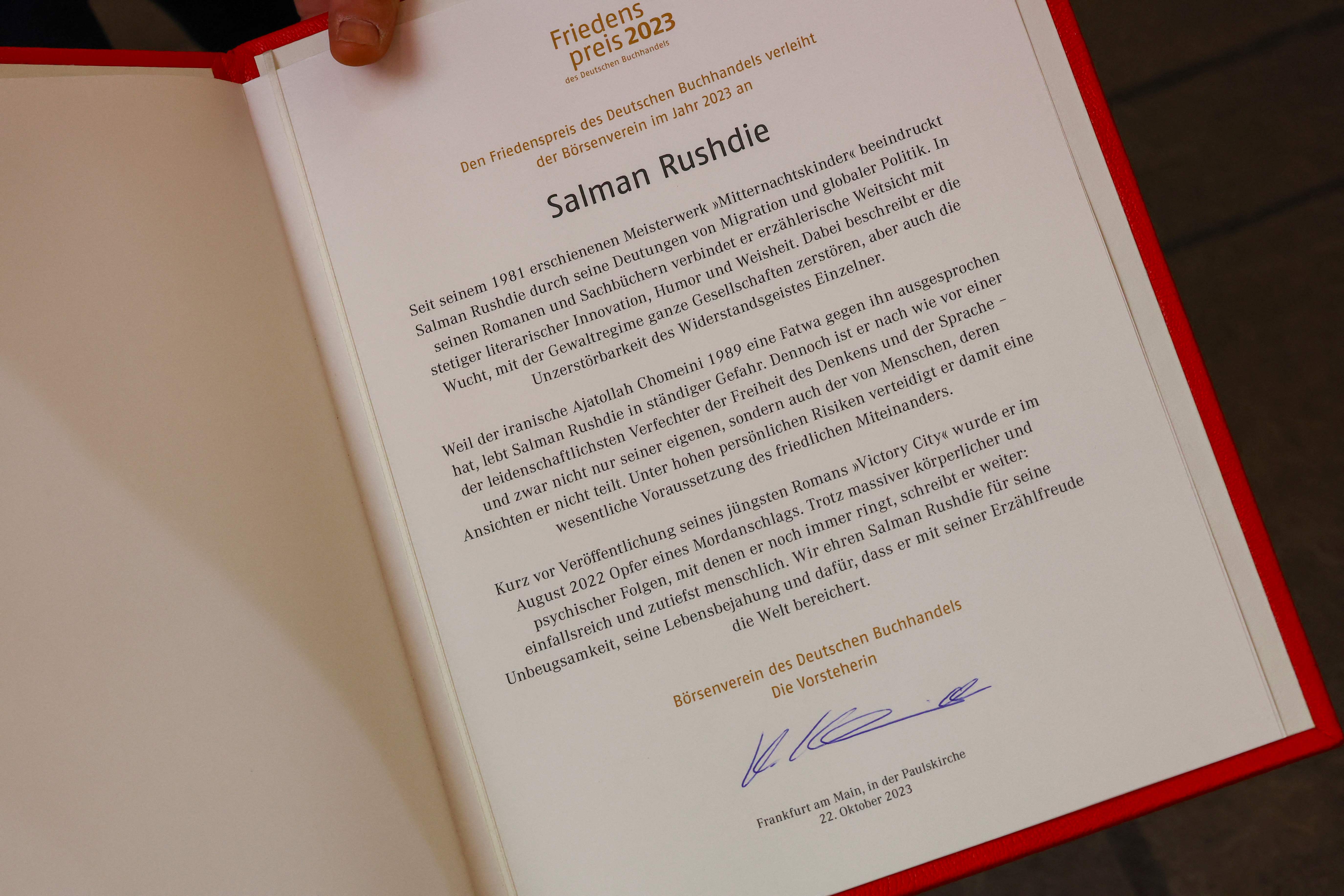
The certificate to British-US author Salman Rushdie is pictured as he received the Peace Prize of the German book trade (Friedenspreis des Deutschen Buchhandels) during a ceremony at the Church of St Paul in Frankfurt am Main, western Germany, October 22, 2023. The international peace prize is awarded annually by the German Publishers and Booksellers Association, which runs the Frankfurt Book Fair. (Photo by KAI PFAFFENBACH / POOL / AFP) KAI PFAFFENBACH
¿Puede la inteligencia artificial escribir como Salman Rushdie? El célebre autor se muestra escéptico. Pero el mundo de la edición reunido en la Feria del Libro de Fráncfort no esconde su inquietud ante la idea de contenidos generados por ordenador.
Como muchos otros sectores, el mundo del libro está en ebullición ante la revolución tecnológica que suponen programas de inteligencia artificial como ChatGPT.
Los actores de esta industria muestran “un profundo sentimiento de inseguridad”, asegura Juergen Boos, director de la Feria del Libro de Fráncfort, la mayor del mundo, que terminó el domingo y en la que hubo numerosos debates sobre la cuestión.
Se preguntan “qué ocurre con la propiedad intelectual de los autores, a quién pertenecen realmente los nuevos contenidos, cómo integrarlos en las cadenas de valor”, explica.
La inteligencia artificial ya está repercutiendo en la traducción, pero se aplica sobre todo en la edición científica y jurídica y es todavía marginal en la creación literaria.
Las máquinas carecen todavía de inspiración para escribir novelas, asegura el autor británico Salman Rushdie después de leer un texto corto generado “con su estilo” por un programa.
“Lo que salió era para tirar”, dijo entre las risas de los asistentes a una rueda de prensa en esta ciudad alemana.
“Quien haya leído 300 palabras de mi puño reconocerá inmediatamente que es imposible que eso sea mío”, agregó el escritor, poco preocupado “por el momento”.
Ayuda a la escritura
El rendimiento de la IA en ficción “no es todavía muy bueno”, argumentó Jennifer Becker, autora y universitaria alemana en una mesa redonda.
“No veo todavía el momento en que confiemos el trabajo de escritura a la IA de forma totalmente autónoma”, estimó.
En cambio, “el potencial es grande para usarla en colaboración”, como una asistencia a la escritura, apuntó.
Para las novelas románticas, que se basan en modelos narrativos estereotipados y con una producción masiva, la IA ofrece oportunidades, incluso “un cierto alivio” para quienes ya no deberán ocuparse de este tipo de contenido, bromeó Juergen Boss.
Pero todo depende del tipo de publicación, según Susanne Barwick, consejera jurídica adjunta de la Asociación Alemana de Editores y Libreros.
“El sector de libros científicos y especializados ya está más avanzado y se ha adentrado más en la cuestión”, sostuvo.
Pero como la IA generativa se sirve de miles de millones de textos para entrenar sus algoritmos y crear el contenido, esto puede provocar contenciosos legales.
Durante la Feria del Libro de Fráncfort, en Alemania, se discutió el uso de la inteligencia artificial en la industria literaria. (KIRILL KUDRYAVTSEV/AFP)
¿Quién es el autor?
Una de las principales incógnitas es saber quién dispone de los derechos de autor del contenido generado por la IA, señaló Boos.
“Eso es un verdadero desbarajuste y un tema muy importante. Hay también mucho dinero en juego”, asegura.
En la plataforma KDP de Amazon, dedicada a la autoedición, ya pululan libros generados enteramente por la IA, observan los especialistas. Algunos incluso aparecen entre los más vendidos.
KDP pide ahora a los autores declarar en la web si sus obras han sido generadas por máquinas (tanto los textos, como las imágenes o las traducciones).
En septiembre, varios escritores, como George R.R. Martin de la saga “Juego de tronos” o el rey de la novela de suspense John Grisham denunciaron en Estados Unidos a la empresa californiana OpenAI, a la que acusan de usar sus obras para crear ChatGPT sin respetar sus derechos de autor.
En una carta abierta firmada por numerosos escritores como Margaret Atwood o Dan Brown, el sindicato estadounidense de autores (Authors Guild) alertó a los gigantes de la tecnología.
“Millones de libros, artículos, ensayos y poemas protegidos por el derecho de autor constituyen el ‘alimento’ de los sistemas de IA, una comida sin fin para la que no hay factura”, criticó.