Electrodos en el cerebro podrían curar la drogadicción
El tratamiento, llamado estimulación cerebral profunda, se ha usado desde hace años para enfermedades neurológicas como el mal de Parkinson.
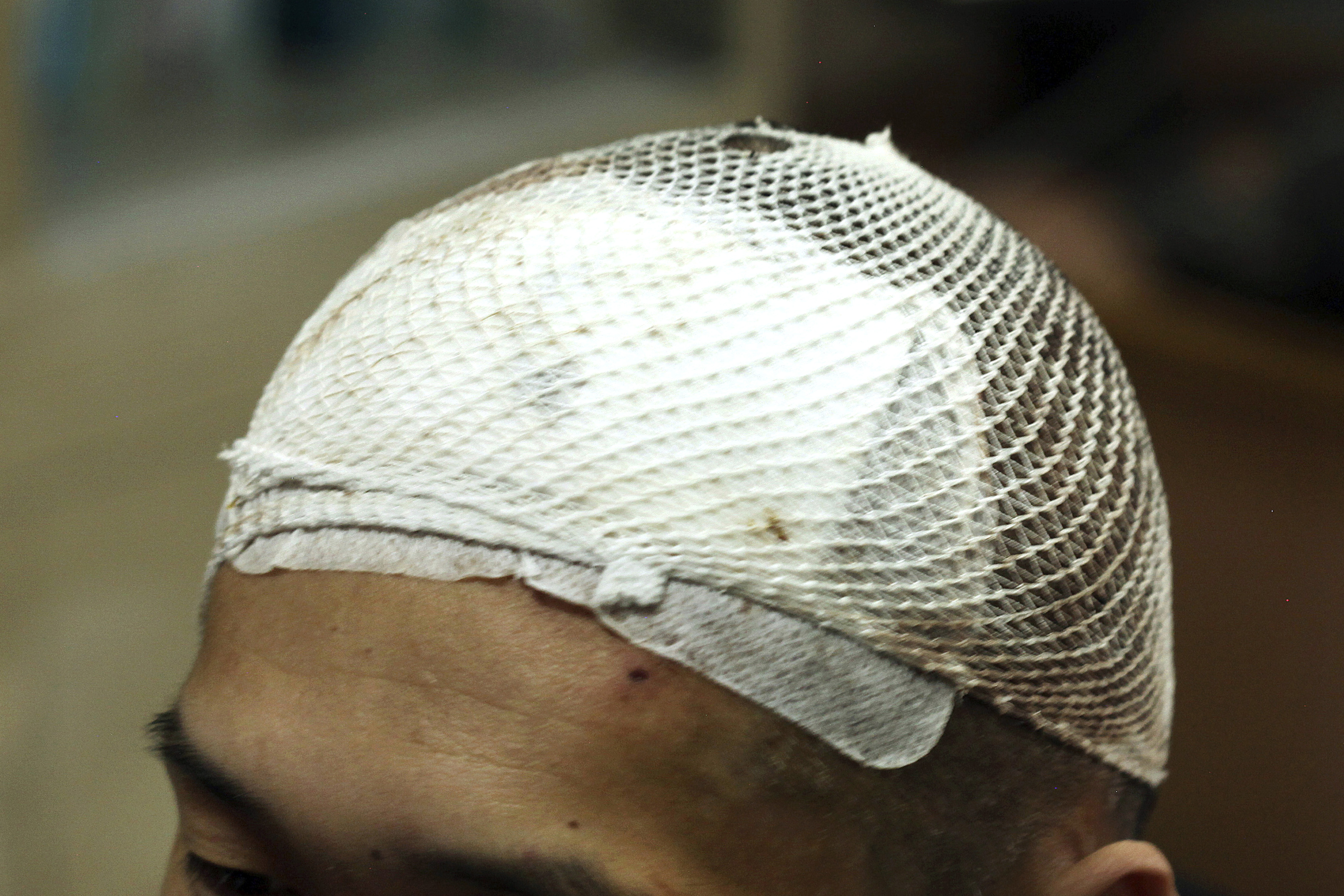
Bloodied white mesh covers the head of a methamphetamine addict named Yan on Monday, Oct. 29, 2018, three days after he had a deep brain stimulation device implanted as part of a clinical trial at Ruijin Hospital in Shanghai, China. The hope is that DBS will extinguish his addiction, quite literally, with the flip of a switch. Critics say such human experiments are premature and risky, but U.S. regulators in February greenlighted a human trial of DBS for opioid addiction at West Virginia University. (AP Photo/Erika Kinetz) Erika Kinetz
Una malla blanca cubre la cabeza de un adicto a la metanfetamina llamado Yan, tres días después de la implantación de un dispositivo de estimulación cerebral profunda como parte de un ensayo clínico en el Hospital Ruijin en Shanghai, China. (Foto AP / Erika Kinetz) (Erika Kinetz/AP)
Shanghái. Un equipo de médicos en China está ensayando un tratamiento innovador que involucra la inserción de electrodos en el cerebro a fin de curar a los drogadictos. La esperanza que con esa tecnología la adicción quedará, literalmente, “apagada” mediante un interruptor.
El tratamiento, llamado estimulación cerebral profunda, se ha usado desde hace años para curar males neurológicos como el mal de Parkinson. Ahora, los primeros ensayos del tratamiento contra la adicción a las metanfetaminas se están realizando en el Hospital Ruijin de Shanghái, junto con experimentos paralelos contra la adicción a los opioides.
El tratamiento involucra una operación en que se le implantan electrodos en el cerebro al paciente, que actúan como una especie de marcapasos que estimulan las áreas señaladas.
El uso de la estimulación cerebral para combatir la drogadicción ha tropezado con obstáculos en Occidente, pero China parece estar perfilándose como el nuevo centro mundial para ese tipo de tratamiento.
Los científicos en Europa han tenido problemas en reclutar a drogadictos para sus experimentos con la estimulación cerebral y en Estados Unidos los dilemas éticos, sociales y científicos han entorpecido la introducción del procedimiento, más aun cuando allí los implantes cuestan $100.000cada uno.
Larga experiencia
China tiene una largo historial de aplicar la cirugía cerebral para curar la drogadicción, pero a la vez ello le ha valido controversias costosas. Incluso hoy en día, China tiene leyes contra el uso de drogas que obligan al acusado a pasar años bajo tratamiento forzado o lo sentencian a campamentos de trabajo para su "rehabilitación".
Sin embargo, lo cierto es que China tiene gran cantidad de pacientes, un financiamiento público abundante y ambiciosas empresas médicas dispuestas a pagar por estudios sobre la estimulación cerebral.
En todo el mundo hay ocho estudios oficialmente registrados para combatir la drogadicción con la estimulación cerebral, según los Institutos Nacionales de la Salud de Estados Unidos. Seis de ellos están en China.
Un dispositivo estereotáctico presiona la cabeza de un paciente de cirugía cerebral en el centro de neurocirugía funcional del Hospital Ruijin en Shanghai, China. La esperanza es que la tecnología extinga la adicción, casi literalmente, con solo tocar un interruptor. (Foto AP / Erika Kinetz) (Erika Kinetz/AP)
Sin embargo, la magnitud y el sufrimiento humano provocado por la epidemia de los opioides podría llevar a las autoridades de salud estadounidenses a cambiar de opinión y la cirugía experimental que se practica hoy en China está en camino hacia Norteamérica: En febrero la Administración de Alimentos y Medicamentos de Estados Unidos (FDA por sus siglas en inglés) aprobó un experimento en Virginia Occidental.
Las operaciones en China antes involucraban extirpaciones cerebrales. Las familias de adictos a la heroína estaban tan desesperadas que pagaban miles de dólares por cirugías riesgosas y dudosas en las que los médicos perforaban el cerebro y extirpaban o malograban tejidos cerebrales. Tales cirugías beneficiaron económicamente a algunos hospitales, pero también dejaron un sinnúmero de personas con trastornos emocionales, memorias atrofiadas y erráticos impulsos sexuales.
En el 2004, el Ministerio de Salud de China ordenó cesar las cirugías de extirpación cerebral para tratar la drogadicción en la mayoría de los hospitales. Nueve años después, especialistas en el hospital militar de Xi’an reportaron que la mitad de los 1.167 pacientes que se habían sometido a la extirpación cerebral habían durado cinco años o más libres de drogas.
La estimulación cerebral tiene sus raíces en esas experiencias, pero a diferencia de la extirpación, que atrofia irreversiblemente algunas células cerebrales, los electrodos causan efectos que son, al menos en teoría, reversibles. La tecnología ha despertado una nueva ola de experimentación a nivel global.
“Como médicos, siempre tenemos que pensar en el paciente”, declaró el doctor Sun Bomin, director del departamento de neurocirugía del Hospital de Ruijin. “Son seres humanos. Uno no puede decirles ‘Véte, aquí no tenemos nada para ayudarte’”.