Las hermosas montañas cubiertas de verde, el balance perfecto entre la presa y el depredador, criaturas con sus propios sistemas digestivos e inmunológicos, cuerpos de agua por doquier y seres humanos reunidos en comunidades para resolver el misterio del por qué estamos aquí y cuál es nuestro propósito…
Al planeta Tierra le tomó 3.500 millones de años para tener vida, desde microorganismos a formas más avanzadas e inteligentes.
¿Pero qué hay afuera? En nuestra galaxia, la Vía Láctea, existen aproximadamente 200.000 millones de estrellas. En comparación, hay 20 veces más estrellas que personas en la Tierra, donde actualmente habitan alrededor de 8.000 millones de seres humanos.
Si asumimos que cada estrella forma un planeta que alberga vida, estamos hablando de 400.000 trillones de planetas con esta posibilidad en nuestro universo.
Sin embargo, de todos ellos, los únicos que hemos detectado con telescopios de onda óptica e infrarrojo están dentro de la Vía Láctea.
Por fortuna, gracias al desarrollo tecnológico de los últimos años, el número de planetas detectados incrementó exponencialmente con el tiempo.
Entre el 2005 al 2016, la cifra de planetas detectados había pasado de 50 a 3.000. Hoy en día se tiene registros de 7.751 de ellos en nuestra galaxia.
Para hacerlo, los astrónomos usan la luz proveniente de estrellas con el fin de hallar planetas orbitando cerca de ellas y evaluar su probabilidad de albergar vida macrobiótica e inteligente.
No obstante, esta tarea es muy compleja ya que depende mucho de la masa de cada estrella, la magnitud de radiación de estrellas que pueden afectar el planeta, e inclusive la proximidad del planeta a la estrella, lo cual regula la temperatura dentro de este cuerpo celeste para poder almacenar agua líquida.
Candidatos posibles
Hasta el día de hoy, los estudios no han detectado vida fuera de la Tierra, pero creemos que existen posibilidades de encontrarla en otra forma distinta a lo que vemos en este planeta.
Mas esto también resulta complicado, porque cómo dar con algo que no conocemos ni sabemos por dónde empezar a buscar.
Por esta razón, las astrónomas y los astrónomos basan su investigación en características de vida similares al que encontramos en la Tierra.
Por ejemplo, uno de los planetas que creemos que puede albergar vida se llama TRAPPIST-1e, que pertenece al sistema planetario TRAPPIST.
Este cuerpo celeste se encuentra a cuarenta años luz o a 300 billones de kilómetros.
Desde nuestra perspectiva, pareciera ser un planeta que ofrece una vista sorprendente de objetos brillantes en un cielo rojo y que se asoman como versiones más grandes y más pequeñas de nuestra propia luna (recordemos que estas son aproximaciones pues nadie ha estado ahí para corroborarlo).
Con estudios se ha podido determinar que dichos objetos no son lunas, son otros planetas del tamaño de la Tierra en un espectacular sistema planetario fuera del nuestro.
Estos siete mundos rocosos se agrupan alrededor de su pequeña estrella roja y comparten como si fueran una familia alrededor de una fogata.
Además de TRAPPIST-1e, tenemos otros posibles candidatos de contener alguna forma de vida.
Tal es el caso de Kepler-16b. Este se encuentra a 2.000 billones de kilómetros. Si viajáramos a la velocidad de la luz, tardaríamos 200 años en llegar ahí. Su masa es 105 veces la del planeta Tierra y su órbita tarda 228 días (como referencia, nuestra órbita es de 365 días).
Kepler-16b orbita un par de estrellas que se encuentran en un sistema binario orbitando entre ellas. Kepler-16b también podría ser un planeta gigante gaseoso como lo es Saturno.
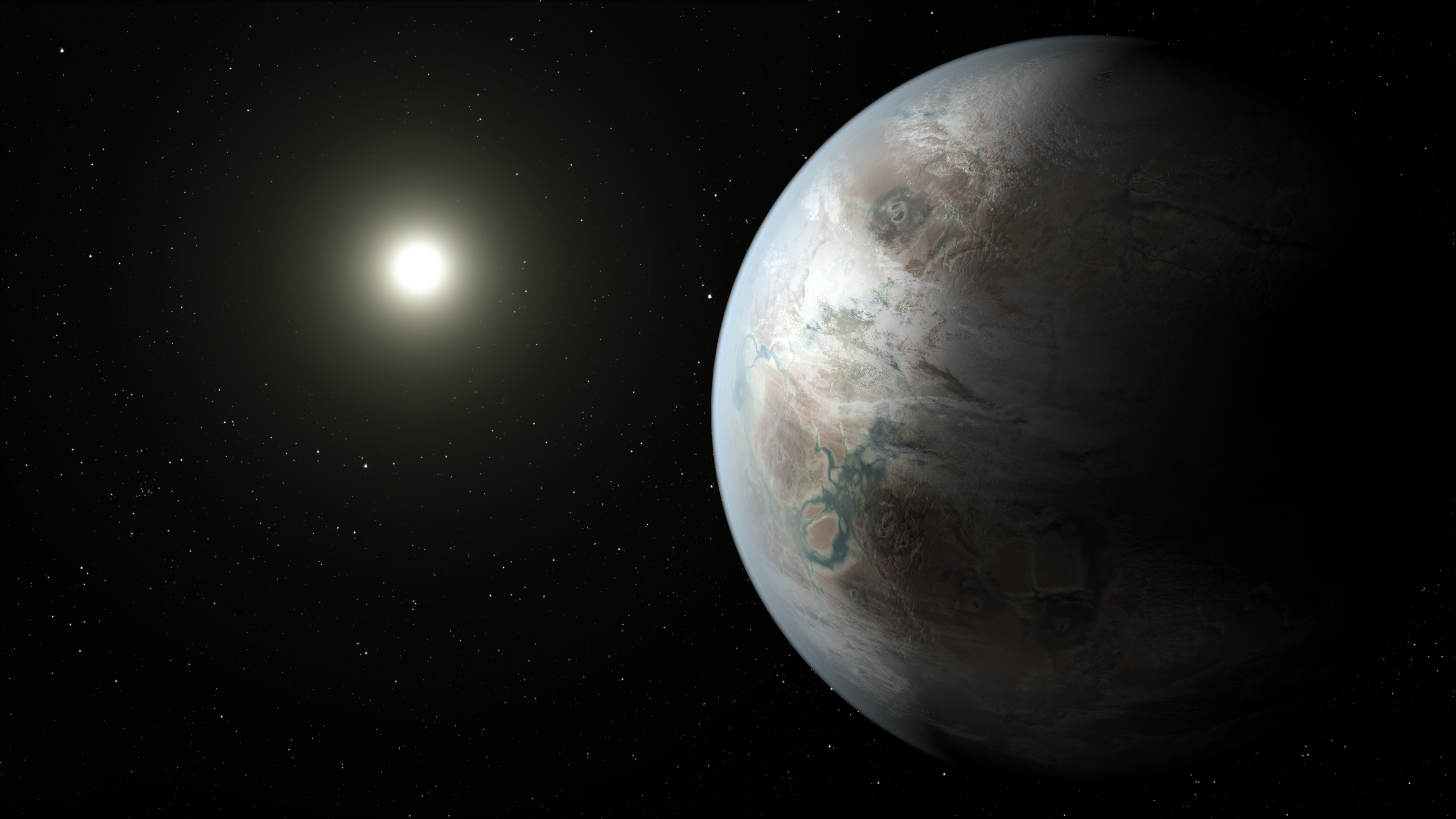
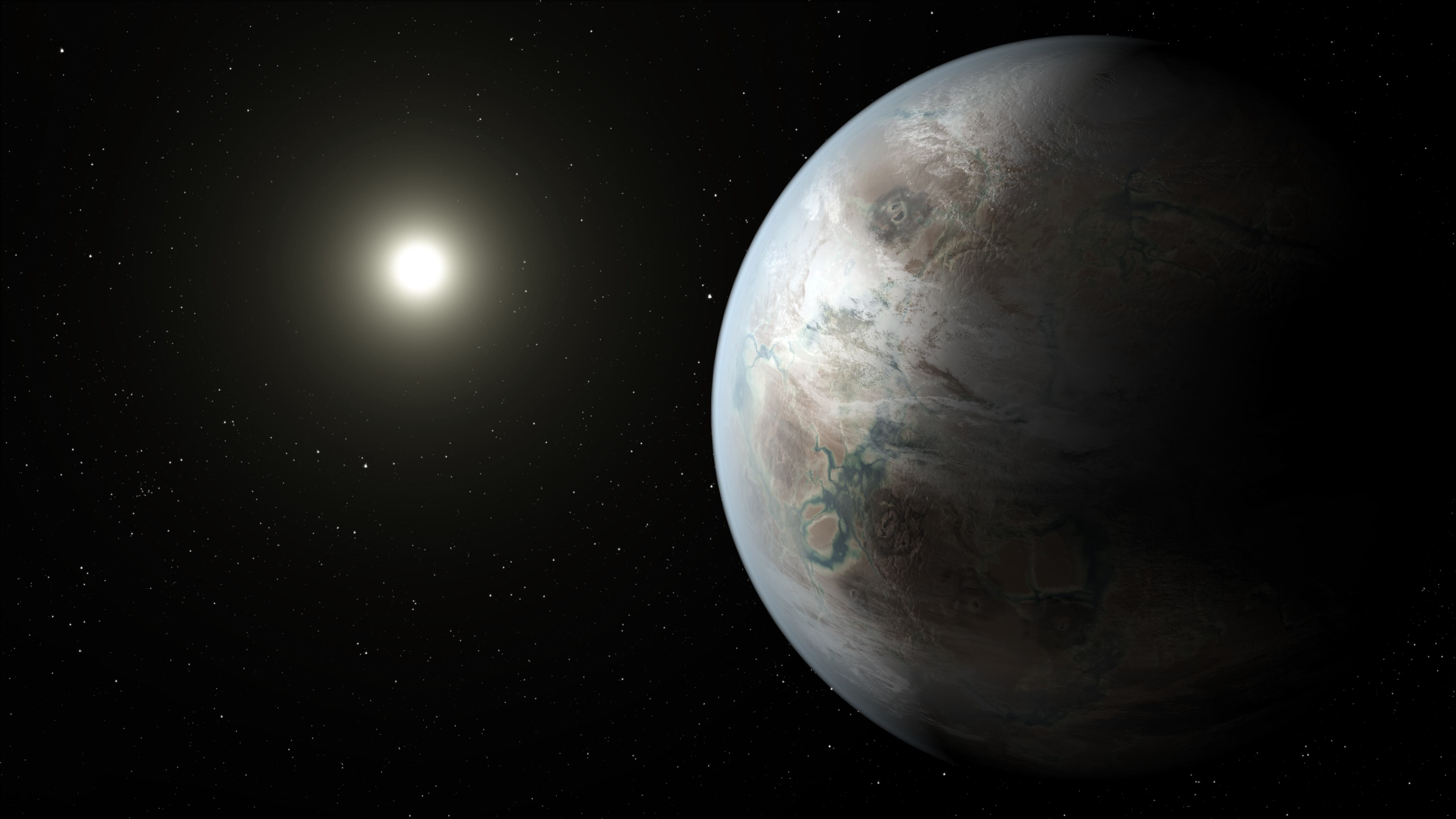
Kepler-452b es otro planeta que causa curiosidad. Sabemos que orbita alrededor de una estrella del mismo tamaño y temperatura que nuestro sol.
Su tamaño es casi igual al de la Tierra, con un periodo de órbita de 384 días. Este planeta se encuentra en la zona de habitabilidad, la región alrededor de la estrella donde la temperatura es perfecta para tener agua líquida. Si se viaja a la velocidad de la luz, tardaríamos 2.000 años en llegar ahí.
Un ejemplo más es Proxima-b que se encuentra a cuatro años luz, alrededor de 40 billones de kilómetros.
Su masa es muy similar a la de nuestro planeta con un periodo de órbita de 11 días, pero su proximidad a su estrella es impactante. Se encuentra a 0,04 unidades astronómicas de su estrella. Como referencia, la Tierra se encuentra a una unidad astronómica del Sol y Mercurio, el planeta más cercano a nuestra estrella está a 0,4 unidades astronómicas.
Si se viaja a la velocidad de la luz, nos llevaría cuatro años en llegar hasta allá. Eso sí, es importante mencionar que actualmente, este planeta recibe alrededor de doscientos cincuenta veces más radiación de rayos X que la Tierra.
Sin duda, la búsqueda de vida en planetas extrasolares es un viaje con muchas emociones, un viaje en el cual todos los seres humanos compartimos en comunidad.

Tecnología de punta
El telescopio más revolucionario de las ciencias planetarias es Kepler Space Telescope, el cual fue lanzado al espacio por la NASA el 7 de marzo del 2009 con la misión de descubrir planetas similares al nuestro.
Luego de nueve años de operación, Kepler fue retirado el 30 de octubre del 2018. Durante ese tiempo, este telescopio espacial observo 530.506 estrellas y detectó más de 3.000 planetas. Con Kepler ya retirado, la NASA lanzó su sucesor llamado Transiting Exoplanet Survey Satellite (TESS) el 18 de abril del 2018.
TESS va a cubrir un área del espacio más amplia que Kepler y espera detectar aproximadamente 20.000 planetas extrasolares.
Kepler costó aproximadamente, $500 millones, mientras que TESS tuvo un costo más bajo de $200 millones.

¿Quién es el científico?
**Antonio J. Porras Valverde
Es oriundo de Barrio Pinto en San Pedro de Montes de Oca, San José. Finalizó su educación general básica en el Colegio Saint Benedict, en Tirrases. Posteriormente, se mudó a los Estados Unidos para iniciar su carrera universitaria. En la University of North Carolina at Chapel Hill obtuvo el grado de bachiller en Matemáticas, luego, en Fisk University una maestría en Física. Actualmente realiza el segundo año como estudiante de doctorado en Astrofísica. Su área de especialidad es el estudio sobre la formación de galaxias en el aspecto teórico, además tiene experiencia en radioastronomía.
Nota del editor: En la primera versión de esta nota, por error se consignaron cifras según el Sistema Métrico Estadounidense (o sistema anglosajón) y no según el Sistema Métrico Decimal, por lo cual, cada vez que se decía “billón” en realidad se refería a mil millones. La información ya fue corregida.