Sonda de NASA se acerca al Sol y descubre ‘mundo sorprendentemente caótico’
Vehículo arroja datos que llaman la atención de los científicos sobre la ardiente corona de nuestra estrella
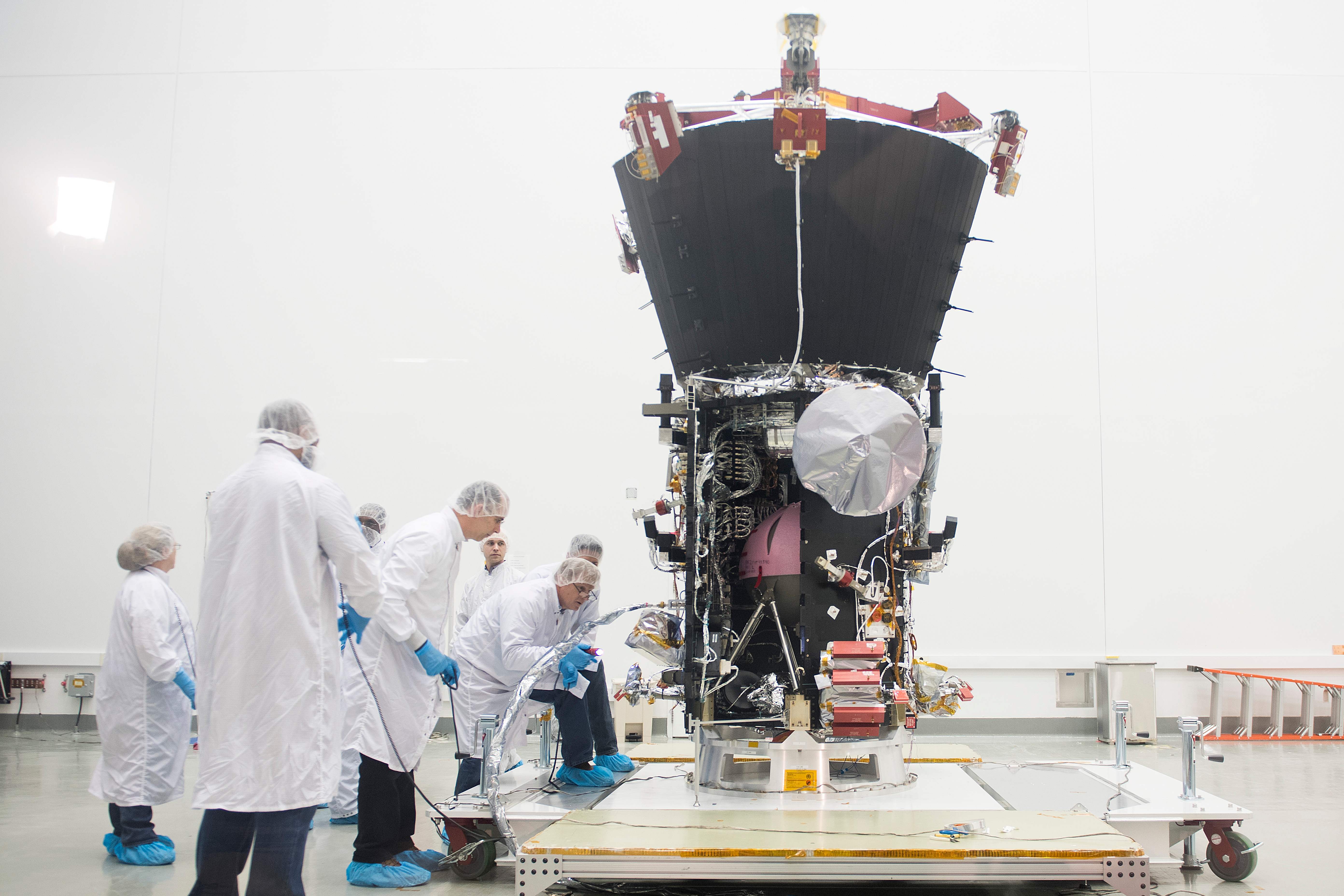
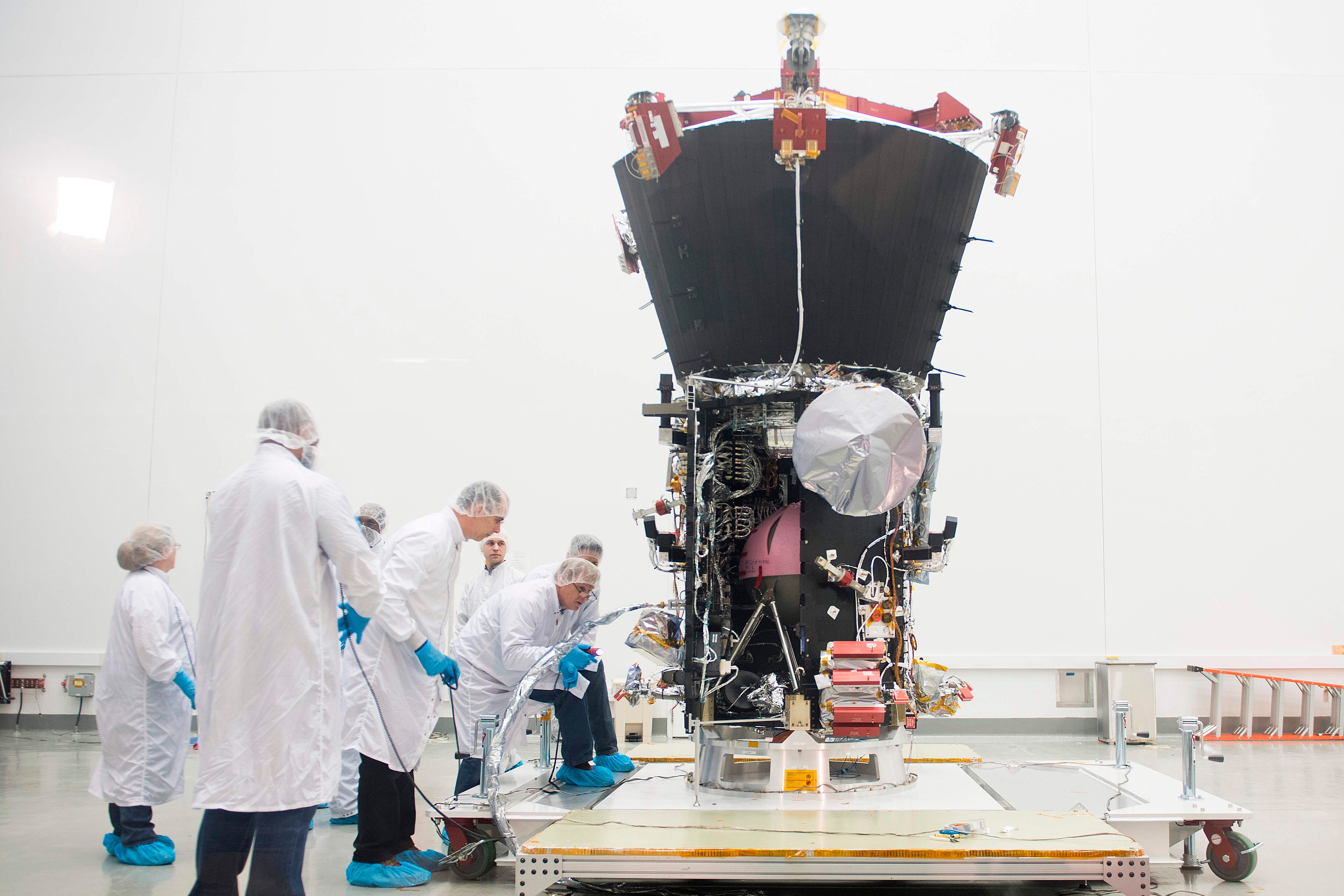
(FILES) In this file photo taken on March 28, 2018 Engineers examine the Parker Solar Probe during a media preview at NASA Goddard Space Flight Center in Greenbelt, Maryland. - Car sized and protected by a very thick heat shield, NASA's Parker Solar Probe probe travels closer to the Sun than any spacecraft in history. Four studies are published today in "Nature" and unveil a world the University of Michigan describes as "surprisingly chaotic". (Photo by JIM WATSON / AFP) JIM WATSON
Houston. La sonda Parker de la NASA, lanzada en una misión pionera en el 2018 para desentrañar los misterios del Sol, se acercó a su ardiente corona, la capa más externa de su atmósfera, para descubrir “un mundo sorprendentemente caótico”.
"¡Descubrimos cosas que no esperábamos en absoluto!", indicó Matthieu Berthomier, del laboratorio francés de Física de los Plasmas y coautor del proyecto.
"Especialmente que la velocidad del viento solar no es en absoluto regular. Puede aumentar de manera muy impulsiva, a veces de 100/150 km por segundo. Es muy extraño", afirmó a la AFP.
Del tamaño de un auto y protegida por un escudo térmico, la sonda Parker Solar Probe de la Administración Nacional de la Aeronáutica y del Espacio (NASA) es la construcción humana que más se ha acercado al Sol. Sus observaciones alimentan cuatro estudios publicados el miércoles en la revista Nature.
Desde su lanzamiento, el 12 de agosto de 2018, Solar Probe avanza a toda velocidad hacia el Sol (la sonda ostenta además el récord de mayor velocidad por unidad de masa). Su objetivo principal es resolver un viejo misterio: ¿qué es lo que calienta la corona solar?
Del tamaño de un auto y protegida por un escudo térmico, la sonda Parker Solar Probe de la NASA es la construcción humana que más se ha acercado al Sol. Esta foto es de marzo del 2018, antes de su lanzamiento. JIM WATSON / AFP (JIM WATSON/AFP)
La parte más externa de la atmósfera del Sol es curiosamente 200 veces más caliente que la superficie de la estrella. Este calor extremo de más de un millón de grados Kelvin no puede por lo tanto ser generado por el Sol puesto que según las leyes de la naturaleza, cuanto más lejos se está del centro, más baja la temperatura.
"La corona halla por lo tanto una manera de calentarse ella misma. Buscamos determinar los procesos físicos que lo permiten", explica a la AFP Alexis Rouillard, investigador en el Instituto de Investigación en Astrofísica y Planetología de Francia, igualmente coautor de los trabajos.
Los científicos esperan resolver este misterio a lo largo de la misión de la sonda, que todavía se prolongará unos seis años, acercándose lo máximo al Sol en 2024.
Impactos en la Tierra
Entre tanto, los centenares de observaciones permiten conocer mejor la estrella y su "mundo sorprendentemente caótico", según la Universidad de Michigan.
Sobre el enigmático viento solar, se trata de un flujo de partículas ionizadas, que nacen en las altas capas de la atmósfera solar. Puede sentirse hasta en la Tierra, donde sus tormentas son susceptibles de perturbar el funcionamiento de la red eléctrica y provocar averías de satélites.
"Las redes de comunicación y eléctrica en la Tierra son ahora muy complejas, por lo que las perturbaciones provocadas por el Sol podrían ser muy graves", según Stuart Bale, de la Universidad de Berkeley de California, coautor de los trabajos.
Comprenderlos permitiría además preverlos.
Según las observaciones de la sonda, el "viento no sería una circulación laminar continua, no perturbada, sino que en gran parte estaría constituido por pequeños chorros de materias caóticas, como pequeñas tormentas", explica Rouillard, admitiendo su asombro.
Los científicos también se sorprendieron con el comportamiento del campo magnético, que seguramente desempeña un papel en el misterio del calentamiento de la corona. En concreto, descubrieron que este se invierte súbitamente de 180 grados para volver a girar unos segundos o unas horas después, según un comunicado de la Universidad de Berkeley.
Y eso no es todo: "El viento solar se desvía por momentos de manera muy significativa", puesto que la corona solar gira más rápido de lo previsto.
"Estas observaciones cambiarán fundamentalmente nuestra comprensión del Sol y del viento solar y por lo tanto nuestra capacidad de prever eventos meteorológicos espaciales", juzga Justin Kasper, de la Universidad de Michigan y coautor de los trabajos.
Sobre todo teniendo en cuenta que la sonda enviará datos cada cinco meses durante los próximos seis años.