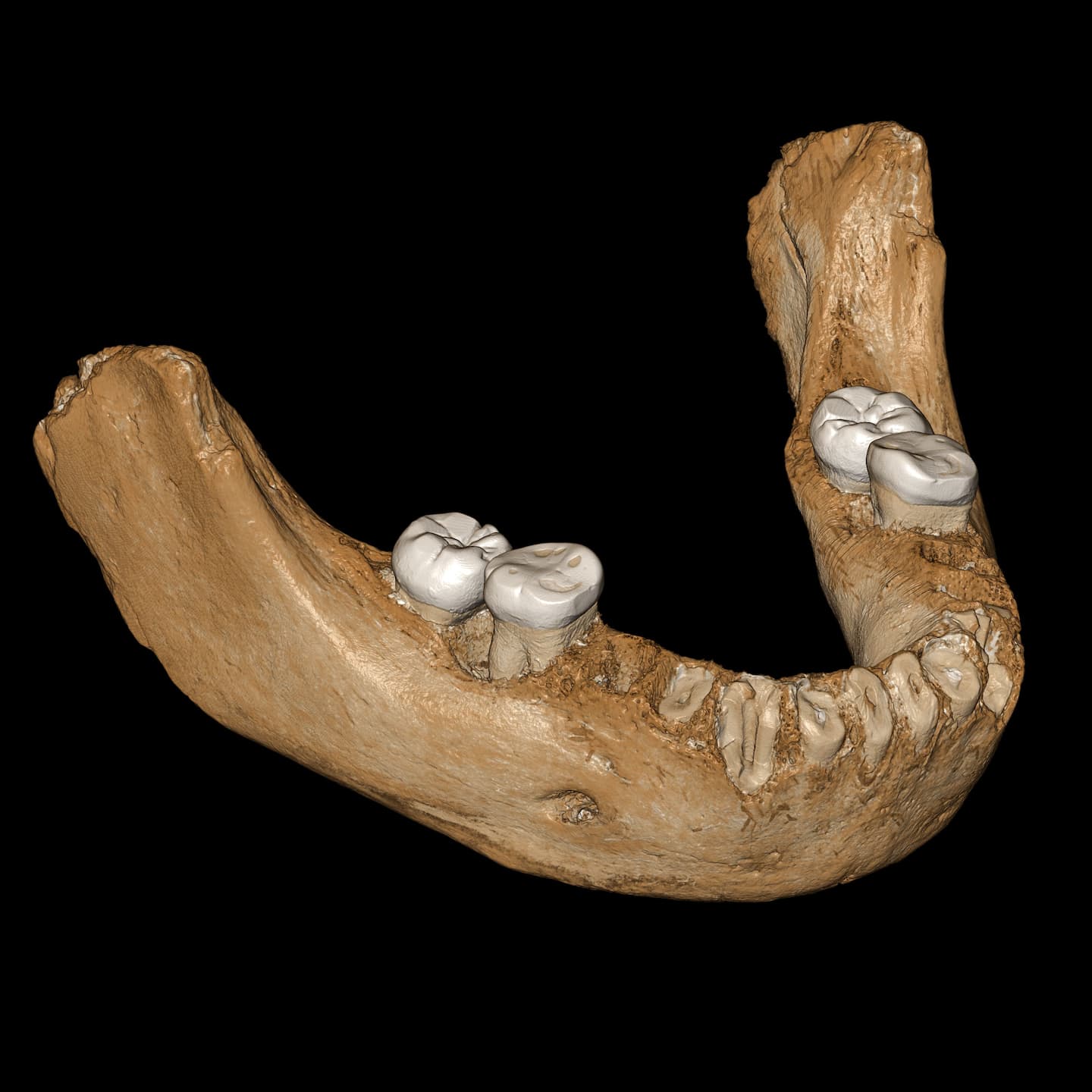
Una mandíbula robusta con grandes dientes hallada en una cueva a 3.300 metros de altitud revela que el hombre de Denisova, especie emparentada con el Neandertal, vivió en la meseta tibetana hace 160.000 años, una “sorpresa”, según los investigadores.
El estudio de este fósil demuestra que el hombre de Denisova, misteriosa especie extinta identificada en 2010 gracias al análisis del ADN de un pequeño hueso de dedo hallado en la cueva de Denisova, en las montañas de Altai (Rusia), estuvo presente tanto en el sur de Siberia como en China.
Y que este primo lejano del homo sapiens ya estaba adaptado a las grandes alturas mucho antes de la llegada del hombre moderno a esta región, señalaron el miércoles estos científicos en la revista Nature.
Esta vez, lo decisivo no ha sido el ADN sino antiguas proteínas que pudieron extraerse de un molar presente aún en la mandíbula. Una nueva técnica, desarrollada por el equipo de Jean-Jacques Hublin en el Instituto Max Planck de Antropología Evolutiva en Leipzig (Alemania).
Este descubrimiento es importante porque hasta ahora los paleantropólogos solo poseían pequeños fragmentos de hueso encontrados en Denisova, que no permitían saber cómo era esta especie.
Lo que se sabe también es que el ADN denisovano dejó sus rastro en las poblaciones actuales de Asia, especialmente en Tíbet y en las regiones circundantes. Las poblaciones autóctonas de Australia y de Melanesia son las que más han conservado su huella.
"Para que nuestro ancestro Homo Sapiens, en su camino a la colonización de Australia, haya conocido a estos denisovanos, era necesario que existieran en otros lugares además de Altai, probablemente en una gran parte de Asia continental", declaró a la AFP el paleoantropólogo Jean-Jacques Hublin.
La mandíbula china es la prueba material. El fósil proviene de la cueva de Baishiya, un santuario budista en Xiahe, en la provincia china de Gansu.
‘Extraordinario’
La mandíbula fue descubierta en 1980 por un monje que la entregó al sexto "Buda viviente", que a su vez la envió a la universidad local de Lanzhou.
En esta, el fósil permaneció mucho tiempo hasta que investigadores de la universidad decidieron estudiarlo.
"Un buen día, cuando estaba de vacaciones, recibí un email de un compañero chino, Dongju Zhang, que me enviaba fotos de la mandíbula. Enseguida vi que era algo extraordinario", contó Hublin.
Se trata de una mandíbula "extremadamente robusta, con dientes de gran tamaño". Su propietario tenía "el mentón salido".
El resto está cubierto de una costra de carbonato que un laboratorio de Taiwán dató en al menos 160.000 años. Esta edad mínima corresponde a la de los especímenes más viejos de la cueva de Denisova.
Una búsqueda de ADN antiguo en la mandíbula resultó en nada. Pero "el análisis de las proteínas muestra que la mandíbula de Xihae pertenece a una población de homínidos cercana a los Denisovas de la cueva de Denisova", señaló Frido Welker, de la Universidad de Copenhague.
El análisis morfológico del maxilar permite ver que el individuo compartía características anatómicas con el hombre de Neandertal y el de Denisova. Según sus dientes, se trataba al parecer de un adolescente.
"Vamos a poder comparar este fósil con otros especímenes no identificados de las colecciones chinas", celebró Hublin. La extracción de ADN antiguo, sensible a las condiciones medioambientales, no funcionó en estos ejemplares pero la de las proteínas antiguas podría ser más fructífera.
"Mi hipótesis es que una buena parte de los fósiles chinos o de Asia del Este con más de 50.000 años y con menos de 350.000 son probablemente denisovanos", agregó.
Otro tema de entusiasmo es la altitud. "Contar con seres, bastante arcaicos, que vivieron en la meseta tibetana a cierta altitud hace 160.000 años es algo que nadie había imaginado".
Un estudio reciente publicado a finales del 2018 en Science demostró la presencia de humanos a gran altitud en la meseta tibetana hace entre 30.000 y 40.000 años. “En nuestro caso, ¡Es cuatro veces más antiguo y no es un Homo Sapiens moderno!”, exclama.
Esto evidencia que los denisovanos se adaptaron a un entorno con poco oxígeno mucho antes de la llegada del Homo Sapiens a la región. Esto permite comprender por qué tenían un gen particular para respirar a gran altitud. Un gen que se encuentra además en los habitantes actuales de Tíbet y de las regiones de alrededor, que poseen un poco de ADN denisovano.