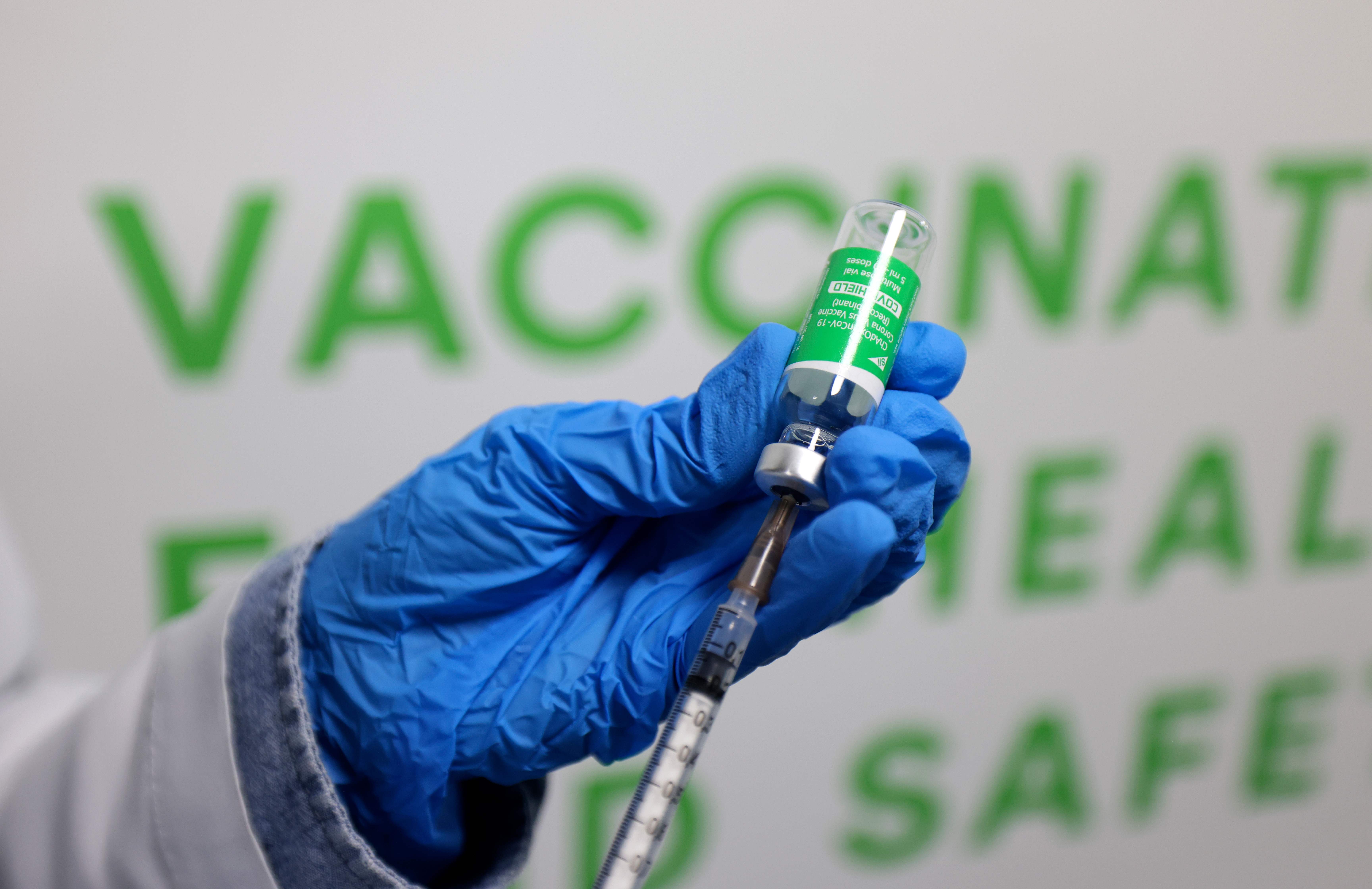
"Si descubrimos que estas vacunas pueden usarse indistintamente, esto aumentará considerablemente la flexibilidad de su distribución", afirmó en un comunicado el profesor Matthew Snape, investigador de Oxford y responsable del ensayo.
El estudio, presentado como una primicia mundial, contará con la participación de 820 voluntarios mayores de 50 años y analizará la combinación de las dos vacunas utilizadas actualmente en el Reino Unido, la de Pfizer/BioNTech y la de AstraZeneca/Oxford.
También evaluará la eficacia de la protección en función del espaciamiento entre las dos inyecciones, probando un intervalo de cuatro semanas, cercano al recomendado inicialmente, y el intervalo de 12 semanas elegido por las autoridades británicas para llegar a más personas.
LEA MÁS: Expertos alemanes y AstraZeneca chocan sobre eficacia de vacuna en mayores de 64 años
País más castigado de Europa por la pandemia, con más de 109.000 muertos, el Reino Unido ha centrado todos sus esfuerzos en la vacunación ante una nueva ola de contagios atribuida a una cepa más transmisible que obligó al país a adoptar su tercer confinamiento a principios de enero.
El subdirector médico de Inglaterra, Jonathan Van-Tam, subrayó el valor de "disponer de datos que puedan apoyar un programa de vacunación más flexible", especialmente debido a las "limitaciones de la oferta".
"Incluso es posible que al combinar las vacunas, la respuesta inmunitaria sea mejor, con niveles más altos de anticuerpos que duren más tiempo", afirmó.
El Reino Unido, primer país occidental en iniciar la campaña de vacunación, ya ha inoculado a más de 10 millones de sus 66 millones de habitantes, y tiene como objetivo llegar a 15 millones a mediados de febrero, incluyendo a todos los mayores de 70 años, personal sanitario y enfermos especialmente frágiles.