¿Realmento los neandertales enterraban a sus muertos? Esto concluye un nuevo estudio
TO GO WITH AFP STORY BY MARIETTE LE ROUX
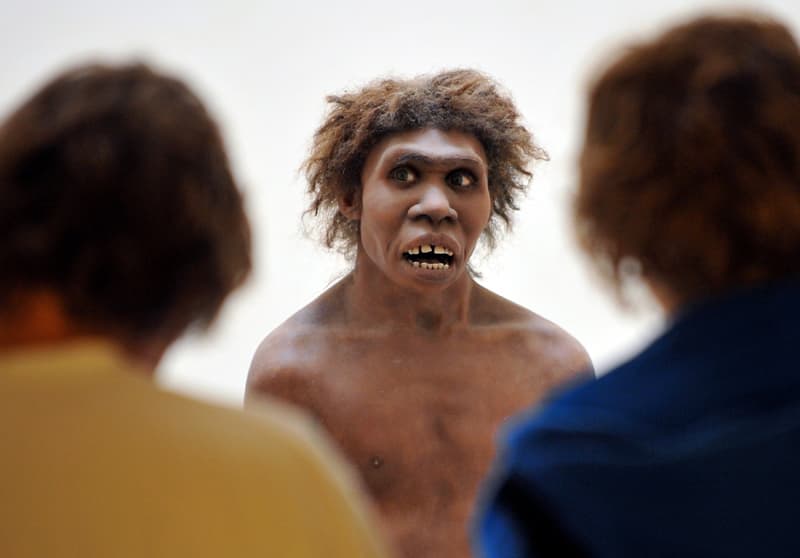
(FILES) -- A photo taken on July 2, 2008 in Eyzies-de-Tayac, Dordogne, shows a model representing a Neanderthal man on display at the National Museum of Prehistory. The 1-3 percent of the Neanderthal genome that survives in modern humans likely helped early homo sapiens adapt to cold Europe by conferring a thicker skin, researchers said on January 29, 2014. Humans acquired Neanderthal DNA through interbreeding between 40,000 and 80,000 years ago which resulted in today's European and East Asian populations, scientists believe. AFP PHOTO / PIERRE ANDRIEU PIERRE ANDRIEU
Muerto hace 41.000 años, un niño neandertal fue enterrado por los suyos en el importante yacimiento prehistórico de La Ferrassie, en el suroeste de Francia, según reveló el miércoles un estudio que refuerza la tesis de la práctica de inhumaciones anteriores al Homo sapiens.
A pesar de que se han descubierto decenas de esqueletos de mujeres y hombres neandertales en Europa y Asia con signos claros de haber sido enterrados, los arqueólogos mantienen cierto escepticismo en cuanto a esta práctica.
Además, entra en contradicción con la imagen primitiva que arrastran los neandertales desde hace tiempo.
Este nuevo estudio publicado en la revista Scientific Reports, a cargo de un equipo internacional pluridisciplinar, podría resolver definitivamente esta cuestión.
"¡Es una historia de buscador de tesoros!", cuenta a la AFP el paleontólogo Antoine Balzeau, del Centro Nacional para la Investigación Científica francés (CNRS), que codirige el estudio con Asier Gómez Olivencia, de la Universidad del País Vasco (España).
A pesar de que se han descubierto decenas de esqueletos de mujeres y hombres neandertales en Europa y Asia con signos claros de haber sido enterrados, los arqueólogos mantienen cierto escepticismo en cuanto a esta práctica. /AFP PHOTO / PIERRE ANDRIEU (PIERRE ANDRIEU)
Hace poco, en las colecciones del Museo del Hombre de París, donde trabaja, Balzeau encontró una caja con los restos óseos de este niño de dos años, excavados en 1973 en un refugio rocoso de La Ferrassie.
El esqueleto de este bebé había sido identificado ya en los años 1970, pero no se estudió su contexto geológico. La caja donde se hallaban sus restos contenía también el misterioso diente de un adulto, sin ninguna descripción pero con un número.
Con esta pista, el investigador se dirigió al Museo Nacional de Arqueología de Saint-Germain en Laye (oeste de París) donde se almacenan los restos de las antiguas excavaciones.
"Había decenas de cuadernos, cajas, informes... Abrí el primero y al cabo de un minuto, encontré la descripción del diente", y su origen exacto.
Su equipo revisó entonces todo el material que se había recogido de la cuadrícula de excavación donde se encontró el cuerpo del niño y el diente y sacaron a la luz 47 nuevos restos humanos que no habían sido identificados.
Para entender mejor lo que tenían entre manos, los científicos decidieron volver a La Ferrassie. La capa de sedimentos donde descubrieron al niño tenía 60.000 años y el cuerpo del bebé, 41.000, "lo que demuestra que cavaron para depositarlo allí y lo cubrieron a continuación", apunta Antoine Balzeau.
Al haber encontrado siete cuerpos diferentes, las hipótesis de un entierro en La Ferrassie eran plausibles, pero "no pasaban de meras especulaciones, a falta de un análisis geológico que demostrara que lo que allí había era una sepultura", explica este científico.
Gracias a un conjunto de técnicas modernas se ha podido demostrar "por primera vez, de forma clara, que estamos ante un enterramiento", añade.
"Muchos arqueólogos se oponen aún hoy en día a la idea de que los neandertales enterraban a sus muertos, porque no teníamos la capacidad de demostrarlo. Pero también porque hay un juicio de valor con el Homo sapiens", que cohabitó con los neandertales, indica este investigador.
"Pensamos que el Homo sapiens era superior al Neandertal y, a partir de este prejuicio, estudiamos la historia, cuando lo que hay que hacer es empezar por los datos arqueológicos", prosigue.
Desde hace años se ha demostrado cómo los neandertales, que vivieron entre 400.000 y 40.000 años antes de nuestra era, formaban una especie compleja con prácticas modernas como la ornamentación de los cuerpos o la fabricación de herramientas sofisticadas.