Pompeya revela un nuevo secreto: encuentran los restos de dos víctimas de la erupción del año 79 d. C.
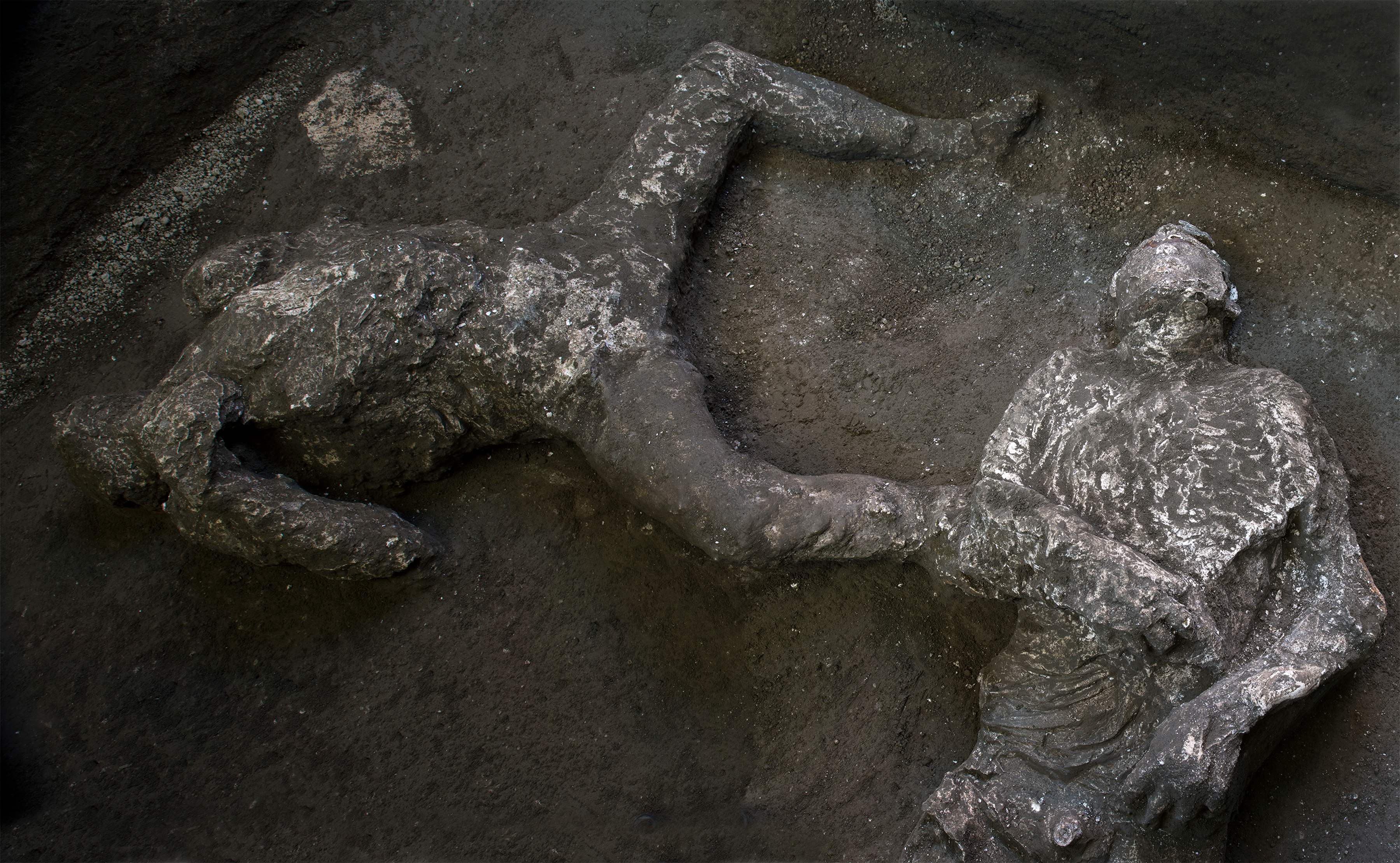
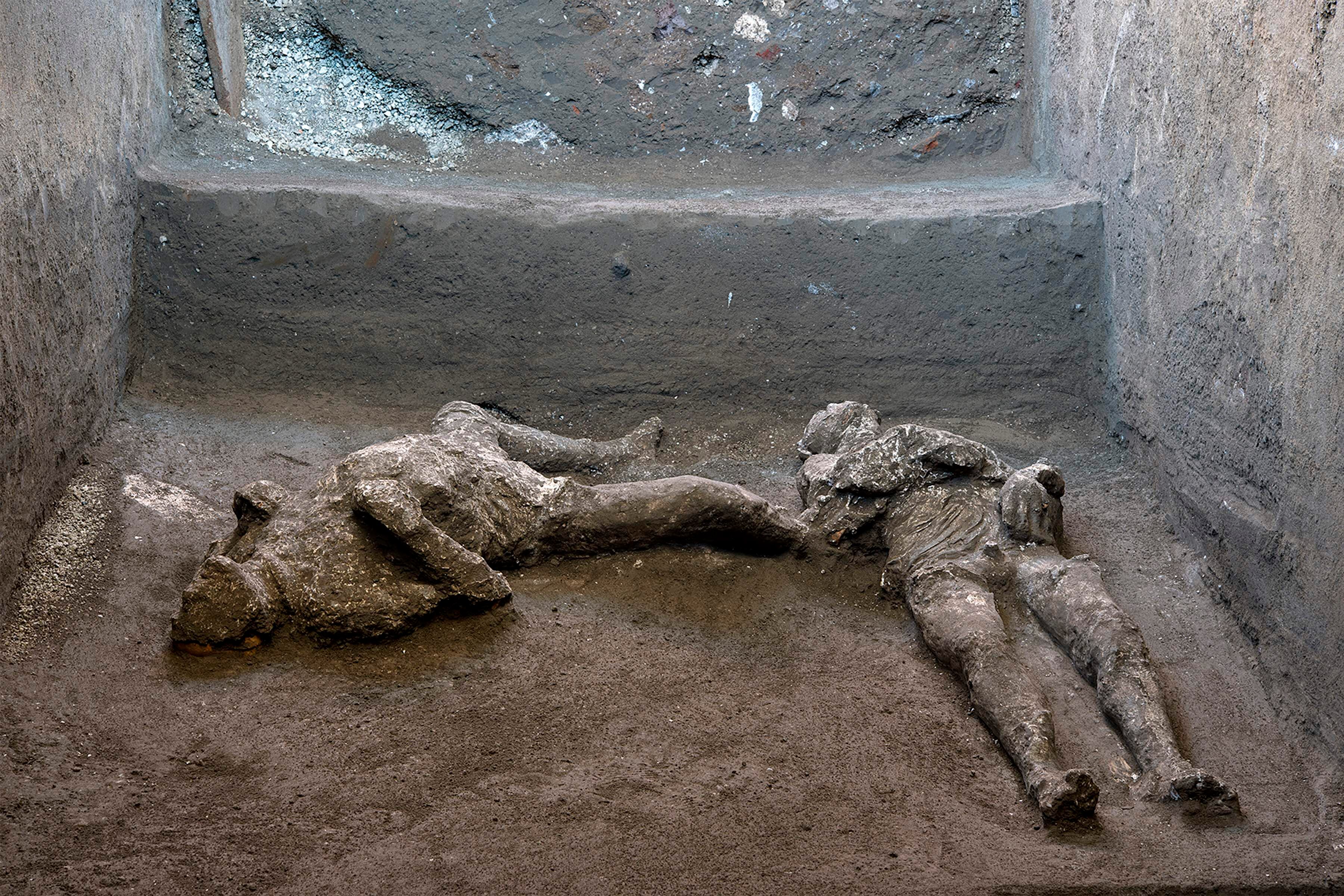
This undated photo handout on November 21, 2020 by the Pompeii Archaeological Park shows casts of the bodies of two men, a 40-year-old master and his young slave, after they were found during recent excavations of a Villa in Civita Giuliana in the outskirts of Pompeii, as Park officials said conditions were optimal to get casts of the victims, following the technique perfected in 1863 by Giuseppe Fiorelli. - The ancient Roman city of Pompeii was engulfed under a hail of volcanic ash after nearby Mount Vesuvius erupted in the year 79. Vesuvius' eruption covered the in a toxic, metres-thick layer of volcanic ash, gases and lava flow which then turned to stone, encasing the city, allowing an extraordinary degree of frozen-in-time preservation both of city structures and of residents unable to flee. (Photo by Handout / POMPEI ARCHAEOLOGICAL PARK / AFP) / RESTRICTED TO EDITORIAL USE - MANDATORY CREDIT "AFP PHOTO / POMPEII ARCHAEOLOGICAL PARK / LUIGI SPINA" - NO MARKETING - NO ADVERTISING CAMPAIGNS - DISTRIBUTED AS A SERVICE TO CLIENTS HANDOUT
Los restos de dos víctimas de la erupción en Pompeya del año 79 d. C. fueron descubiertos y sus cuerpos pudieron ser reconstituidos en la posición que tenían en el momento de su muerte, anunció el sábado el célebre sitio arqueológico italiano en un comunicado.
Los dos esqueletos fueron hallados durante excavaciones a unos 700 metros al noroeste de Pompeya, en una gran villa de la periferia de la famosa ciudad romana.
Los dos esqueletos fueron hallados durante excavaciones a unos 700 metros al noroeste de Pompeya, en una gran villa de la periferia de la famosa ciudad romana. / AFP PHOTO / POMPEII ARCHAEOLOGICAL PARK / LUIGI SPINA (HANDOUT/AFP)
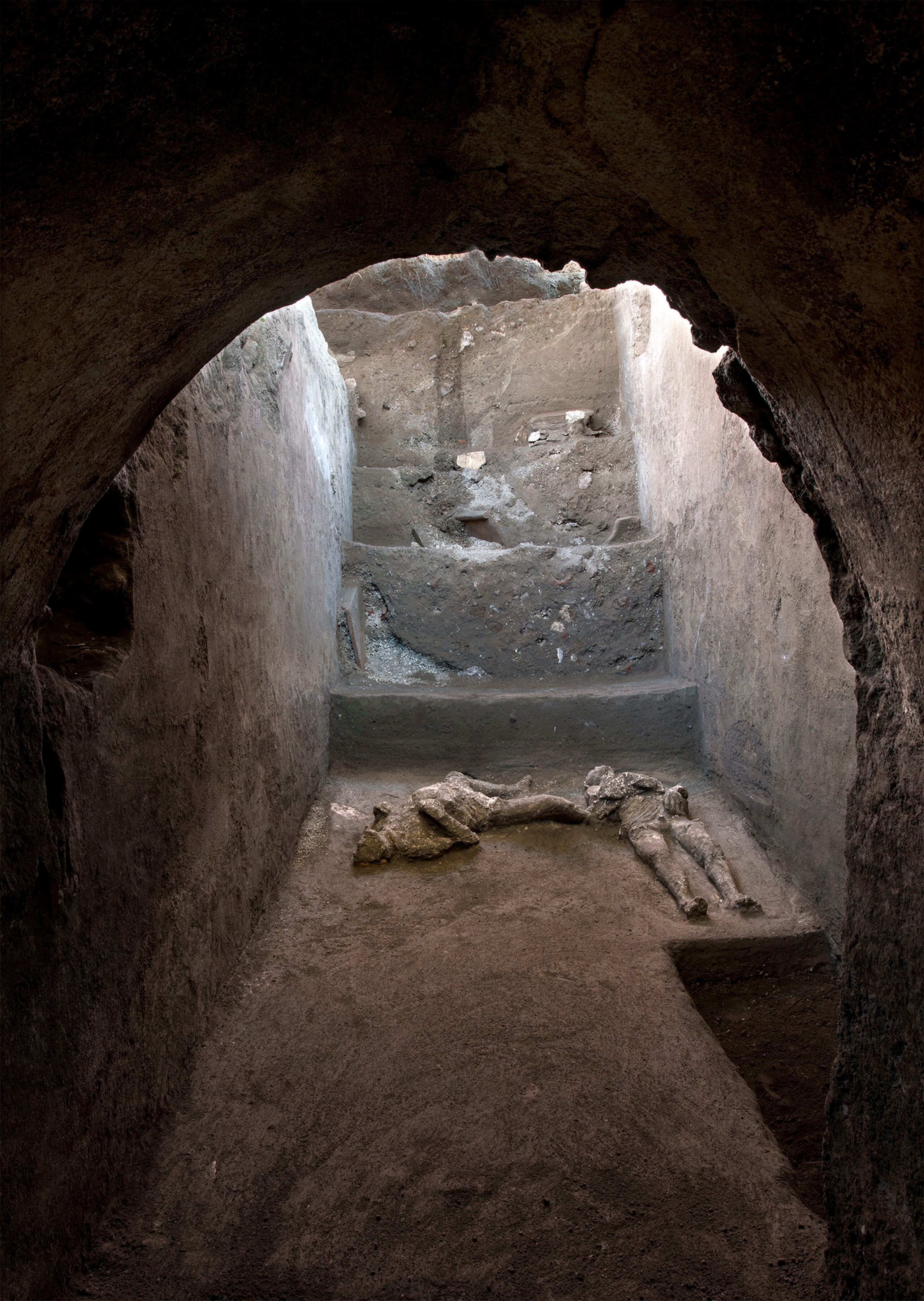
Los restos se encontraban en un pasillo de 2,20 metros de ancho que daba acceso a la planta superior de la villa, donde los arqueólogos habían detectado cavidades en las capas de ceniza endurecida. Al verter yeso en estas grietas, según la técnica inventada por Giuseppe Fiorelli en 1867, pudieron volver a constituir los cuerpos en su posición original.
Seguramente, la erupción sorprendió a ambas víctimas cuando intentaban huir. La primera, un joven, de 1,56 metros, vestido con una túnica corta y que debía tener entre 18 y 25 años, era probablemente un esclavo, como hacen pensar varias vértebras comprimidas debido a duros trabajos físicos. Tiene la cabeza inclinada hacia atrás y sus dientes y su cráneo son visibles.
Los restos se encontraban en un pasillo de 2,20 metros de ancho que daba acceso a la planta superior de la villa, donde los arqueólogos habían detectado cavidades en las capas de ceniza endurecida. / AFP PHOTO / POMPEII ARCHAEOLOGICAL PARK / LUIGI SPINA (HANDOUT/AFP)
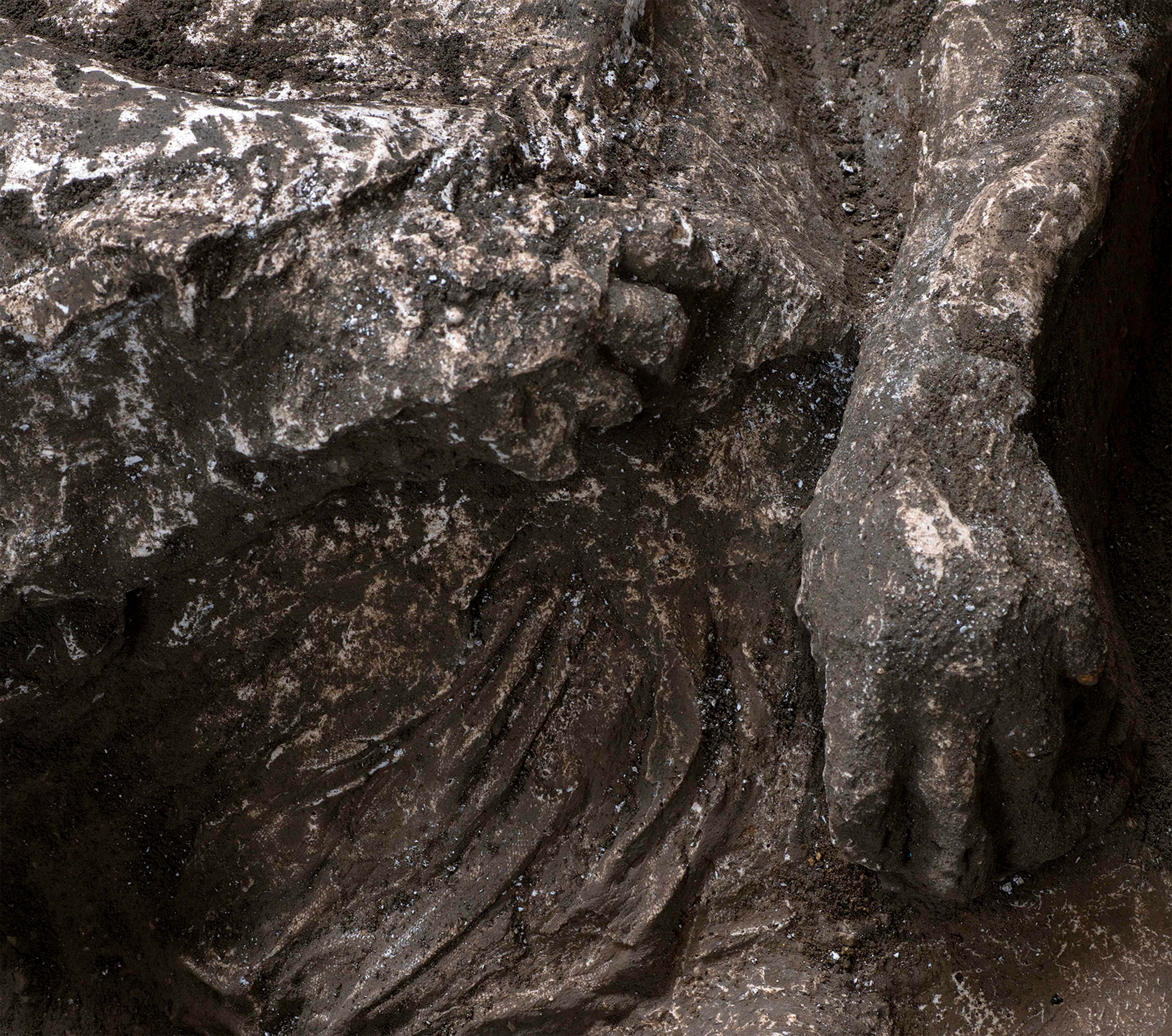
La segunda víctima tiene sus brazos doblados con las manos sobre el torso, en una posición similar a la de otras víctimas halladas en Pompeya. Se trata de un hombre de 1,62 metros, de entre 30 y 40 años, vestido con una túnica y un abrigo y probablemente se trate del propietario del joven esclavo encontrado junto a él.
Pompeya, sepultada por la erupción del Vesubio en el año 79 d. C., es el segundo sitio más visitado de Italia después del Coliseo de Roma, con cerca de cuatro millones de visitantes en 2019. Solo un tercio de la ciudad, que se extiende actualmente sobre 44 hectáreas cerca de Nápoles, ha sido excavado por los arqueólogos.
La segunda víctima tiene sus brazos doblados con las manos sobre el torso, en una posición similar a la de otras víctimas halladas en Pompeya. / AFP PHOTO / POMPEII ARCHAEOLOGICAL PARK / LUIGI SPINA (HANDOUT/AFP)