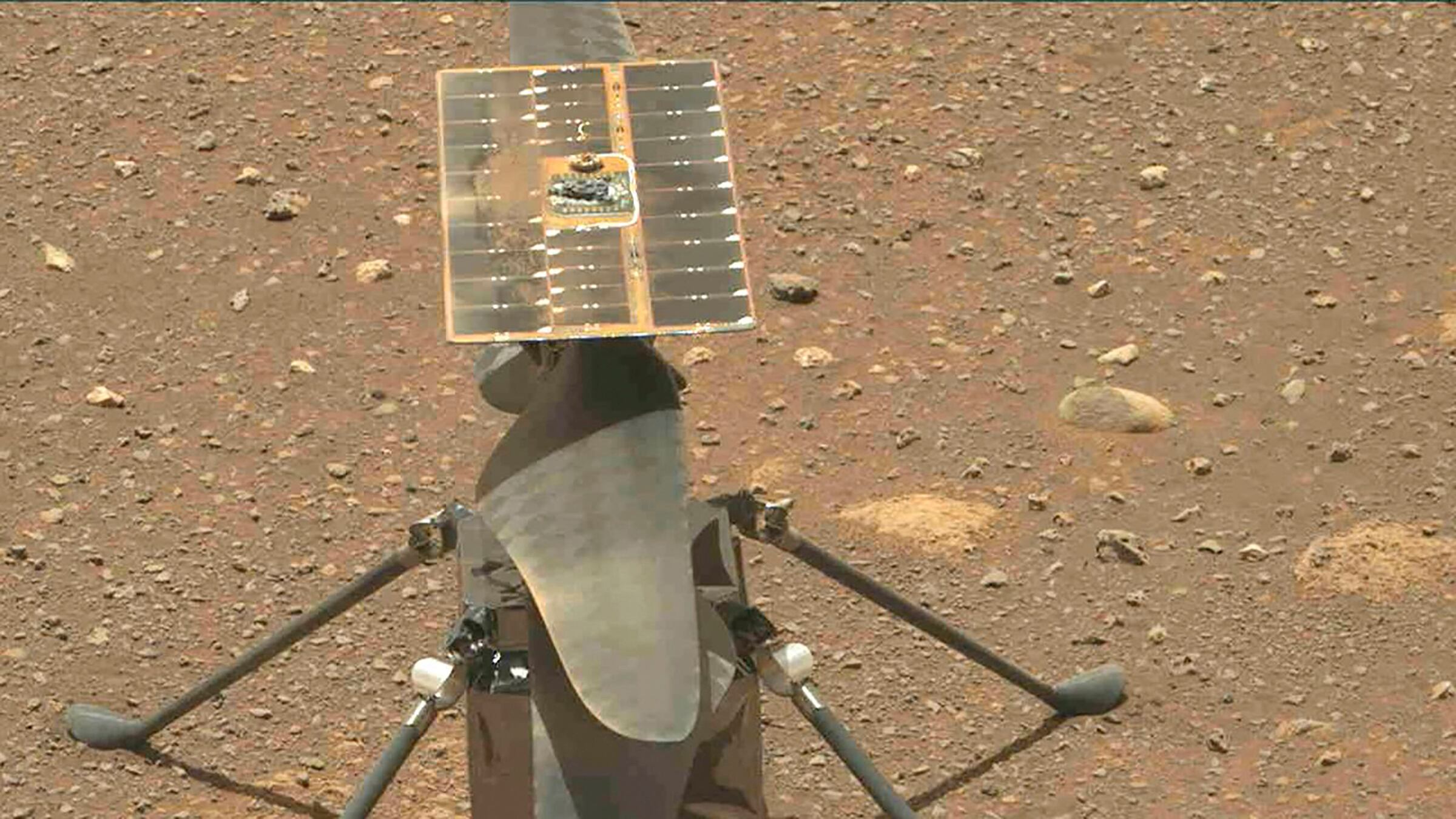
Se espera que el viaje de Ingenuity, el primero de un dispositivo motorizado en otro planeta, permita a la NASA recopilar datos invaluables sobre las condiciones de vida en Marte.
"La NASA espera que el primer vuelo de su helicóptero Ingenuity Mars se desarrolle a partir del lunes 19 de abril", dijo la agencia.
Los datos podrían recibirse “unas horas después del vuelo autónomo”, que debería comenzar alrededor de las 3:30 a. m. (hora local), según la NASA.
El vuelo es un verdadero desafío, porque el aire marciano tiene una densidad equivalente a solo 1% del de la atmósfera terrestre.
Ingenuity tiene que hacer girar sus palas de rotor mucho más rápido de lo que lo haría un helicóptero en la Tierra para volar.
Después del vuelo, el helicóptero transmitirá datos técnicos al rover Perseverance, que los enviará a la Tierra.
Entre estos primeros datos, habrá una foto en blanco y negro del suelo tomada por Ingenuity.
Al día siguiente, una vez recargadas sus baterías, el helicóptero transmitirá una foto en color del horizonte, tomada por su otra cámara.
Pero las imágenes más espectaculares deberían provenir del Perseverance, colocado para observación a varios metros de distancia y que filmará el vuelo.
Si resulta exitoso, el segundo vuelo podría tener lugar no más de cuatro días después.
Están previstos hasta cinco vuelos en total, de dificultad creciente.
La NASA pretende elevar el helicóptero hasta cinco metros de altura y luego intentar que se mueva hacia los lados.
La operación será el equivalente en Marte al primer vuelo de un vehículo motorizado en la Tierra, en 1903, de los hermanos Wright.
Incluso se ha colocado a bordo del Ingenuity un trozo de tela de este avión que despegó hace más de un siglo en Carolina del Norte, en Estados Unidos.
Pase lo que pase, después de un mes o menos, el experimento Ingenuity se detendrá, dejando que el rover Perseverance se dedique a su tarea principal: buscar rastros de vida antigua en Marte.