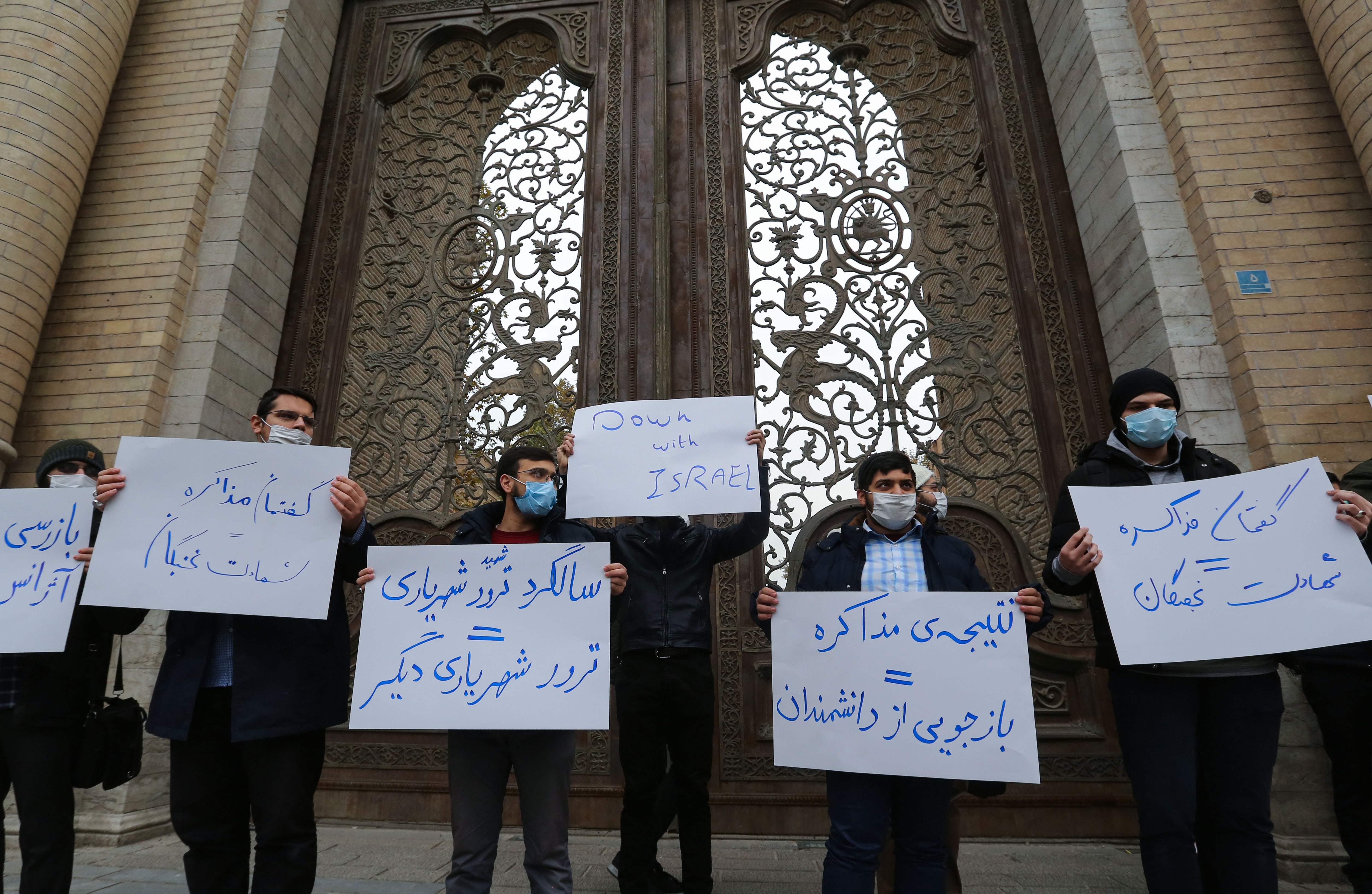
Teherán acusó el viernes a Israel de querer sembrar el “caos” al matar a Mohsen Fakhrizadeh, de 59 años, un científico de alto nivel del programa nuclear de Irán, sugiriendo que el estado judío actuó con la bendición de Estados Unidos.
Washington no ha emitido comentarios oficiales sobre la operación, pero el presidente saliente, Donald Trump, retuiteó un artículo y análisis sobre el caso.
Trump sacó a su país del acuerdo nuclear internacional con la república islámica alcanzado en Viena en 2015, en nombre de una política de 'máxima presión' contra Irán que su gobierno está decidido a llevar a cabo hasta el final de su mandato.
El canciller estadounidense, Mike Pompeo, que acaba de realizar una visita a Israel, impuso el viernes nuevas sanciones económicas contra cuatro empresas chinas y rusas acusadas de apoyar el desarrollo del programa nuclear de Irán.
LEA MÁS: Presidente de Irán acusa a Israel de querer sembrar el ‘caos’ con asesinato de prominente científico
“Esta administración está ahí hasta el 20 de enero y seguirá implementando sus políticas hasta el final”, aseguró recientemente un alto funcionario del Departamento de Estado, quien solicitó el anonimato.
Pompeo dijo que espera que el próximo gobierno estadounidense “haga un buen uso de la correlación de fuerzas favorable que la administración (actual) está tratando de lograr, para presionar a los iraníes a comportarse como un país normal”.
‘Sabotaje a la diplomacia’
Sin embargo, para la mayoría de los analistas estadounidenses, el asesinato de Fakhrizadeh es peligroso y debilita la posición de Biden quien, ansioso por romper con el unilateralismo de Trump, dijo que quería ofrecer a “Irán un camino de regreso creíble” a la diplomacia “con miras a reintegrar a Estados Unidos en el acuerdo nuclear” con Teherán.
Para John Brennan, exjefe de la CIA, se trata de un “acto criminal y extremadamente peligroso”, que corre el riesgo de conducir a “represalias letales y a una nueva fase del conflicto regional”.
Brennan, jefe de la agencia de inteligencia entre el 2013 y 2017 bajo la presidencia de Barack Obama y mientras Biden era vicepresidente, instó a Irán a “resistir el impulso” de tomar represalias y a esperar “el regreso a la escena internacional de líderes estadounidenses responsables”.
El gobierno de Trump envió al portaaviones USS Nimitz al Golfo Pérsico, negando que esa decisión tuviera algo que ver con el asesinato del científico iraní.
Alemania, de su lado, advirtió el sábado contra “una nueva escalada” de la situación mientras Naciones Unidas instó a las partes a “la contención”.
“Unas semanas antes de que asuma el nuevo gobierno de Estados Unidos se deben mantener los márgenes de diálogo existentes con Irán para poder resolver el conflicto sobre el programa atómico iraní mediante la negociación”, afirmó un vocero del Ministerio de Relaciones Exteriores alemán.
Una opinión compartida por Ben Friedman, profesor de la Universidad George Washington, para quien este asesinato “probablemente ayudará al ala dura de Irán, que quiere armas nucleares”.
LEA MÁS: Asesinado el principal científico nuclear de Irán en un atentado
También constituye “un acto de sabotaje dirigido a la diplomacia y los intereses de Estados Unidos”, tuiteó.
“Esta es una acción escandalosa, destinada a socavar las relaciones diplomáticas entre un nuevo gobierno de Estados Unidos e Irán”, dijo Ben Rhodes, exasesor diplomático de Obama. “Es hora de que termine esta escalada continua”.
Sin embargo, algunos ven esta operación como una palanca que el gobierno de Biden podría utilizar en posibles discusiones con Teherán.
“Aún quedan dos meses antes de que Joe Biden asuma el cargo”, señaló Mark Dubowitz, director del grupo de expertos conservador Foundation for Defense of Democracies.
“Es un plazo suficiente para que Estados Unidos e Israel inflijan un daño severo al régimen de Irán y le den medios de presión a la administración Biden”.