
LA HABANA (AP) — Una usuaria escribió en un grupo de WhatsApp “Galletas María, alguien ha visto?”. Minutos después otra persona le respondió que podía encontrarlas en un centro comercial del oeste de La Habana.
Lo mismo sucede a diario con productos tan dispares y faltantes en Cuba como papel higiénico, leche en polvo, pollo, detergentes, azulejos o combustible.
Un año después de que las autoridades cubanas autorizaran los datos móviles para celulares, miles de isleños incorporaron las redes sociales y las aplicaciones a sus estrategias cotidianas para enfrentar el desabastecimiento, que se incrementó con el endurecimiento de las sanciones impuestas por Washington.
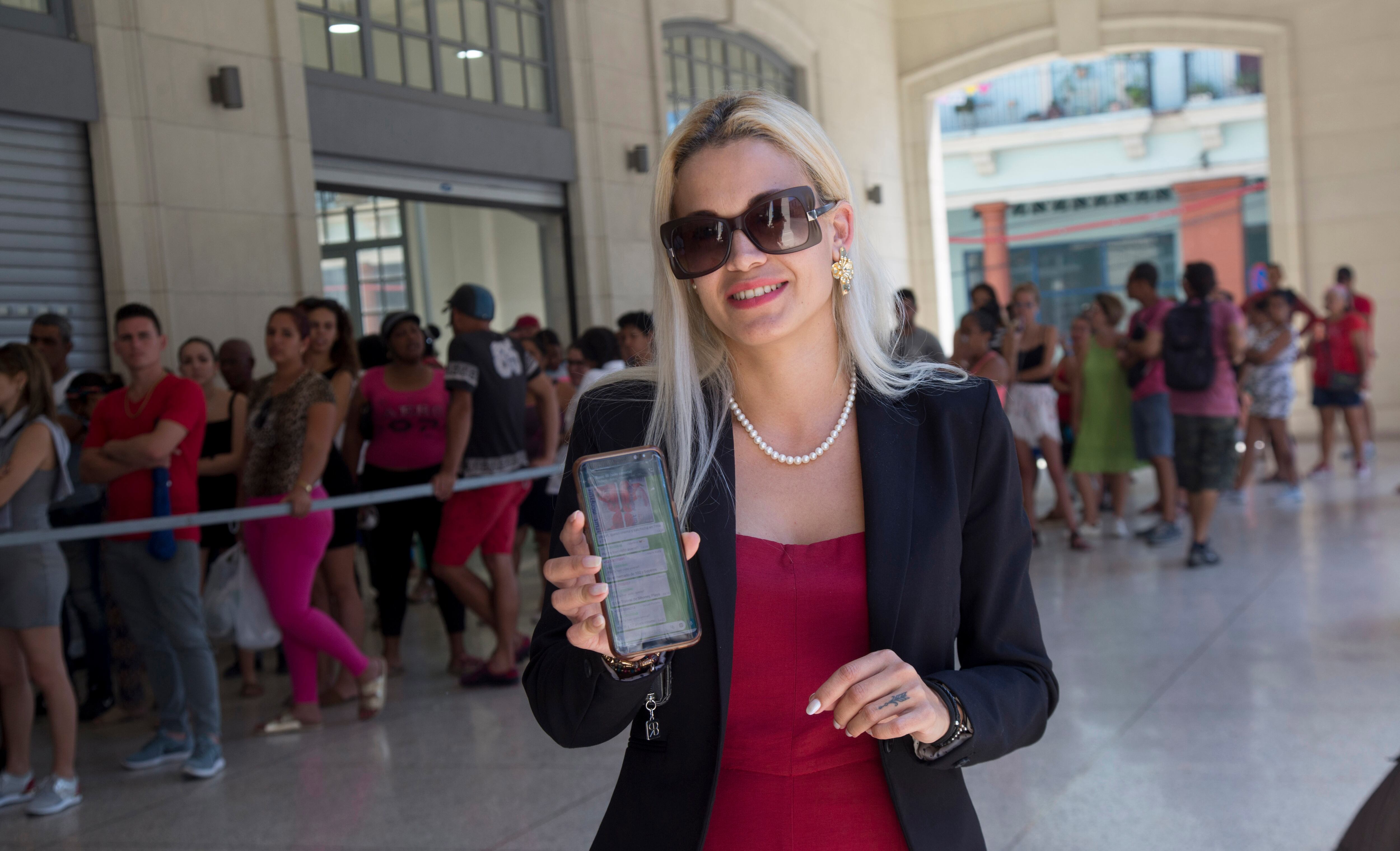
“Tienes que dar millones de vueltas en las tiendas para poder encontrar lo que necesitas, al final estás el día entero recorriendo la ciudad”, explicó a The Associated Press, Claudia Santander, una diseñadora gráfica de 31 años que administra en forma gratuita una decena de grupos en WhatsApp. “Invierto mi tiempo, mi internet, pero el beneficio es grande”, agregó.
Con nombres como “¿Adónde hay?”, “Lo que quieran” o “Ventas en La Habana” estos foros unen a miles de personas sobre todo en WhatsApp, Instagram y Facebook.
Algunos están tan abarrotados que tienen listas de espera o se han duplicado como “Basic” -uno de los que administra Santander- y “Mercadillo”, pues WhatsApp permite sólo 256 miembros por grupo.
“Pertenezco a tres y administro dos y nos ha resuelto muchísimo la vida. Tengo un hijo pequeño y desde que empezó esto a las toallitas húmedas y culeros (pañales), que estuvieron medios perdidos, los resolví allí”, explicó a AP Laura Vela.
Cuba no tiene clasificados en los periódicos oficiales en papel y en la red se han desarrollado algunas páginas de ventas, pero no tienen la inmediatez e interactividad de estos grupos.
El desabastecimiento en la isla ha sido intermitente: puede desaparecer el aceite y cuando hay no se encuentra harina; en una hora hay mantequilla y a la siguiente faltan puré de tomate, vinagre o queso.
Aunque hubo dificultades regulares en el mercado minorista en los últimos 30 años -cuando la caída de la Unión Soviética dejó a la isla en una severa crisis económica-, en 2019 la situación empeoró. Al endurecimiento de las sanciones impulsado por el presidente Donald Trump para presionar por un cambio de modelo político se sumaron la falta de liquidez debido a la ineficiencia del gobierno cubano y las dificultades económicas de socios clave como Venezuela.
Trump prohibió los cruceros y limitó los vuelos comerciales, multó a las empresas extranjeras que operan en la isla y alentó los procesos judiciales para disuadir a los inversores, entre otro centenar de medidas.
El resultado fue un 2019 con largas colas en las tiendas -algunas controladas con policías-, desmanes y racionamiento en algunos productos.
Por eso creció la participación en estos grupos. Los compradores quieren ir a lo seguro: incluso si tienen que hacer largas colas saben dónde pueden encontrar lo que necesitan.
“Creo que hay un antes y un después en la vida de los cubanos en este año de los datos móviles”, dijo a AP Lucía March, una escritora cubana que hace algunos meses estrenó uno de los primeros canales de Podcast de la isla y se convirtió en una suerte de “influencer” entre los jóvenes.
“La utilidad es obvia y es algo que representa más que nada desarrollo”, indicó March, de 29 años.
La historia de internet en Cuba estuvo marcada por los vaivenes políticos. Inicialmente Estados Unidos bloqueó el acceso de la isla a la fibra óptica obligándola a utilizar conexiones satelitales caras y con poco ancho de banda. El servicio estaba entonces destinado a diplomáticos, empresarios y universidades.
En 2012 la isla se conectó a un cable submarino con apoyo de Venezuela, pero no fue hasta varios años después que el servicio se abrió al público en salas estatales o puntos de conexión a wifi en parques y espacios públicos. Recién en diciembre de 2018 comenzó el servicio para móviles.
Cuba tiene más de tres millones de líneas con servicio de datos, según cifras oficiales, pero su costo es el punto de queja de los usuarios. “Es caro, carísimo, eso es algo que no puede pasarse por alto. Para muchos no es asequible”, indicó March.
La tarifa va de cinco pesos convertibles o CUC (igual cantidad en dólares) por 400 MB a 20 CUC por 2,5 GB, aunque en los últimos tiempos se hicieron rebajas mediante bonos. Hay también paquetes por 45 CUC para altos consumidores por red de cuarta generación.
Pero el salario promedio en Cuba está entre 20 y 50 CUC mensuales, aunque muchas personas reciben remesas o recargas en sus móviles de familiares que viven en el extranjero.
Para el politólogo Ted Henken, profesor de la Universidad de Nueva York y experto en la isla, esta nueva conexión entre los ciudadanos ha abierto un nuevo canal de expresión.
Durante 2019 se desarrollaron en las redes sociales campañas ciudadanas en apoyo a la comunidad LGTB, contra la violencia de género, para visibilizar los derechos de los animales o quejarse del gobierno, algo inusual en Cuba.
Sin embargo, “la mayoría de los cubanos sigue usando estas herramientas digitales para fines personales o sociales, no políticos o cívicos”, indicó Henken. “Pero ojo, a veces hay que reconocer que no es el mensaje lo que es más importante, sino el medio a través del que circula... y el uso de estas (las redes sociales) es mucho más libre, social y espontáneo”.
Paralelamente en los últimos meses las autoridades comenzaron a promocionar sitios en internet como www.compraspacuba.com, que permiten adquirir con tarjetas de crédito y en dólares desde flores y carne hasta colchones y aires acondicionados.
Según el gobierno próximamente se podrán comprar pasajes de autobús de larga distancia a través de una aplicación para agilizar las colas y controlar la corrupción que rodea los intentos de conseguir asientos, al calor de lo que se espera sea una mayor informatización de la sociedad.
Pero junto con sus beneficios, estos sitios y aplicaciones podrían incrementar la desigualdad entre quienes tienen acceso a dólares y tarjetas de crédito -no disponibles en Cuba- y quienes no, o aquellos que poseen parientes emigrados que pueden afrontar el gasto.
Los que no pueden pagar el servicio de datos en sus móviles o no reciben ayuda deberán seguir resignándose a pasar horas de tienda en tienda en busca de lo que necesitan.
___
Andrea Rodríguez está en Twitter como www.twitter.com/ARodriguezAP