Halladas minas de ocre de hace 12.000 años en cuevas subacuáticas de México
Investigaciones apuntan a que el ocre rojo era un pigmento mineral altamente valorado y utilizado por los primeros habitantes del hemisferio occidental
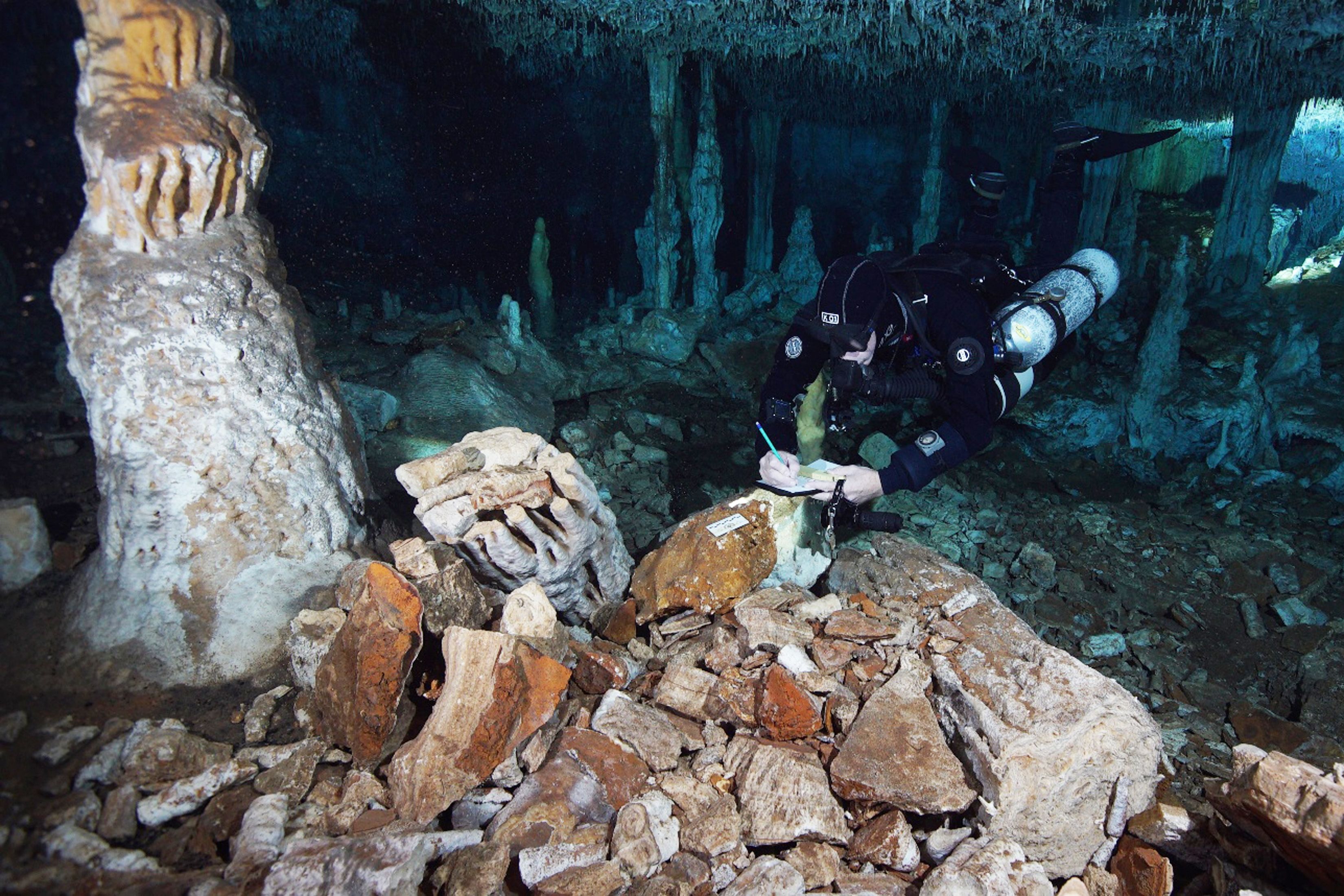
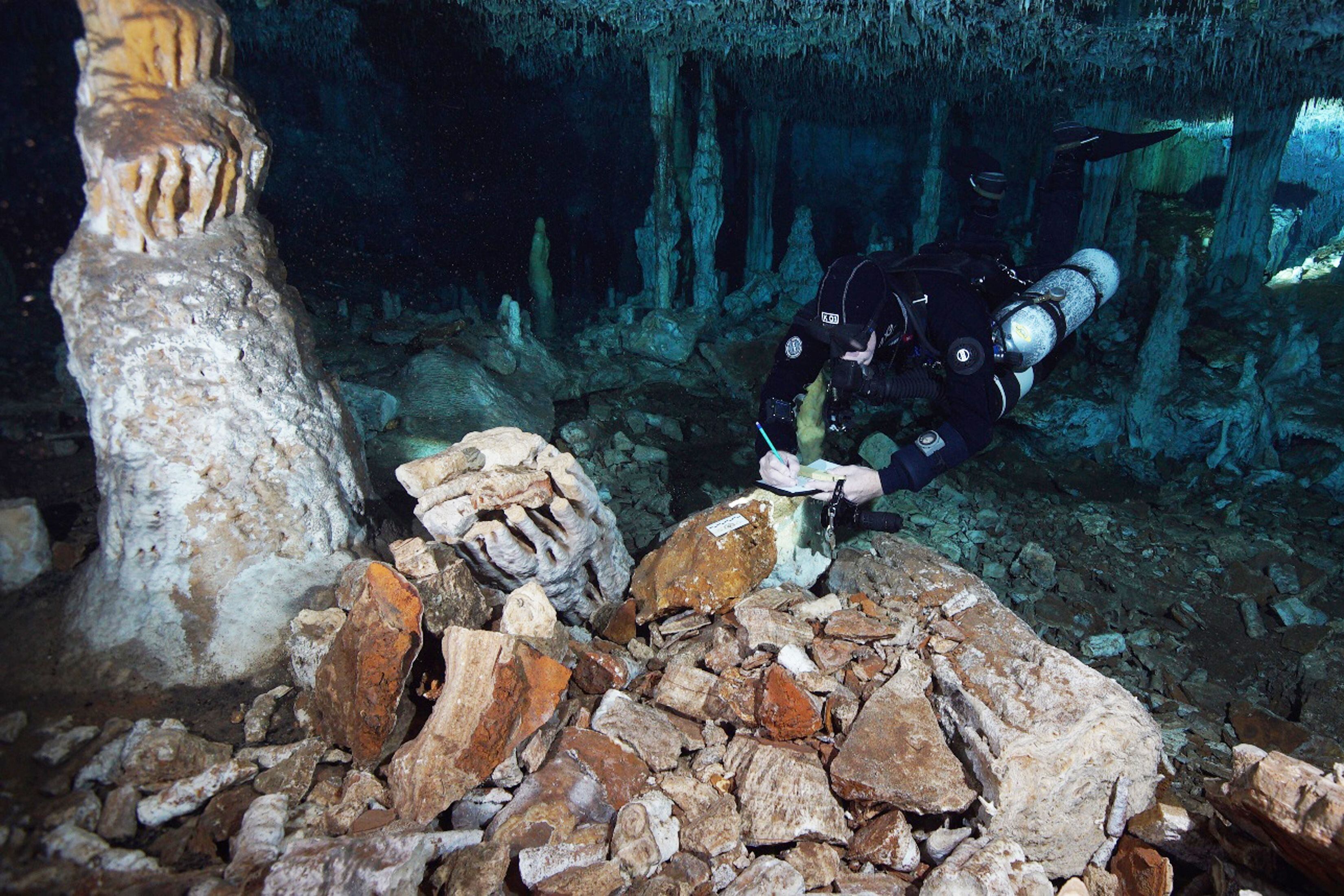
Handout picture released by the Aquifer System Research Center of Quintana Roo (CINDAQ) and the National Institute of Anthropology and History (INAH) on July 3, 2020 showing CINDAQ diver Christophe Le Maillot exploring on December 15, 2019 vestiges of submerged ochre mines, the oldest known ochre mines in the American continent which had been in use between 10,000 and 12,000 years ago in the Yucatan Peninsula, Quintana Roo State, Mexico. (Photo by Sam MEACHAM / CINDAQ / AFP) / RESTRICTED TO EDITORIAL USE - MANDATORY CREDIT "AFP PHOTO / CINDAQ / INAH " - NO MARKETING - NO ADVERTISING CAMPAIGNS - DISTRIBUTED AS A SERVICE TO CLIENTS SAM MEACHAM
AFP
Un buceador en las minas de ocre más antiguas conocidas en el continente americano en la península de Yucatán, estado de Quintana Roo, México. Foto: AFP (SAM MEACHAM/AFP)
Ciudad de México. Vestigios de minas de ocre que podrían ser las más antiguas del continente americano, con unos 12.000 años, fueron hallados en cuevas subacuáticas de la península de Yucatán, en el sureste de México, informaron este viernes los responsables del descubrimiento.
“Representan las minas de ocre más antiguas conocidas en las Américas”, señaló en un comunicado el Centro Investigador del Sistema Acuífero de Quintana Roo (Cindaq), organización privada que exploró el lugar y realizó el hallazgo.
El acceso a estas cavernas, que en el pasado fueron espacio seco, se ubica unos 10 kilómetros tierra adentro de las famosas playas del Caribe mexicano que atraen a millones de turistas de todo el mundo.
Los buceadores de Cindaq, quienes se sumergieron varios kilómetros por cuevas y pasajes que a veces alcanzan apenas 70 centímetros de ancho, hallaron que el paisaje subterráneo había sido alterado de forma no natural, lo que indica que otras personas habitaron esos espacios y que dicha presencia ocurrió hace más de 10.000 años, según se determinó posteriormente.
Los exploradores subacuáticos llevaron muestras físicas, más de 20.000 fotografías y horas de videograbaciones a personal del Instituto Nacional de Antropología e Historia (INAH), así como a otros expertos internacionales de distintas disciplinas, necesarios para determinar el significado del sitio.
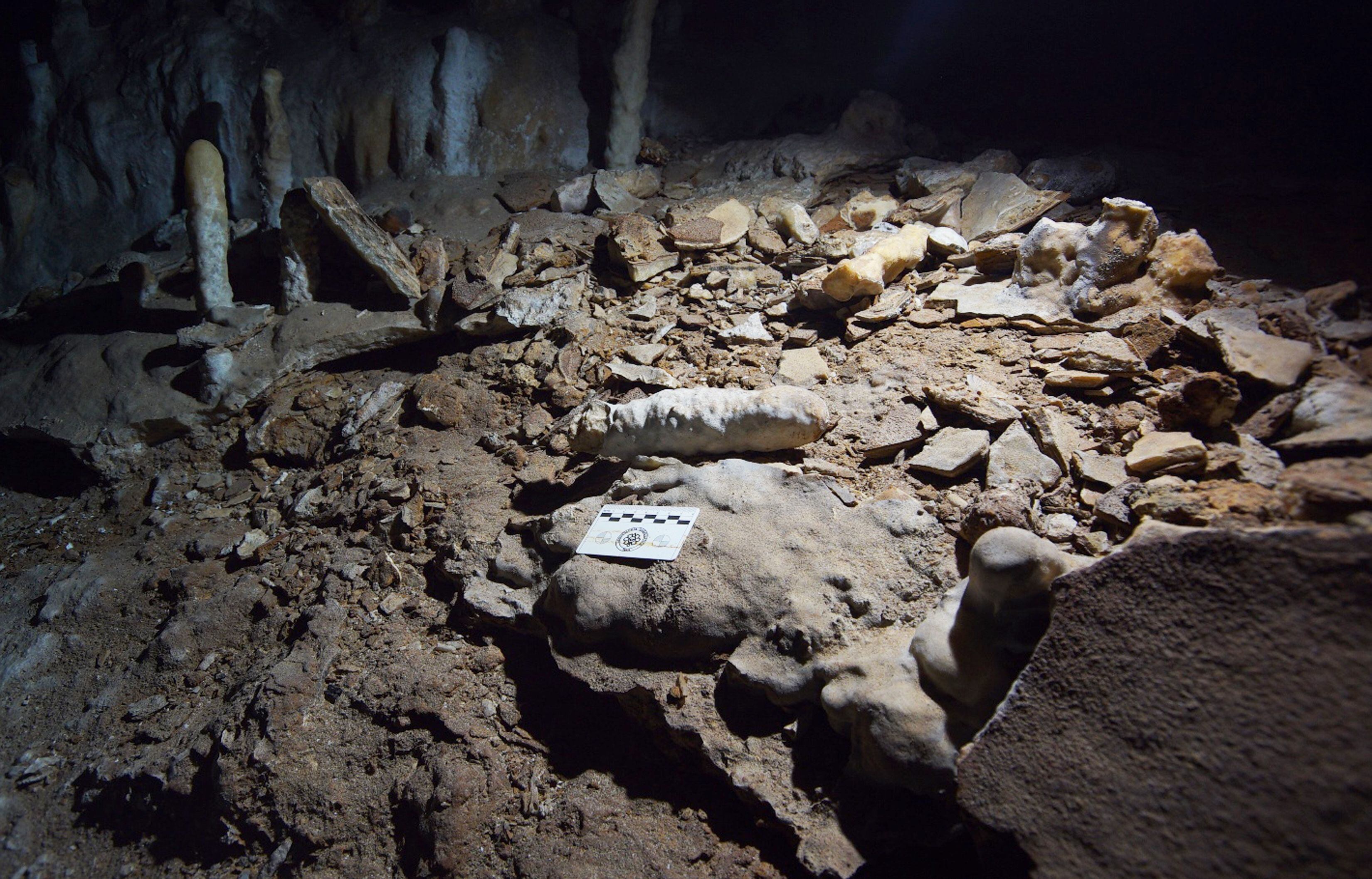
Vestigios de las minas de ocre más antiguas conocidas en el continente americano en la península de Yucatán, estado de Quintana Roo, México. Foto: AFP (SAM MEACHAM/AFP)
“Esto ha revelado por primera vez sitios mineros notablemente preservados que incluyen camas de extracción, hoyos, herramientas de excavación, escombros destrozados que se acumularon por el esfuerzo humano, marcadores de navegación y fogatas”, añadió el Cindaq.
Las investigaciones apuntan a que el ocre rojo era un pigmento mineral altamente valorado y utilizado por los primeros habitantes del hemisferio occidental, lo que los habría impulsado a explorar estos peligrosos lugares para obtenerlo.
En algunas áreas de la antigua mina el techo está visiblemente oscurecido por lo que parece haber sido el hollín de pequeñas fogatas de aquellos mineros.
Los elaborados pasajes subterráneos estuvieron secos alguna vez, pero fueron inundados hace unos 8.000 años creando las condiciones ideales para preservar las huellas de la antigua actividad humana, según el estudio.
La evidencia de actividad minera apunta a que esta abarcó un período de 2.000 años y que ocurrió entre 12.000 y 10.000 años atrás. “Esto fue 8.000 años antes del establecimiento de la cultura maya por la que la región es bien conocida”, apunta el reporte.