
Nueva York Aunque es un axioma doloroso que la brutalidad y la violencia son al menos tan antiguos como la humanidad, también lo son, al parecer, la atención a los enfermos y discapacitados.
Algunos arqueólogos están sugiriendo un vistazo más cercano y más sistemático a la forma en que los pueblos prehistóricos –de los que quizá solo queden sus huesos –trataron las enfermedades, las lesiones y la incapacidad. Llamémosle la arqueología de la atención de salud.
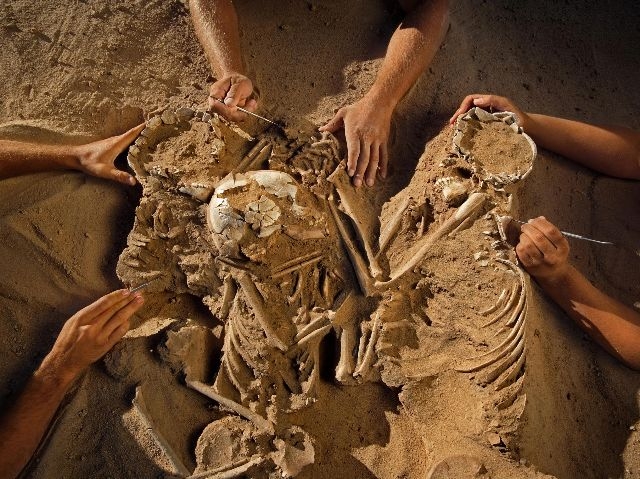
El caso que llevó a Lorna Tilley y Marc Oxenham, de la Universidad Nacional Australiana, en Camberra, a esta idea es el de un joven gravemente enfermo que vivió hace 4.000 años en lo que ahora es el norte de Vietnam y fue sepultado, como otros en su cultura, en un sitio conocido como Man Bac.
Casi todos los demás esqueletos del sitio, al sur de Hanói y a unos 24 kilómetros de la costa, yacen rectos. La Tumba 9, como se conoce a los restos y a la persona alguna vez viviente, fue tendido acurrucado en posición fetal.
Cuando Tilley, estudiante de posgrado de Arqueología, y Oxenham, profesor, excavaron y examinaron el esqueleto en 2007, se volvió claro por qué. Sus vértebras fusionadas, huesos débiles y otra evidencia sugirieron que yace en la muerte como lo fue en vida, doblado y discapacitado por la enfermedad. Ellos dedujeron que el joven quedó paralizado de la cintura para abajo antes de la adolescencia, resultado de una enfermedad congénita conocida como síndrome de Klippel-Feil. Tenía poco, o ningún, uso de sus brazos y no podía haberse alimentado solo ni haberse mantenido limpio solo. Pero vivió unos 10 años más.
Concluyeron que la gente a su alrededor que no tenía metales y vivía de la pesca, la caza y la crianza de cerdos apenas domesticados, se tomó el tiempo y el cuidado de atender todas sus necesidades.
“Hay una experiencia emocional al excavar cualquier ser humano, una sensación de sobrecogimiento y la responsabilidad de contar la historia con la mayor precisión y humanidad posible”, manifestó Tilley.
Este caso, y otros similares, aunque ejemplos menos extremos de enfermedad y discapacidad, han llevado a Tilley y Oxenham a preguntarse qué dice el cuidado de los enfermos y lesionados sobre la cultura que lo ofreció.
Los arqueólogos describieron el alcance de la discapacidad de la Tumba 9 en un artículo en Anthropological Science en 2009. Dos años después, regresaron al caso para abordar directamente el tema de la atención de salud.
“La provisión y recepción de atención de salud podría, por lo tanto, reflejar parte de los aspectos más fundamentales de una cultura”, escribieron los dos arqueólogos en The International Journal of Paleopathology.
A principios de este año, al proponer lo que ella llama una “bioarqueología del cuidado”, Tilley escribió que este campo de estudio “tiene el potencial de ofrecer importantes –y posiblemente singulares– conocimientos sobre las vidas de aquellos bajo estudio”.
En el caso de la Tumba 9, dice, su cuidado indica no solo tolerancia y cooperación en su cultura, sino que sugiere que él mismo tenía una sensación de su propio valor y una fuerte voluntad de vivir.
Vidas con limitaciones. Oxenham aclaró que varios hallazgos arqueológicos arrojaron luz sobre personas que necesitaron de ayuda para sobrevivir en la Edad de Piedra.
“Hay unos 30 casos en los cuales la enfermedad o patología fueron tan graves que deben haber tenido cuidados para sobrevivir”.
Uno de ellos es el de un neandertal, Shanidar 1, de un sitio en Irak, que data de hace 45.000 años y murió alrededor de los 50 años con un brazo amputado, pérdida de visión en un ojo y otras lesiones.
Otro es el niño de Windover de hace unos 7.500 años, encontrado en Florida, que tenía una deformación espinal congénita conocida como espina bífida, y vivió hasta alrededor de los 15 años.
En otro caso bien conocido, el esqueleto de un adolescente, Romito 2, encontrado en un sitio en Italia en los años 80, y que data de hace 10.000 años, mostró una forma grave de enanismo que dejó al muchacho con brazos muy cortos.
Su pueblo era nómada y vivía de la caza y la recolección. Aunque él no necesitaba cuidados especiales, el grupo tuvo que aceptar que no podía correr igual ni participar en la cacería como los demás.
Tilley se graduó en Psicología en 1982 y trabajó en la industria de la atención de salud, estudiando los resultados de tratamientos antes de dedicarse a la Arqueología. Fue esa experiencia la que influyó en su interés en la atención de salud en la Antiguedad.
Lo que propone, en artículos con Oxenham, es un método estándar para estudiar los restos antiguos de individuos discapacitados o enfermos, con la vista puesta en la comprensión de sus sociedades.
Ella señala varias etapas de investigación: primero, establecer qué era lo que estaba mal en una persona; segundo, qué impacto tenía la enfermedad o discapacidad dada la forma de vida seguida en esa cultura, y tercero, qué nivel de cuidado habrían necesitado.
Una persona paralizada, por ejemplo, necesitaría “apoyo directo” similar a cuidados constantes, mientras que alguien como Romito 2 necesitaría “adaptación”; es decir, tolerancia a sus limitaciones y algo de asistencia.
La cuarta etapa en el método es reunir todos los hechos para formar la base de la interpretación. Extrapolar con base en la evidencia extraída de los restos humanos para llegar a conclusiones sobre cómo vivía la gente es el meollo de la Bioarqueología.
El concepto lo acuñó en los 70 Jane E. Buikstra en la Universidad Estatal de Arizona para describir el uso de los métodos de la antropología física, que se concentra en los huesos, y los de la arqueología, que se concentra en la cultura y sus artefactos, para tratar a los “pueblos del pasado”.
Buikstra, directora del Centro para la Investigación Bioarqueológica, quien se concentra en la coevolución de los humanos y sus enfermedades, dijo que “la gente ha tratado de vez en cuando, a través de los años, de atribuir solidaridad y comprensión” a los humanos antiguos.
No obstante, dijo, “meterse en la mente de los pueblos antiguos” siempre es difícil.