El Titanic se desintegra progresivamente por fuertes corrientes, corrosión y bacterias
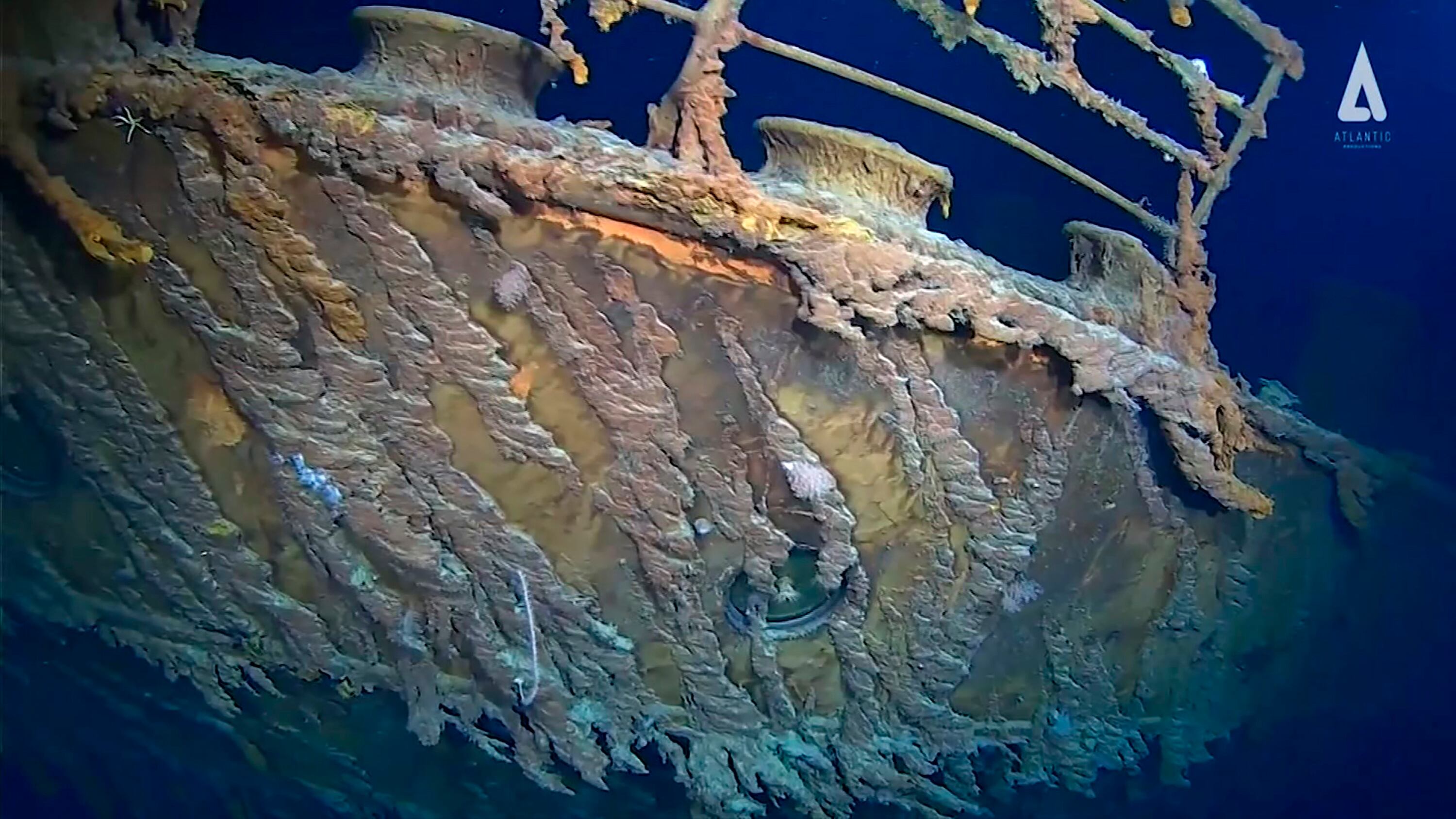
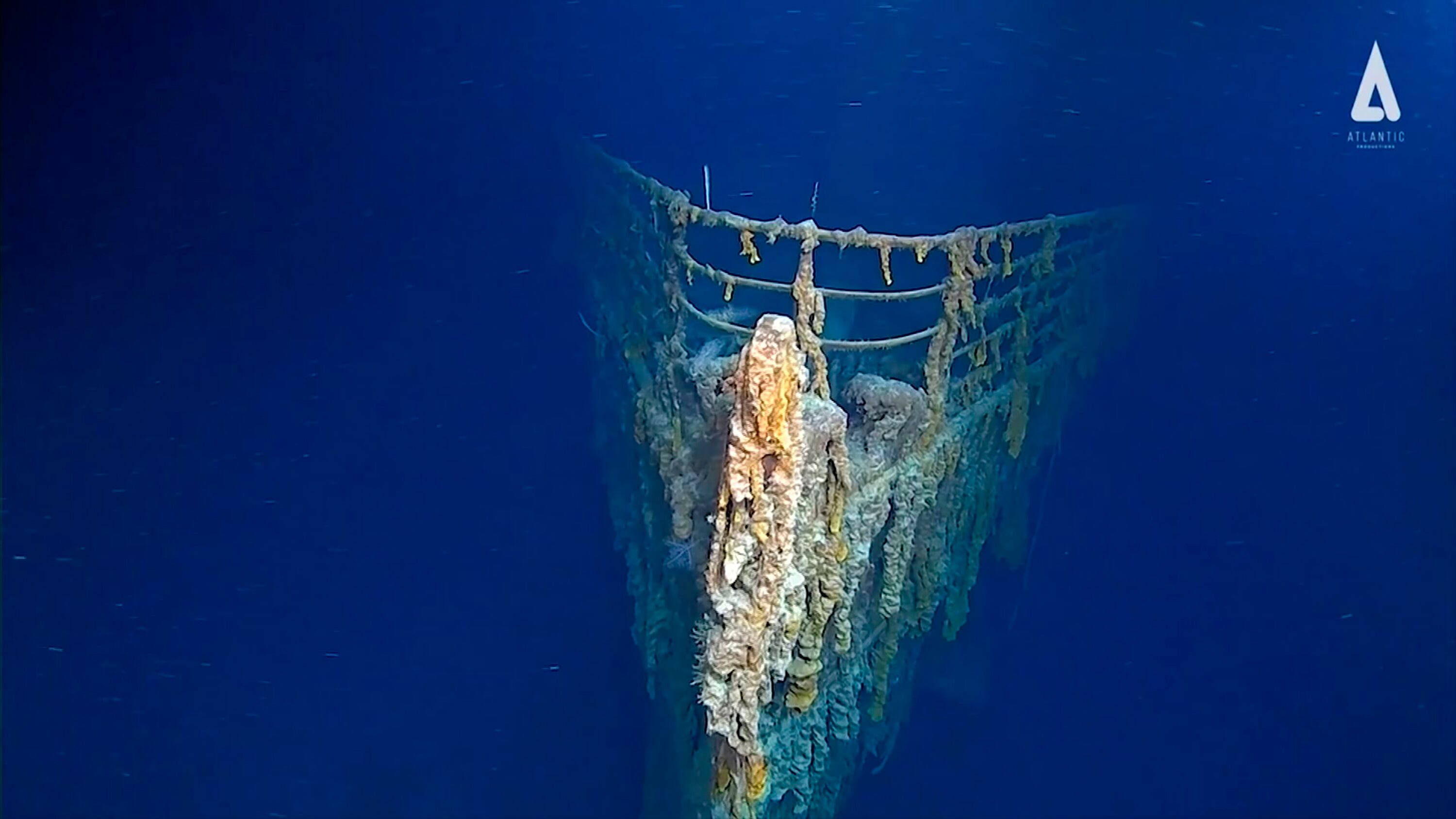
In this image taken from video released by Atlantic Productions, part of the wreckage of the RMS Titanic that lays about 3,800 metres below the surface of North Atlantic Ocean around 370 miles (596km) south of Newfoundland in Canada, during a recent visit for over 14-years to record the wreck. Scientists have warned that the wreckage of the Titanic, which sank in 1912 killing more 1,500 people, is deteriorating rapidly, noting salt corrosion, metal-eating bacteria and deep current action all having profound impact. The Atlantic Productions crew used the expedition to assess the wreck's current condition and make visuals of the wreck using augmented reality and virtual reality technology. (Atlantic Productions via AP) MANDATORY CREDIT : ATLANTIC PRODUCTIONS Atlantic Productions
El Mercurio/ GDA
En esta imagen tomada del video publicado por Atlantic Productions, muestra parte de los restos del RMS Titanic que se encuentra a unos 3.800 metros por debajo de la superficie del Océano Atlántico Norte a unos 596 km al sur de Terranova en Canadá. (Atlantic Productions vía AP) (Atlantic Productions/AP)
Chile. Tras pasar más de un siglo bajo el agua, el mítico transatlántico Titanic podría pronto desaparecer para siempre.
Así lo constató un equipo de la organización EYOS Expeditions, liderado por su fundador Rob McCallum, que acaba de realizar la primera visita submarina a la nave desde 2005.
“Llegar al ‘Titanic’ es una tarea compleja y costosa; necesitas una embarcación oceánica, un submarino de buceo profundo y mucha experiencia”, explica McCallum al diario El Mercurio, de Chile.
El expedicionario utilizó un sumergible Tritón, de la compañía del mismo nombre, para realizar una serie de descensos.
“Es un privilegio estar de vuelta”, declaró.
El Titanic, el mayor transatlántico de su época, se hundió en las aguas del Atlántico Norte entre el 14 y 15 de abril de 1912, tras estrellarse contra un iceberg luego de haber completado dos terceras partes de su viaje inaugural entre Southampton (Inglaterra) y Nueva York. Murieron 1.523 de los 2.227 pasajeros y tripulantes.
El objetivo de la expedición fue ver qué había pasado con los restos después de tantos años sin visitarlo.
“Estábamos ansiosos de revisar y monitorear su estado, trabajar con los científicos que lo estaban monitoreando remotamente y ayudar con la filmación de un nuevo documental”.
Valioso aprendizaje
La secuencia de inmersiones partió el día 29 de julio, oportunidad en que el explorador submarino Víctor Vescovo descendió en solitario hasta los 4 mil metros de profundidad dentro de un submarino Tritón.
Fue el primer reencuentro con los restos. “No estaba preparado para lo grande que era. Fue extraordinario verlo todo; el momento más asombroso fue cuando iba al costado del Titanic y las brillantes luces del sumergible se reflejaron en un portal y regresaron, fue como si la nave me estuviera guiñando un ojo. Increíble”, relató a la prensa británica tras su experiencia.
Imagen tomada del video publicado por Atlantic Productions (Atlantic Productions via AP) (Atlantic Productions/AP)
En los días posteriores y hasta el domingo 4 de este mes, la expedición realizó cuatro descensos más. Con la ayuda de tecnología de filmación digital avanzada, los exploradores pudieron realizar una detallada fotogrametría de la nave, con lo que desarrollaron modelos 3D de alta precisión.
Esto permitirá evaluar en detalle la condición actual del naufragio, proyectar su futuro, como también tener acceso a modelaciones en realidad aumentada y realidad virtual del naufragio.
Por el hecho de yacer a más de cuatro kilómetros y rodeado por aguas con una temperatura media de un grado centígrado bajo cero, asegura McCallum, el naufragio presenta una alta vulnerabilidad.
A esto se suma una lenta desintegración debido a las fuertes corrientes que fluyen bajo el Atlántico, junto con la natural corrosión salina y la acción de bacterias que comen metales.
“Es un tema de mucha discusión cuánto es lo que puede durar, tal vez sean unas décadas más, pero nunca más allá de otro siglo”, estima.
Es así como algunos objetos simbólicos están desapareciendo. Un ejemplo es la llamada tina de baño del capitán, que fue observada durante la inmersión de 2005. Ahora ya no es visible porque estaría cubierta por los sedimentos marinos que se han ido acumulando en la nave.
No obstante, asegura el explorador, la investigación del naufragio todavía puede ser importante no solo por su significado histórico, sino también para la ciencia. “Podemos aprender un montón del ‘Titanic’. Lo que aprendamos acá pude ser aplicado a un gran número de estructuras hechas por el ser humano y a otros naufragios en el mar profundo”, dice McCallum. GDA/El Mercurio/Chile